Abstract: Computer engraving knives are not a universal model, and the mainstream models on the market are divided into three categories: ordinary engraving knives, relief engraving knives, and milling engraving knives. Many processing factories, graphic stores, and procurement personnel often mix materials, resulting in problems such as burrs, broken knives, uneven carving depth, and difficulty cutting through the board. This article comprehensively distinguishes three types of engraving knives from tool structure, working principle, compatible equipment, applicable materials, processing effect, advantages and disadvantages, helping everyone to quickly and accurately select, reduce losses, and improve processing yield.
1、 Ordinary engraving knife (film cutting knife)
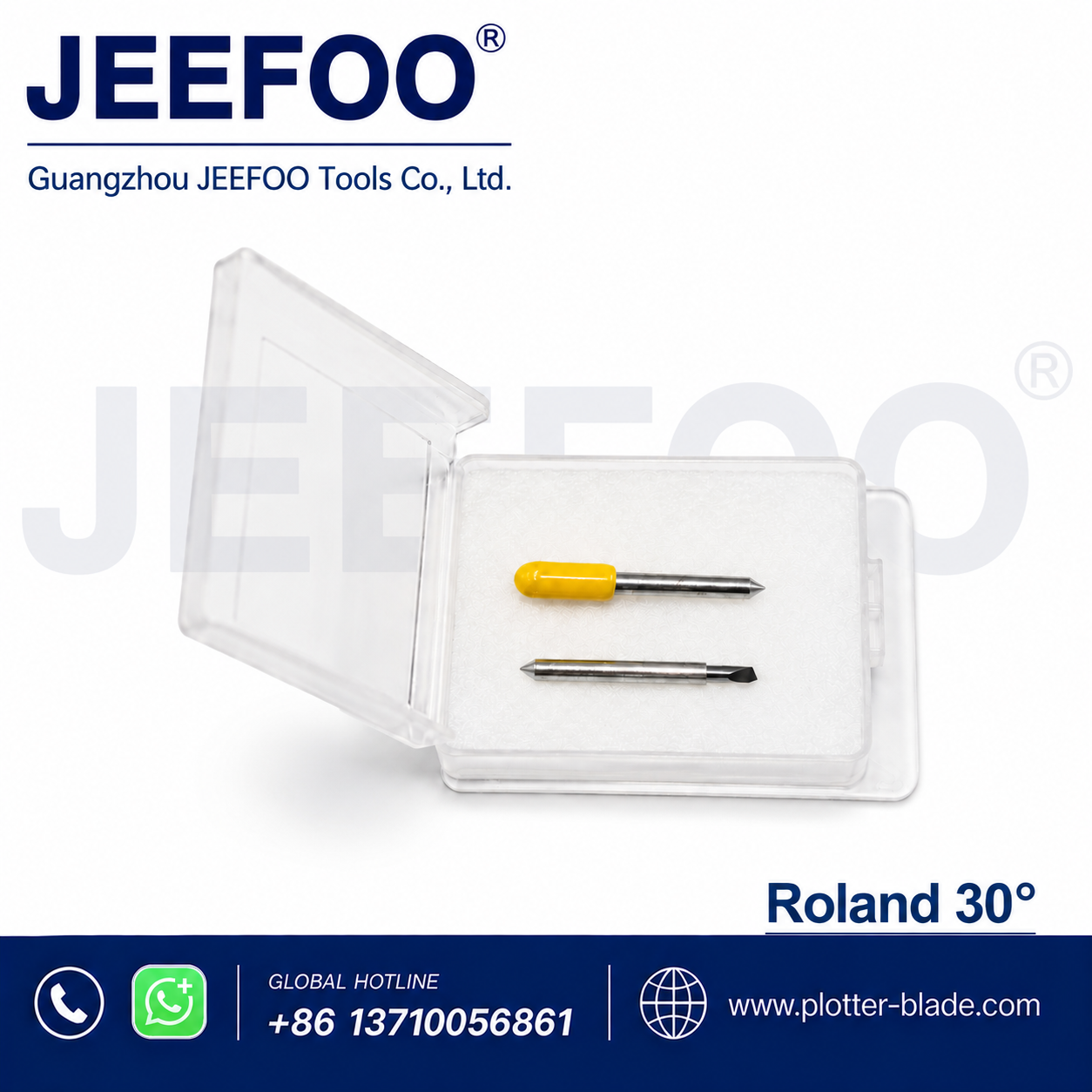
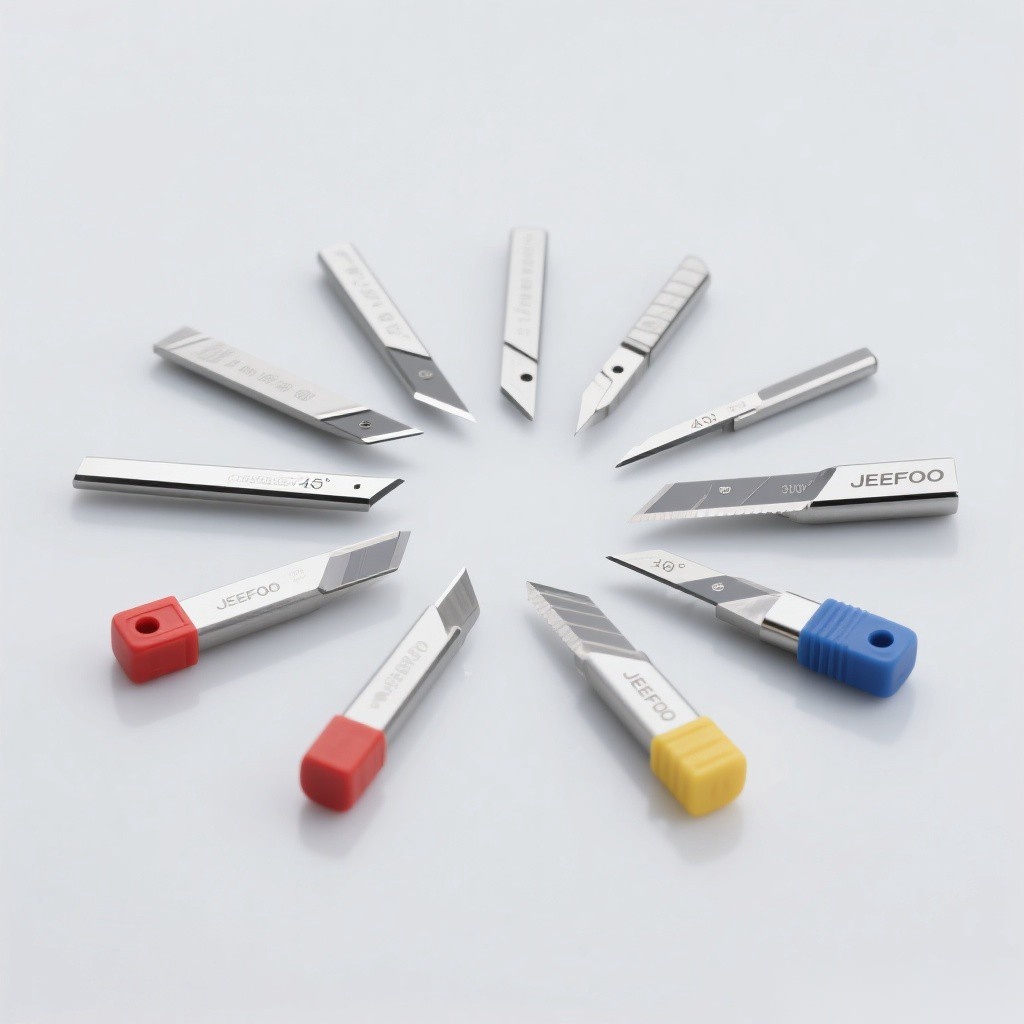
Ordinary engraving knives, also known as adhesive engraving knives, Roland engraving knives, and film cutting knives, are the most commonly used basic cutting tools in advertising graphic stores. They specialize in static pressure cutting and low-speed rotary milling, specifically for cutting flexible film materials.
Structure and principle of cutting tools
The blade head is a pure V-shaped pointed structure, without spiral grooves or flat bottoms. It relies on the downward pressure of the engraving machine blade seat to cut through the surface layer of the material, only making surface cutting without deep excavation or milling chips. Common angles: 15 °, 30 °, 45 °, 60 °. The smaller the angle, the finer it is, and the larger the angle, the more wear-resistant it is.
Adapting devices
Specialized desktop computer engraving machines and edge scanning engraving machines (Roland, Picard, Mimark, etc.) are prohibited from being used for high-speed rotation of CNC engraving machine spindles, as they are prone to tip breakage.
Applicable materials and scenarios
Only applicable to soft thin materials: instant stickers, car stickers, reflective films, heat transfer films, adhesive stickers, thin kraft paper, PVC film. Mainly used for making shallow cutting techniques such as car body stickers, store stickers, hollow characters, and advertising film.
Advantages and disadvantages
Advantages: Low cost, easy replacement, clean film cutting edges, smooth small character lines, and no burrs.
Limitations: Unable to process hard boards, unable to do deep carving, unable to mill groove relief, hard material processing is prone to tool breakage.
2、 Relief engraving knife (flat bottomed pointed knife/tapered engraving knife)
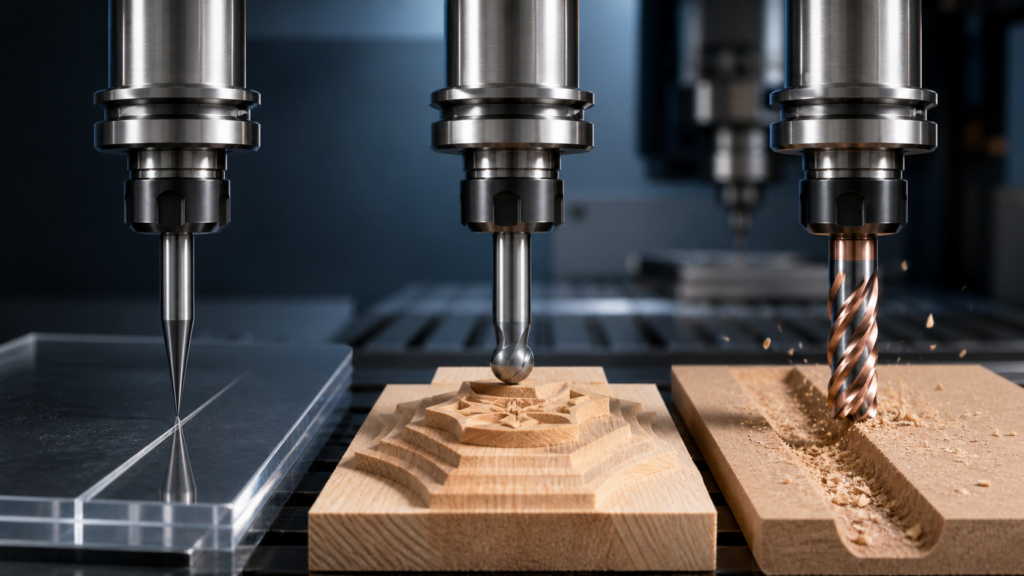
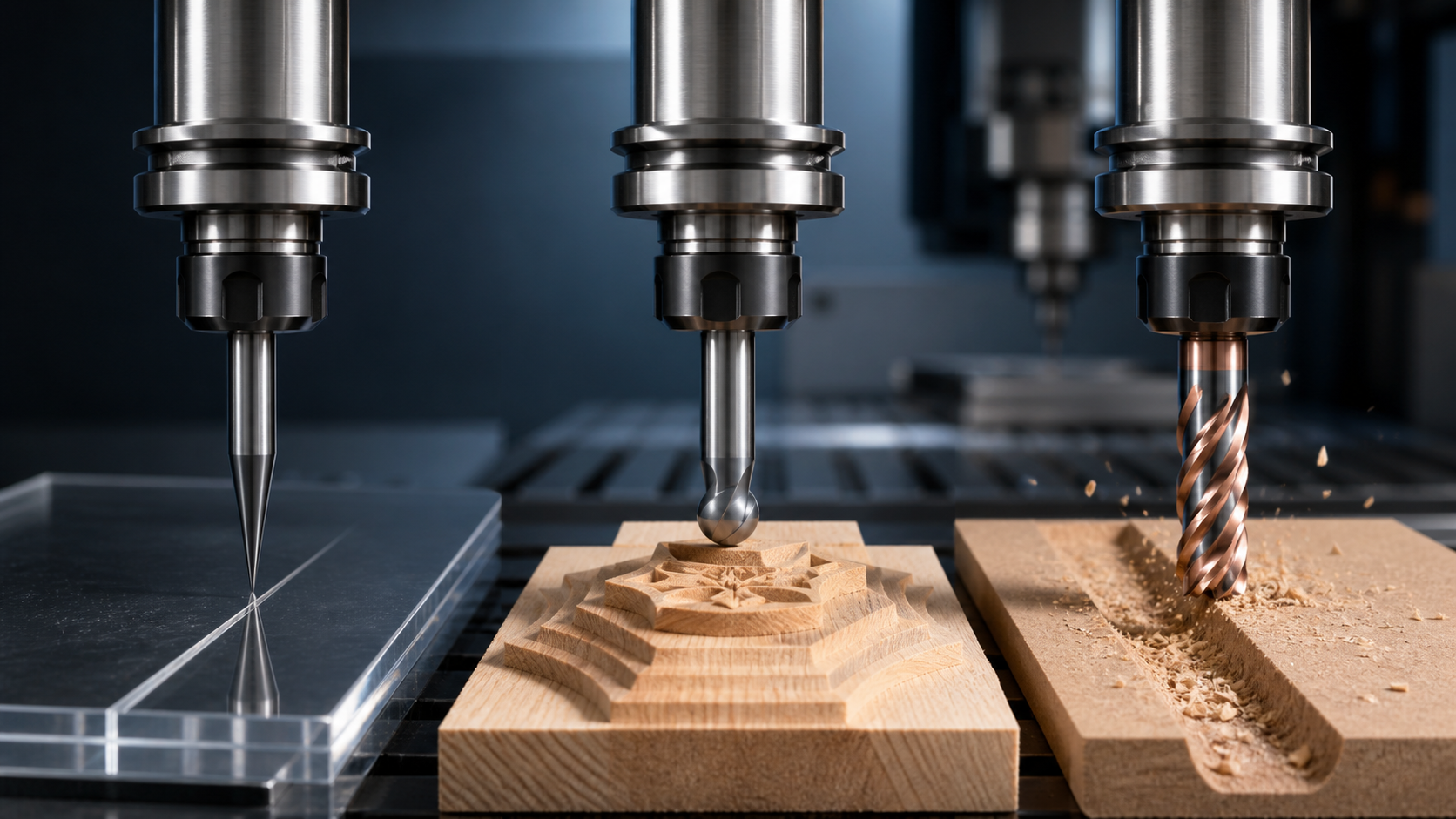
The relief engraving knife industry, collectively known as flat bottomed sharp knife and tapered sharp knife, is a CNC engraving machine specific engraving knife that focuses on three-dimensional engraving with controllable depth. It solves the pain point of ordinary engraving knives not being able to engrave boards or create reliefs, and is also a mainstream engraving tool for advertising signs, nameplates, and handicrafts.
Structure and principle of cutting tools
The blade has a tapered structure, with a very thin tip and a flat bottom. The cutting edge has a slight chip groove, and the spindle rotates at high speed for layered cutting. The carving depth can be controlled, and it can be used for fine line engraving, shallow relief, and three-dimensional patterns. The tapered design ensures that small characters do not deform and the edges are vertical and neat.
Adapting devices
CNC engraving machines, precision engraving machines, woodworking engraving machines, and advertising CNC engraving machines rely on high-speed spindle rotation for cutting and forming.
Applicable materials and scenarios
Suitable for various types of hard/semi hard boards: acrylic, two-color board, PVC board, wooden board, density board, resin, ordinary soft aluminum. Commonly used for engraving on signs and nameplates, fine carving of logos, intaglio and Yang engraving, shallow relief patterns, seal carving, and texture processing of handicrafts.
Angle selection skills
15 °/20 °: Ultra fine blade tip, specifically designed for mini fonts, fine lines, and micro reliefs;
30 °: Universal version, balancing accuracy and speed, preferred for daily carving;
45 °/60 °: The blade has high strength and is suitable for deep carving, large-area relief carving, and rough line processing.
Advantages and disadvantages
Advantages: high carving accuracy, controllable depth, good three-dimensional effect, clear small characters, and no broken edges in board processing;
Limitations: Not suitable for pure film cutting, low efficiency for large-area cutting.
3、 Milling engraving cutter (straight groove milling cutter/engraving milling cutter)
The milling engraving tool belongs to the cutting type industrial cutting tool, which is different from the pointed cutting mode. It focuses on slotting, milling, cutting, and deep carving, while also taking into account engraving and sheet cutting. It is the core tool for industrial batch processing and thick material processing.
Structure and principle of cutting tools
It is mostly a double-edged straight groove/spiral groove cylindrical blade body, with a flat bottom and no sharp points. It relies on high-speed rotary milling to remove materials, with large cutting volume and smooth chip removal. It can achieve through cutting, groove milling, and large-area flat carving, with processing efficiency much higher than sharp blades.
Adapting devices
The entire range of CNC engraving machines, CNC milling machines, and woodworking cutting machines are suitable for long-term mass production processing.
Applicable materials and scenarios
Thick acrylic, solid wood, density board, PVC thick board ABS、 Aluminum plastic panel, lightweight non-ferrous metals. Mainly used for thick plate engraving, slotting and drilling, contour cutting, large-area surface milling, and deep carving processing.
Advantages and disadvantages
Advantages: Strong cutting force, no chip blockage, deep carving without burning materials, stable mass production, can be cut and engraved;
Limitations: The blade tip is thicker, and the accuracy of extremely small text and fine lines is not as good as that of a tapered relief knife.
4、 Summary of the core differences among three types of computer engraving knives
Ordinary engraving knife: specially designed for cutting thin films, without rotation or depth, only used for cutting stickers and films, just needed by graphic and text stores.
Relief engraving knife: specialized for fine three-dimensional engraving, with a tapered flat bottom, preferred for shallow engraving on board, small character relief, and sign engraving.
Milling engraving knife: specialized for industrial milling and cutting, used for large cutting volume, deep slotting, thick material processing, and mass production.
5、 Selection suggestions
Make car stickers, stickers, and reflective film stickers → choose a regular engraving knife;
Creating signs, nameplates, fine carving of small characters, shallow relief carving → selecting a floating carving knife (flat bottomed sharp knife);
Thick plate cutting, slotting and drilling, batch processing of sheet metal ->select milling and engraving knife.