
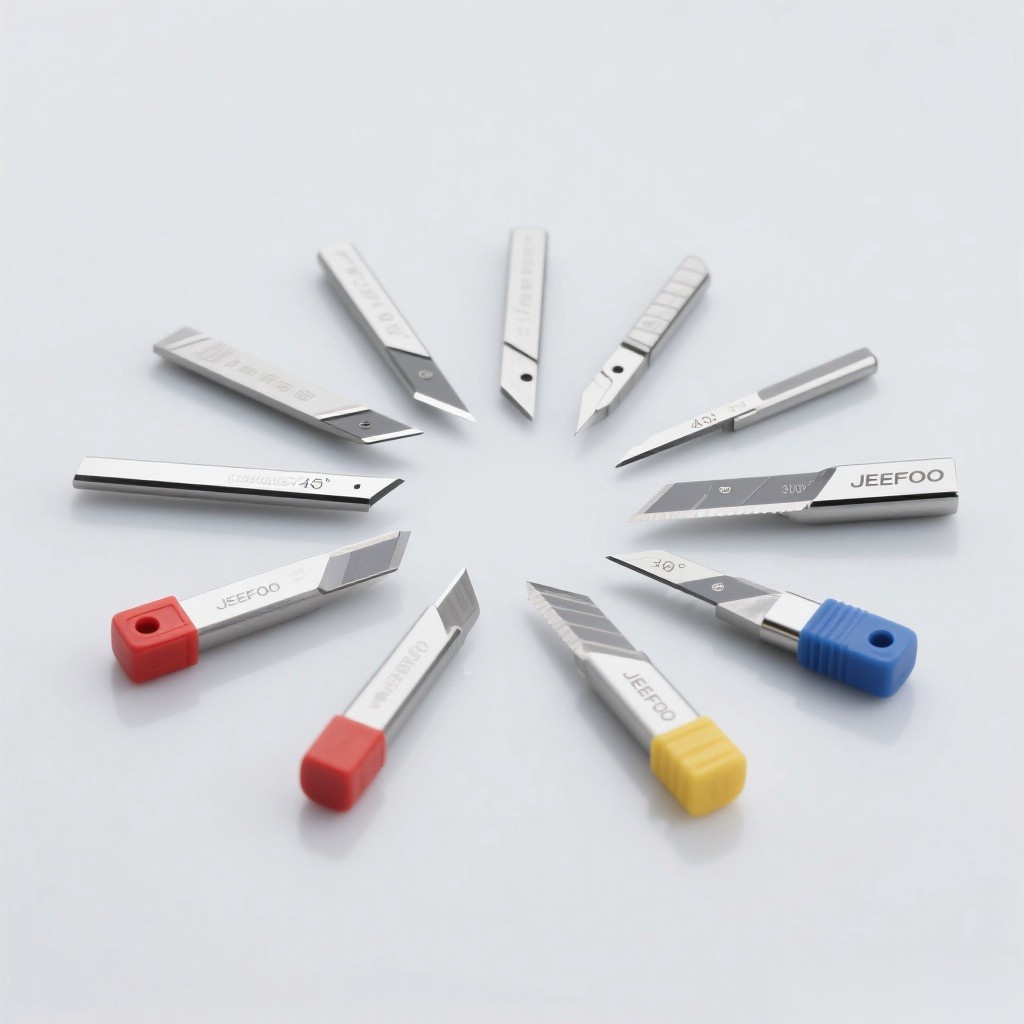
The main types of milling cutters include end mills, face mills, slab mills, side-and-face cutters, slot drills, keyway cutters, ball nose cutters, T-slot cutters, dovetail cutters, thread mills, and form cutters. Each design controls where cutting edges contact the workpiece and which surfaces, slots, profiles, or features it can produce.
Table of Contents
What Are the Main Types of Milling Cutters?
| Cutter type | Primary operation | Typical feature |
|---|---|---|
| End mill | Profiling, pockets, slots | Peripheral and end cutting edges |
| Face mill | Large flat surfaces | Multiple inserts and wide diameter |
| Ball nose cutter | 3D contouring | Rounded cutting end |
| Slot drill | Slots and plunging | Center-cutting geometry |
| Side-and-face cutter | Deep slots and shoulders | Teeth on side and circumference |
| Form cutter | Special profiles | Profile ground into tool |
1. End Mills
End mills are among the most versatile cutters. Square-end tools create shoulders, pockets, and slots; corner-radius tools strengthen the tip; roughing end mills break chips and remove stock; finishing end mills prioritize surface quality. Flute count, helix angle, diameter, and center-cutting capability all affect performance.
2. Face Mills
Face mills use multiple cutting edges, commonly replaceable inserts, to machine broad flat surfaces. Their large effective diameter and distributed cutting load support high productivity. Insert shape, lead angle, pitch, and wiper geometry influence force direction and finish.
3. Ball Nose and Corner-Radius Cutters
A ball nose cutter is used for molds, dies, sculptured surfaces, and three-dimensional contours. A corner-radius cutter keeps a mostly flat end while replacing the sharp corner with a radius for improved edge strength. Toolpath strategy is critical because effective cutting speed changes across a ball nose profile.
4. Slot, Keyway, and T-Slot Cutters
Slot drills and keyway cutters create narrow grooves and can often plunge when center cutting. T-slot cutters have a reduced neck and wider cutting head that machines the undercut after an entry slot has been produced. These types of milling cutters need careful chip evacuation because the cutting zone is confined.
5. Side-and-Face and Slab Mills
Side-and-face cutters cut on the circumference and sides, making them suitable for deep slots, straddle milling, and shoulders. Slab mills are cylindrical cutters primarily used on horizontal milling machines for machining long flat surfaces. Arbor support and machine rigidity are important.
6. Dovetail, Angle, and Chamfer Cutters
Dovetail cutters produce undercut angled features after a clearance slot is prepared. Single- and double-angle cutters machine V-grooves, serrations, and angular surfaces. Chamfer mills create edge breaks, countersinks, and deburring features. The included angle must match the drawing.
7. Thread Mills
Thread mills use helical interpolation to create internal or external threads. One tool may cover multiple diameters with the same pitch, and the process offers control over thread fit. A CNC machine capable of synchronized circular and axial motion is required.
8. Form and Gear Cutters
Form cutters reproduce a specific profile such as a radius, concave form, or special groove. Gear cutters include involute form cutters, hobs, and specialized tools selected for the gear system and module or diametral pitch. Inspection requirements are usually more specialized.
How to Choose a Milling Cutter
- Identify the feature: face, slot, pocket, thread, contour, or form.
- Match cutter diameter and reach to the drawing and access.
- Select substrate and coating for the workpiece material.
- Choose flute count for chip space and productivity.
- Check spindle speed, power, holder, and machine rigidity.
- Use the shortest practical overhang.
- Validate speed, feed, and engagement with a test cut.
For a decision workflow, see our guide to choosing a milling cutter.
Materials and Construction
High-speed steel offers toughness and economical tooling for lower speeds. Solid carbide provides high wear resistance and speed potential in rigid machines. Indexable cutters reduce replacement cost by using replaceable inserts. Brazed carbide and specialized superhard materials serve additional niches.
Safe Milling Checklist
Confirm tool condition, holder security, workholding, clearance, guards, and cutting data before starting. Keep hands away from rotating tools and chips. Follow the machine manual and applicable OSHA machine guarding guidance.
Frequently Asked Questions
Which milling cutter is most versatile?
A square or corner-radius end mill is highly versatile for slots, pockets, profiles, and shoulders, but no single cutter is best for every operation.
What is the difference between a face mill and an end mill?
A face mill is optimized for broad flat surfaces and productivity. An end mill is smaller and more versatile for pockets, profiles, shoulders, and slots.
Summary
The types of milling cutters are distinguished by cutting-edge location, geometry, mounting method, and intended feature. Begin with the required operation, then match material, diameter, reach, flute design, coating, and cutting data to the machine and workpiece.

发表回复
要发表评论,您必须先登录。