
Aluminum PCB router quality should be judged by carbide microstructure, flexural strength, edge wear resistance, dimensional consistency, runout, and the cleanliness of test-cut grooves, holes, and board edges. A good cutter removes material efficiently without heavy burrs, smearing, rapid built-up edge, or premature breakage.
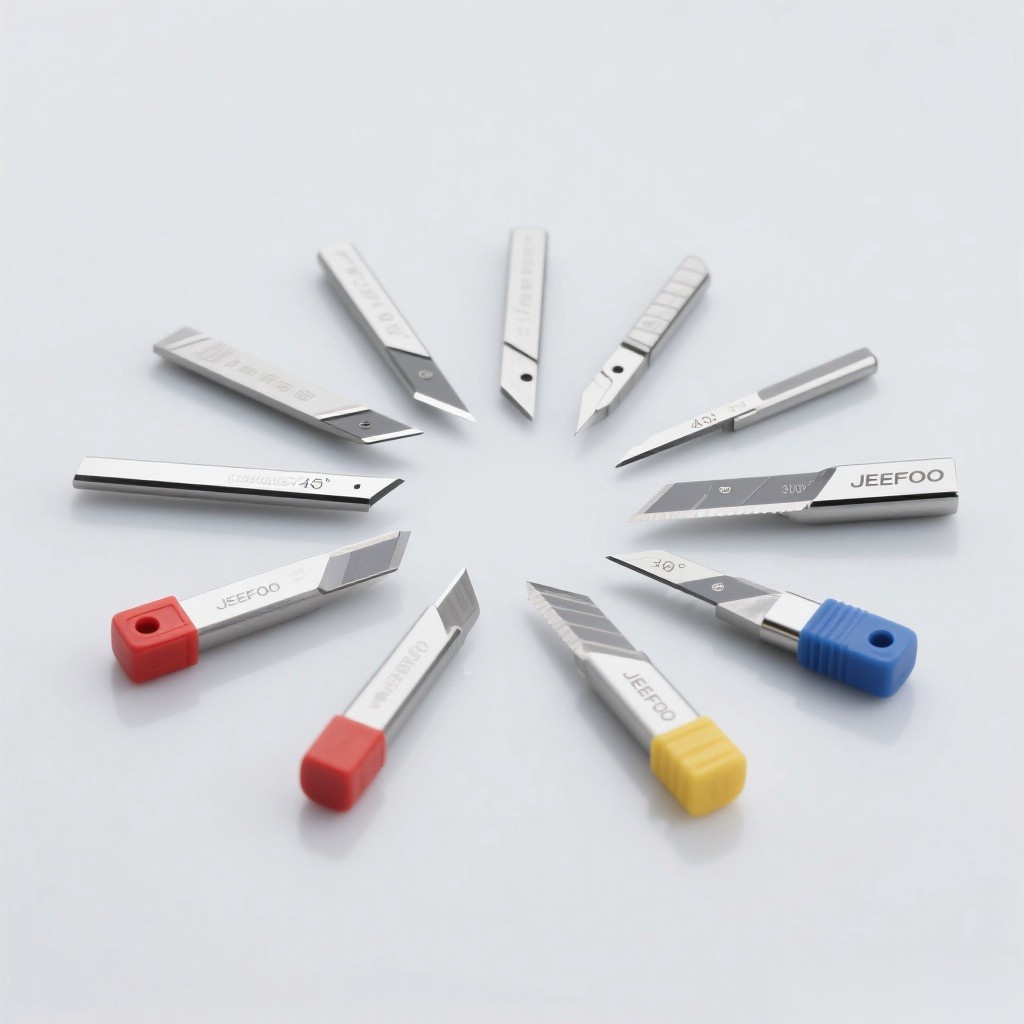
Aluminum PCB Router Quality Indicators
| Indicator | Why it matters | How to verify |
|---|---|---|
| Ultra-fine-grain carbide | Supports a sharp edge with useful toughness | Supplier grade data and batch documentation |
| Flexural strength | Helps the small cutter resist bending and breakage | Material specification plus controlled test cuts |
| Wear resistance | Maintains slot width and finish over more panels | Tool-life and edge-wear records |
| Low runout | Reduces uneven load and oversize features | Measure near the cutting edge |
| Clean finish | Limits secondary deburring and scrap | Inspect grooves, holes, and edges under magnification |
Why Carbide Grain Size Matters
Fine carbide grains can support a uniform cutting edge for ductile aluminum and copper layers. However, grain size alone does not define aluminum PCB router quality. Binder content, sintering, edge preparation, coating, geometry, shank accuracy, and inspection control also influence strength, wear, and finish.
Incoming Inspection Checklist
- Confirm the specification. Check diameter, cutting length, shank, flute count, tip style, and tolerance.
- Inspect the edge. Look for chips, grinding lines, coating defects, contamination, or inconsistent points.
- Measure dimensions. Verify the batch with calibrated equipment and a documented sampling plan.
- Check shank and runout. Clean the holder and measure near the cutting edge.
- Record traceability. Keep lot, supplier, receipt date, machine, operator, and test-cut data.
How to Run a Controlled Test Cut
- Use a representative aluminum-base PCB stack and stable panel support.
- Use manufacturer-recommended rpm, feed, pass depth, entry strategy, and extraction.
- Keep the same spindle, collet, projection, vacuum, and program for comparison.
- Measure groove width, hole quality, wall finish, burr height, and edge condition.
- Record cut length or panel count until the defined replacement criterion is reached.
Aluminum PCB router quality comparisons are meaningful only when the process is controlled. A good cutter can appear poor in a worn collet, while an unstable setup can hide the difference between carbide grades.
Finish Acceptance Criteria
| Check | Acceptable signal | Warning signal |
|---|---|---|
| Groove or slot | Consistent width and clean walls | Smearing, taper, chatter, or oversize path |
| Hole entry | Controlled entry with minimal breakout | Heavy burr, delamination, or point wandering |
| Board edge | Neat profile with low burrs | Torn metal, packed chips, or discoloration |
| Tool edge | Predictable gradual wear | Micro-chipping, built-up edge, or sudden failure |
| Process stability | Repeatable results across samples | Large variation between identical cuts |
Questions to Ask the Cutter Supplier
- Which aluminum-base PCB and copper laminate stacks are approved?
- What carbide grade, coating, edge preparation, and geometry are used?
- What are the diameter, shank, cutting-length, and runout tolerances?
- Which rpm, feed, pass depth, entry method, and chip-removal settings are recommended?
- What tool-life criterion and batch traceability are available?
Common Failures and Likely Causes
| Failure | Possible tool factor | Possible process factor |
|---|---|---|
| Rapid wear | Unsuitable grade or edge preparation | Rubbing, heat, abrasive stack |
| Breakage | Low toughness or chipped edge | Runout, excessive depth, long overhang |
| Burrs | Dull or inconsistent edge | Weak support or unsuitable feed |
| Wall smearing | Geometry prone to built-up edge | Poor chip removal and excess heat |
| Variable size | Diameter or shank inconsistency | Deflection, spindle play, or collet wear |
Buyer Summary
Evaluate aluminum PCB router quality with documented specifications and a repeatable test-cut plan, not marketing claims alone. The best cutter is the one that meets the required finish, tolerance, productivity, and tool-life targets in the actual board stack. Browse related tools in the JeeFoo cutter library and follow relevant OSHA machine-guarding guidance.
Frequently Asked Questions
Is fine-grain carbide always better?
No. Grain size is important, but the complete carbide grade, geometry, edge preparation, manufacturing control, and application determine performance.
What is the fastest useful quality test?
Verify dimensions and runout, then make a controlled cut in representative material and inspect width, burrs, wall finish, chips, and edge wear.
Why can identical cutters perform differently?
Collet condition, runout, projection, panel support, cutting data, extraction, material lot, and operator setup can change the result.


发表回复
要发表评论,您必须先登录。