
CNC milling cutters can be classified by tool material, construction, cutting-edge location, end shape, flute count, and machining purpose. The most practical selection method is to start with the feature—face, slot, pocket, wall, profile, hole, or 3D surface—then match workpiece material, rigidity, reach, chip evacuation, tolerance, and machine power.
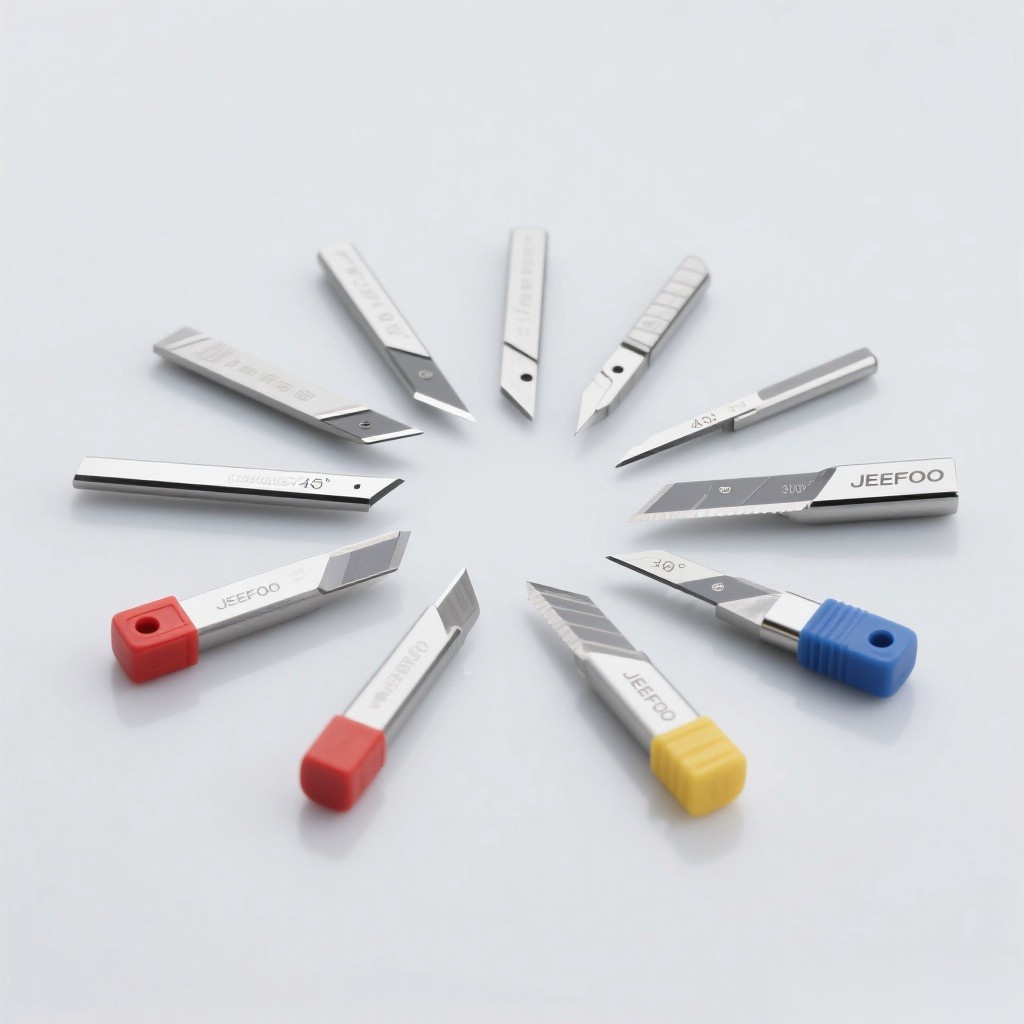
CNC Milling Cutter Types by Material
| Material | Main advantage | Typical use |
|---|---|---|
| High-speed steel | Toughness and easy resharpening | Lower-speed work and interrupted cuts |
| Solid carbide | Rigidity, hot hardness, wear resistance | High-speed CNC milling on rigid machines |
| Carbide-tipped | Carbide edge with economical body | Larger cutters and specialized profiles |
| PCD/diamond | Extreme wear resistance | Aluminum, composites, and nonferrous finishing |
| CBN/ceramic | High-temperature hardness | Specialized hard-material machining |
Types by Construction
- Solid cutters: body and cutting edges are one material; accurate and compact.
- Indexable cutters: replaceable inserts mount in a reusable body; economical for larger diameters.
- Modular cutters: replaceable heads or extensions balance flexibility and rigidity.
- Brazed cutters: tips are permanently joined to the body for special forms or sizes.
Types by Machining Operation
| Cutter type | Best suited to | Selection note |
|---|---|---|
| Face mill | Broad flat surfaces | Match diameter and pitch to power |
| Square end mill | Slots, pockets, shoulders | Center cutting required for plunging |
| Ball nose end mill | 3D contours and curved surfaces | Account for changing effective diameter |
| Corner-radius end mill | Strong edges and filleted floors | Balances strength and flat-bottom capability |
| Roughing end mill | High material removal | Serrations break chips and reduce force |
| Chamfer/V cutter | Chamfers, engraving, countersinks | Verify included angle and tip width |
| Thread mill | Internal/external threads | Needs helical interpolation |
| Slotting/slitting cutter | Narrow grooves and cutoffs | Runout and side support are critical |
Flute Count and Helix Direction
Fewer flutes provide larger chip spaces for aluminum, plastic, and full slots. More flutes can increase productivity in steel and finishing when chips can escape. Upcut helices evacuate chips upward; downcut helices improve top-edge support; compression geometry can protect both faces of sheet material.
How to Choose a CNC Milling Cutter
- Define the feature, tolerance, finish, corner radius, and reach.
- Match substrate, coating, and edge geometry to the workpiece.
- Choose diameter and cutting length with the shortest practical overhang.
- Select flute count for chip volume and available spindle power.
- Confirm holder, shank, coolant, and maximum rpm compatibility.
- Use manufacturer speed, feed, and engagement data as the starting point.
Selection Mistakes and Corrections
| Problem | Likely mismatch | Correction |
|---|---|---|
| Chip packing | Too many flutes or poor evacuation | Use fewer flutes and improve chip flow |
| Chatter | Long reach, weak holder, wrong engagement | Shorten tool and improve rigidity |
| Rapid wear | Wrong grade, coating, or speed | Match tool material and cutting data |
| Corner chipping | Sharp corner under high load | Use corner radius or tougher geometry |
| Poor finish | Runout, deflection, worn edge | Check holding and use a finish pass |
Explore related options in the JeeFoo CNC cutting tool library. Follow the machine manual and applicable OSHA machine-guarding guidance.
Frequently Asked Questions
What are the main CNC milling cutter categories?
Common categories include face mills, end mills, ball nose, corner-radius, roughing, chamfer, thread, slotting, and form cutters.
Is carbide always better than HSS?
No. Carbide supports speed and wear resistance, while HSS can be preferable for toughness, lower-speed machines, and interrupted cuts.
How many flutes should an end mill have?
Use fewer flutes for chip space and more flutes for edge engagement when material, power, and evacuation permit.
Which cutter is used for 3D surfaces?
Ball nose and tapered ball nose cutters are common, with corner-radius tools also useful for some semi-finishing operations.


发表回复
要发表评论,您必须先登录。