
The five main types of CNC milling cutters by construction are integral cutters, inlaid or indexable cutters, vibration-reducing cutters, internal-cooling cutters and special-purpose cutters. Each design solves a different machining problem involving rigidity, insert replacement, long overhang, heat control or complex operations.
How Are CNC Milling Cutters Classified?
CNC milling cutters can be classified by body construction and function. This approach helps machinists choose between a one-piece tool, a replaceable-edge system, a damped body, through-tool coolant or a specialised design. Geometry, cutter material and application create additional categories, but the five designs below describe the core construction types.
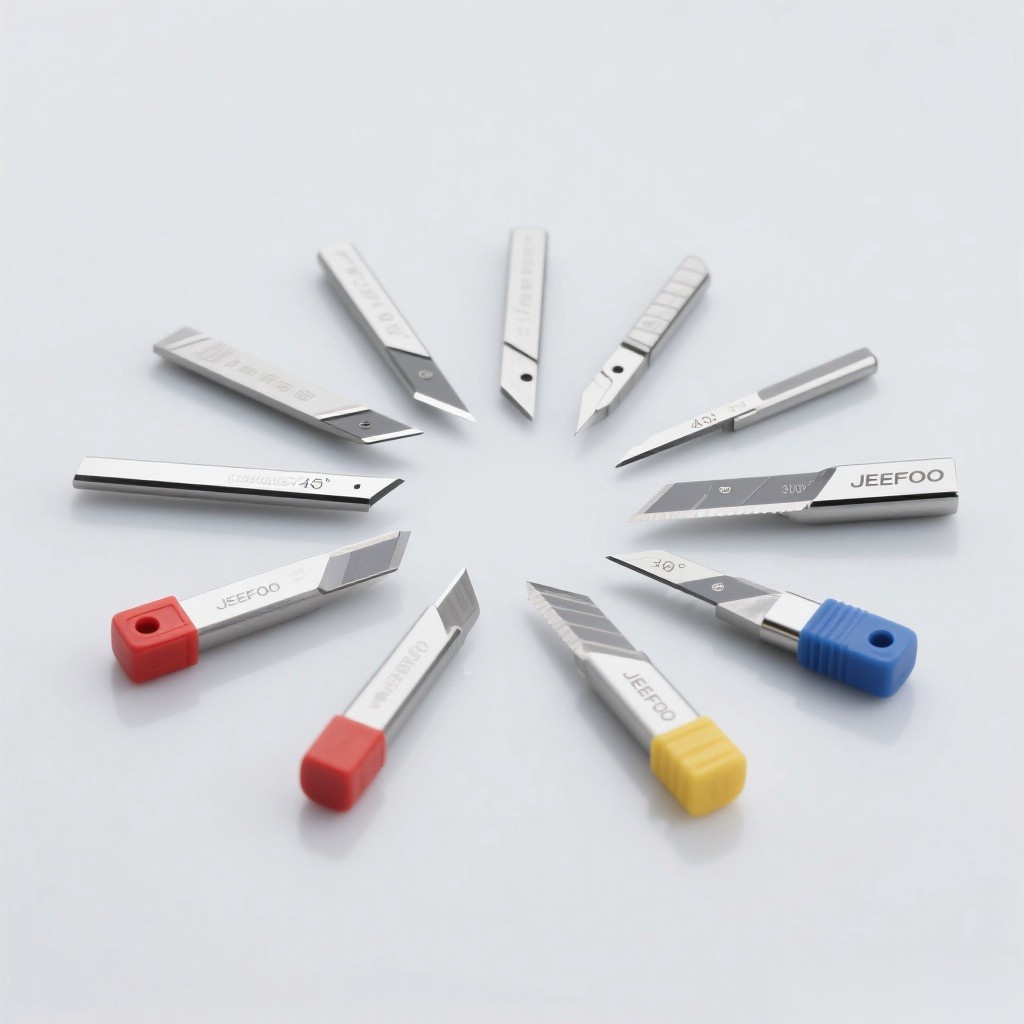
| Cutter type | Construction | Best suited to |
|---|---|---|
| Integral | Tool and shank made as one unit | Precision, rigidity and smaller diameters |
| Inlaid or indexable | Welded edge or mechanically clamped insert | Economical edge replacement and larger cutters |
| Vibration-reducing | Damped body or anti-vibration structure | Long overhang and chatter-sensitive machining |
| Internal cooling | Coolant channels through the tool body | Heat control and deep or demanding cuts |
| Special purpose | Compound, reversible or application-specific design | Combined operations and unusual profiles |
1. Integral CNC Milling Cutters
An integral cutter has the cutting portion and shank manufactured as one piece. The continuous body provides rigidity, accurate concentricity and predictable balance. Solid carbide end mills are common examples. When the cutting edge is worn, the cutter may be reground if its geometry and remaining dimensions permit.
2. Inlaid and Indexable Milling Cutters
Inlaid cutters use a separate cutting element attached to the body. A welded design permanently joins the cutting edge, while an indexable design clamps replaceable inserts mechanically. Indexable cutters reduce replacement cost because the body is reused and worn insert edges can be rotated or exchanged.
3. Vibration-Reducing Cutters
When the working overhang is large compared with tool diameter, a standard cutter may chatter. A vibration-reducing cutter uses damping features to suppress oscillation, improve surface finish and protect the cutting edge. It is valuable for deep cavities, extended-reach machining and slender setups where rigidity is limited.
4. Internal-Cooling Cutters
An internal-cooling cutter delivers cutting fluid through channels and nozzle holes inside the tool body. Coolant reaches the edge more directly, helping control temperature, lubricate the cutting zone and move chips away. The machine, holder and coolant supply must all support the required pressure and connection.
5. Special-Purpose Cutters
Special types of CNC milling cutters include compound tools, form cutters and reversible or combined-operation tools. They are designed for a defined profile or sequence and can reduce tool changes. Their benefit is highest when production volume and part geometry justify a dedicated solution.
How to Choose Among the Five Types
- Define the operation: identify whether the job requires facing, slotting, profiling, pocketing or a special form.
- Check rigidity: evaluate spindle condition, holder, workholding and tool overhang.
- Match the material: select a suitable tool grade, insert, coating and edge geometry.
- Plan chip and heat control: decide whether air, external coolant or through-tool coolant is required.
- Compare production cost: consider tool life, insert changes, regrinding, cycle time and machine downtime.
Practical Setup and Safety
Use a clean, balanced holder and minimise cutter overhang. Confirm that the cutter’s diameter, speed rating and coolant method match the machine. Clamp the workpiece, set appropriate feed and spindle speed, and monitor vibration and chip evacuation during the first cut. Follow the machine manufacturer’s instructions and applicable OSHA machine-guarding guidance.
Frequently Asked Questions
What is the difference between integral and indexable cutters?
An integral cutter is a one-piece tool, while an indexable cutter uses replaceable inserts fixed to a reusable body. Integral tools favour compact rigidity; indexable tools favour economical edge replacement.
When is a vibration-reducing cutter needed?
It is useful when long overhang, deep cavities or limited setup rigidity create chatter that harms accuracy, surface finish or tool life.
Why use internal coolant?
Through-tool coolant delivers fluid close to the cutting edge, improving heat control and chip evacuation in suitable milling operations.
See our precision cutting tool solutions or contact JEEFOO with your machine, workpiece material, operation and cutter dimensions for selection support.


发表回复
要发表评论,您必须先登录。