
CNC milling cutter types by application include face mills, die or mold mills, keyway cutters and form cutters. Each design places cutting edges and support geometry where a specific surface, slot or profile requires them.
What Are CNC Milling Cutter Types By Application?
Application-based classification answers a practical question: what feature must the cutter produce? Face mills generate broad flat surfaces, die mills follow 3D contours, keyway cutters create controlled slots, and form cutters reproduce a defined profile.
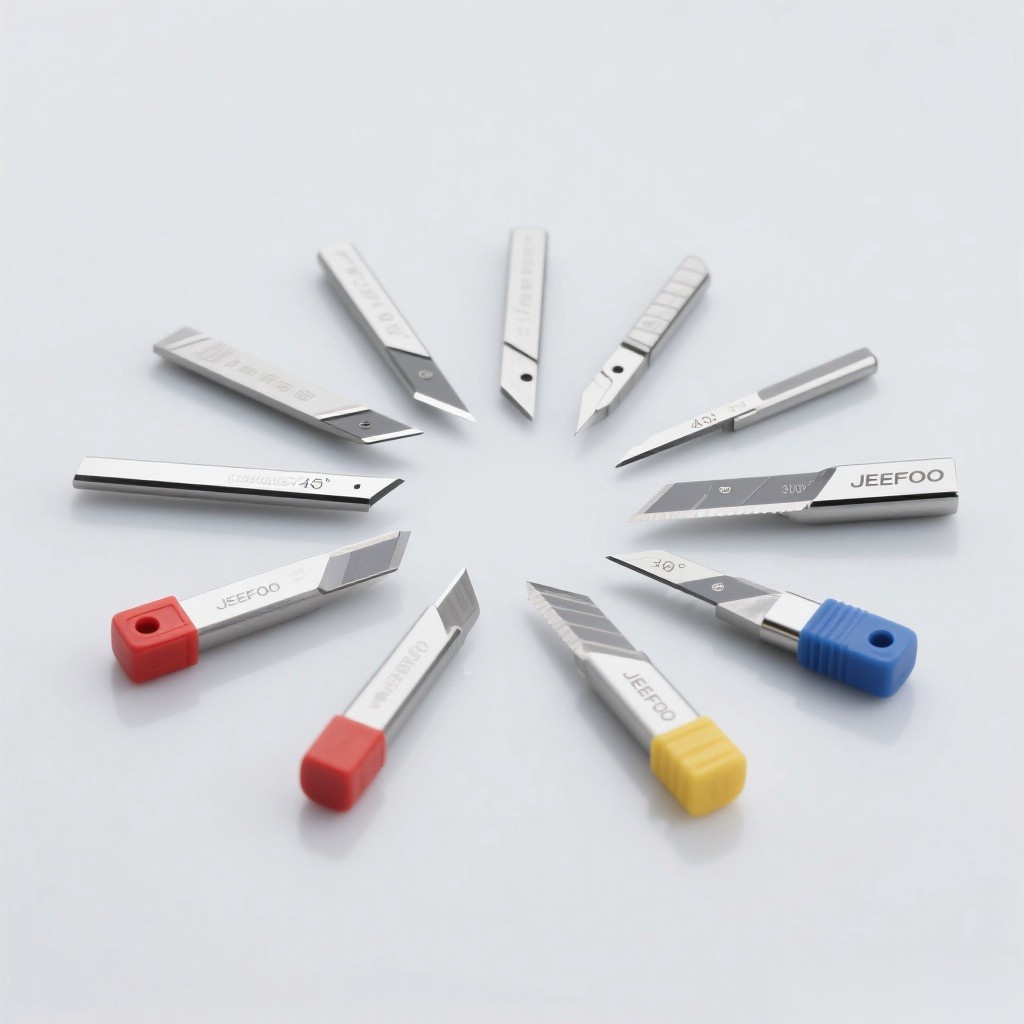
CNC Milling Cutter Types Comparison
| Type | Primary use | Selection focus |
|---|---|---|
| Face mill | Flat open surfaces | Diameter and insert geometry |
| Die or mold mill | 3D contours and cavities | Nose shape and reach |
| Keyway cutter | Keyways and narrow slots | Width and rigidity |
| Form cutter | Repeated profiles | Exact edge form |
1. Face Milling Cutters
A face mill carries primary cutting edges around its circumference and secondary edges near the face. Indexable insert designs are common for production because worn edges can be replaced. Choose diameter, lead angle, pitch, insert grade and spindle capability for the material and surface width.
2. Die And Mold Milling Cutters
Die milling cutters developed from end-mill geometry for curved cavities and complex surfaces. Common forms include tapered end mills, cylindrical ball-nose cutters and tapered ball-nose cutters. Straight, flat or taper shanks may be available. Ball and peripheral edges support radial and axial toolpaths.
3. Keyway Milling Cutters
Keyway cutters machine slots that locate keys between shafts and hubs. Width accuracy, tool runout, rigidity and entry strategy affect fit. A short cutter and stable holder reduce deflection; chip evacuation prevents recutting inside the narrow groove.
4. Form Milling Cutters
A form cutter has a cutting edge shaped to match the required workpiece profile. It can produce radii, grooves, gears or custom contours consistently. Inspect the form carefully because edge wear changes the transferred geometry.
How To Choose The Right Cutter
- Define the surface, slot or profile to be produced.
- Match diameter, width, radius and reach to the drawing.
- Confirm tool material, coating and insert grade.
- Check spindle interface, power, speed and coolant supply.
- Minimize runout and overhang before setting cutting data.
Follow the machine and cutter manuals plus OSHA machine-guarding guidance. For selection support, visit Guangzhou JeeFoo Tools.
Frequently Asked Questions
Which cutter is best for a flat surface?
A face mill is normally the productive choice for broad open surfaces.
Which cutter machines 3D mold surfaces?
Ball-nose, tapered ball-nose and corner-radius die mills are common choices.
Why use a form cutter?
It reproduces a defined profile efficiently when the same geometry is required repeatedly.
Bottom line: select CNC milling cutter types by application first, then verify geometry, material, rigidity, cutting data and machine limits.


发表回复
要发表评论,您必须先登录。