
CNC milling cutters are classified by operation and geometry into face mills, square end mills, ball-nose mills, corner-radius mills, roughing mills, slot drills, T-slot cutters, dovetail cutters, chamfer mills, and thread mills. This CNC Milling Cutter Types Guide explains ten common tools, their best uses, and the selection checks that prevent poor fit, chatter, and premature wear.
What is a CNC milling cutter?
Table of Contents
A CNC milling cutter is a rotating tool whose edges intermittently remove workpiece material. Solid tools carry integral cutting edges; indexable cutters use replaceable inserts. The correct type depends on feature geometry, work material, machine rigidity, holder, engagement, chip evacuation, and finish.
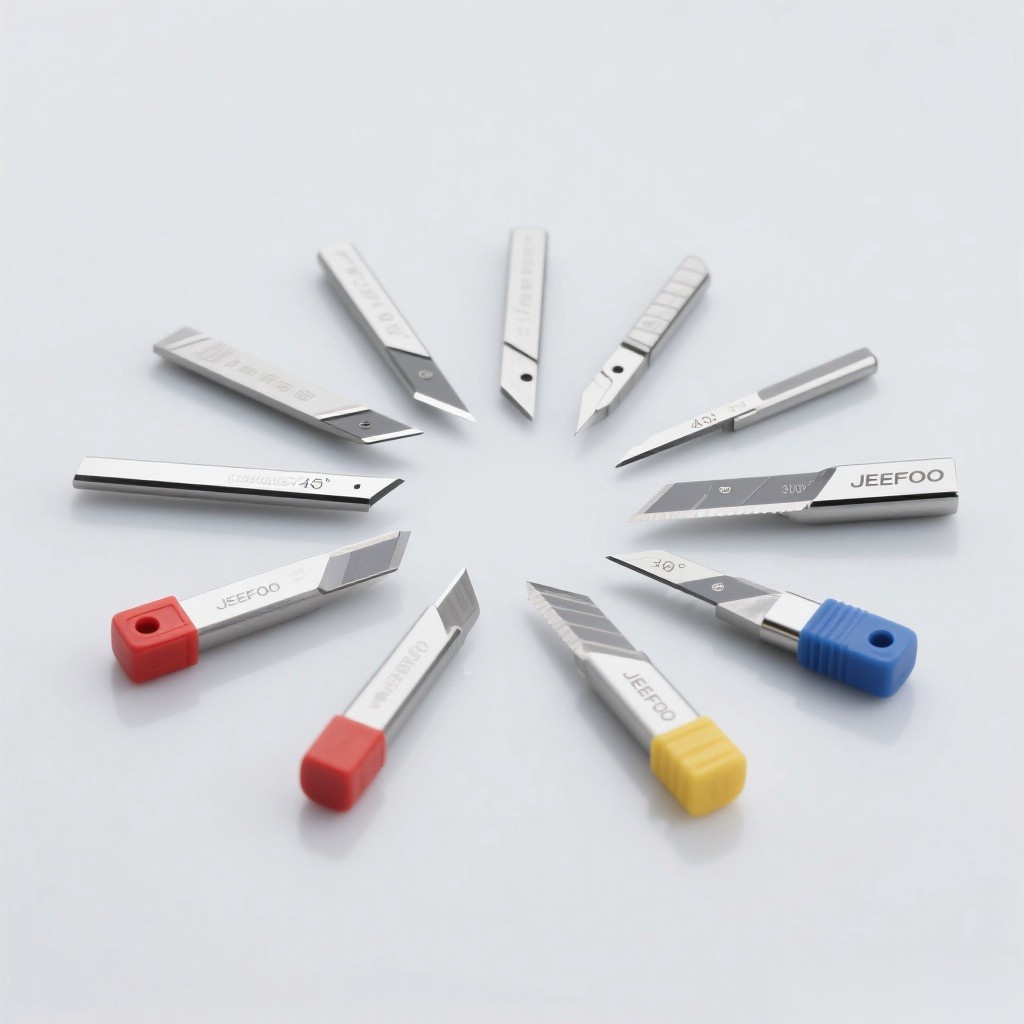
CNC Milling Cutter Types Guide: comparison
| Type | Primary use | Selection priority |
|---|---|---|
| Face mill | Large flat surfaces | Diameter, lead angle, inserts |
| Square end mill | Slots, pockets, shoulders | Center cutting and flute length |
| Ball-nose mill | 3D contours | Effective diameter and step-over |
| Corner-radius mill | Strong edges and fillets | Radius and wall clearance |
| Roughing mill | High stock removal | Chipbreaker and allowance |
| Slot drill | Full-width slots | Chip evacuation |
| T-slot cutter | Undercut T features | Neck clearance and slot width |
| Dovetail cutter | Angled undercuts | Included angle |
| Chamfer mill | Chamfers and deburring | Angle and tip clearance |
| Thread mill | Internal or external threads | Pitch, diameter, interpolation |
1. Face mills
Face mills use multiple edges across a broad diameter for efficient planar machining. Verify spindle power, insert grade, cutter lead angle, workholding, and approach clearance.
2. Square end mills and slot drills
Square end mills machine floors, walls, pockets, and profiles. For axial entry, confirm center-cutting geometry. The CNC Milling Cutter Types Guide favors fewer flutes when full-width chip evacuation is critical and more flutes for lighter engagement and finishing.
3. Ball-nose and corner-radius mills
Ball-nose tools follow freeform surfaces but cut at a lower effective speed near the tip. Corner-radius tools strengthen corners and leave a controlled fillet. Choose step-over, reach, and allowance from the required cusp height and finish.
4. Roughing cutters
Serrated or chipbreaker geometry divides chips and can reduce cutting force during heavy stock removal. Leave a predictable finishing allowance and use a separate finishing tool when tolerance or surface quality demands it.
5. T-slot and dovetail cutters
These tools machine undercuts after an access slot exists. Verify head diameter, neck diameter, width, angle, reach, and holder clearance. Use conservative engagement because the neck can be less rigid than the cutting head.
6. Chamfer and thread mills
Chamfer mills create edges, countersinks, and deburring features. Thread mills interpolate threads and can machine multiple diameters within their pitch and reach limits. Confirm cutter compensation, handedness, pitch, and pre-hole size.
How to choose among cutter types
- Define the feature and operation before selecting diameter.
- Match carbide grade, coating, rake, and edge preparation to the material.
- Use the shortest reach and flute length that clear the fixture.
- Choose flute count from chip space and desired productivity.
- Verify holder, shank, spindle RPM, power, torque, and runout.
- Calculate feed from chip load, flute count, and spindle speed.
- Inspect tool wear, sound, chips, load, finish, and dimensions.
The CNC Milling Cutter Types Guide treats manufacturer cutting data as a starting range. Adjust for radial and axial engagement, overhang, coolant, machine rigidity, and workholding instead of reducing feed blindly until the edge rubs.
Material-based starting points
| Material | Useful cutter traits | Main risk |
|---|---|---|
| Aluminum | Sharp polished flutes, large chip space | Built-up edge |
| Steel | Wear-resistant carbide and coating | Heat and flank wear |
| Stainless steel | Positive geometry, tough grade | Work hardening |
| Cast iron | Abrasion-resistant edge | Abrasive wear |
| Hardened steel | Rigid setup, suitable coated carbide | Chipping and heat |
Common mistakes
- Choosing by diameter instead of feature geometry.
- Using excessive overhang or flute length.
- Ignoring chip evacuation in slots and pockets.
- Using a ball nose where a corner-radius tool would finish faster.
- Running an undercut cutter without neck and holder clearance.
- Ignoring runout, maximum RPM, or insert compatibility.
Follow the machine maker’s setup and guarding procedure and review authoritative OSHA machine-guarding guidance. For related product support, visit Guangzhou JeeFoo Tools.
Frequently asked questions
What is the most common CNC milling cutter?
The square end mill is highly versatile for slots, pockets, walls, and profiles, but it is not optimal for every feature.
Which cutter is best for 3D surfaces?
Ball-nose and corner-radius tools are common. Select step-over and effective diameter from the contour and finish requirement.
How many flutes should a cutter have?
Use fewer flutes when chip space is critical and more flutes when engagement is lighter and productivity benefits from extra edges.
Why does a milling cutter chatter?
Common causes include excess reach, weak workholding, runout, worn edges, unsuitable speed or engagement, and insufficient rigidity.
Bottom line: use this CNC Milling Cutter Types Guide to match tool type to feature first, then verify material, geometry, reach, flute count, holder, cutting data, and safety.


发表回复
要发表评论,您必须先登录。