
Choose a wood carving knife by carving task, blade profile, bevel, steel, handle control, grain direction, reach, and sharpening requirements. This Wood Carving Knife Guide compares eight practical tool types and explains how to select, use, maintain, and store them safely.
What is a wood carving knife?
Table of Contents
A wood carving knife is a hand cutting tool designed to remove controlled chips and form details, hollows, curves, stop cuts, and smooth transitions in wood. Unlike a general utility knife, its blade geometry and handle support precise cuts along or across the grain.
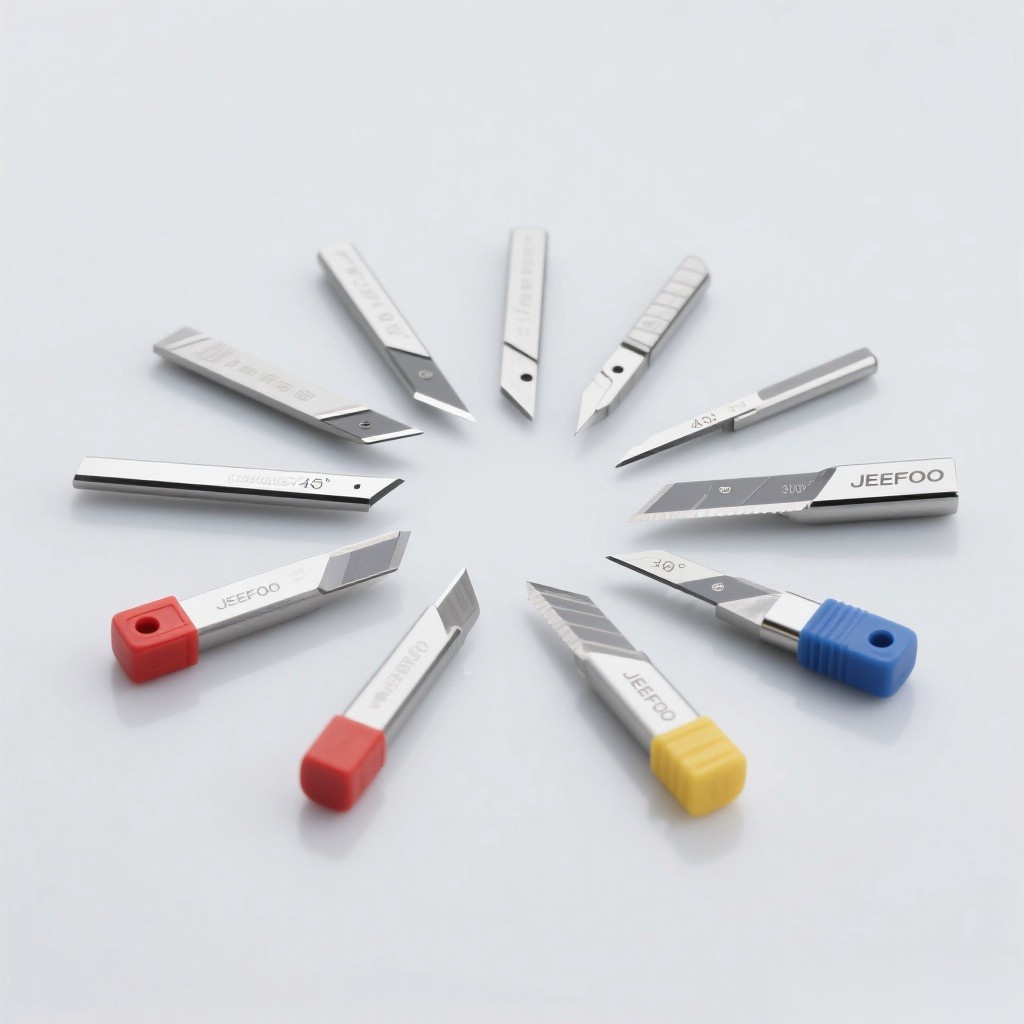
Wood Carving Knife Guide: quick comparison
| Knife type | Best use | Key feature |
|---|---|---|
| Detail knife | Fine lines and small features | Short narrow point |
| Sloyd knife | General shaping and green wood | Longer versatile blade |
| Chip-carving knife | Geometric patterns | Precise angled cuts |
| Hook knife | Spoons and bowls | Curved cutting edge |
| Gouge | Grooves and hollows | Defined sweep |
| V-tool | Channels and outlines | V-shaped edge |
| Skew knife | Clean corners and slicing | Angled edge |
| Bent knife | Deep recesses | Added handle clearance |
1. Match the knife to the carving task
The Wood Carving Knife Guide starts with the intended cut. Use a detail knife for tight features, a sloyd knife for broad shaping, a chip knife for repeated geometric cuts, and a hook knife or gouge for concave surfaces. One knife rarely performs every operation efficiently.
2. Choose blade profile and length
Short blades offer control near the hand and workpiece. Longer blades increase slicing reach but require more clearance and discipline. A narrow point enters tight corners; a broader belly supports smooth slicing. Curved and bent profiles reach hollows that a straight blade cannot.
3. Understand bevel geometry
Single-bevel, double-bevel, outside-bevel, and inside-bevel tools track differently. The flat or bevel side influences how the blade follows a surface. Preserve the maker’s bevel angle and orientation unless an approved sharpening specification says otherwise.
4. Compare carving steels
| Steel | Advantage | Care point |
|---|---|---|
| High-carbon steel | Keen edge and easy sharpening | Protect from corrosion |
| Stainless steel | Corrosion resistance | Edge behavior varies by grade |
| Tool or alloy steel | Toughness and wear balance | Follow maker’s heat-treatment limits |
| Laminated steel | Hard edge with supportive body | Maintain the original geometry |
The Wood Carving Knife Guide favors a fine, stable edge over hardness alone. A very hard but brittle edge can chip in knots, end grain, or twisting cuts.
5. Select a controllable handle
The handle should permit a secure pinch, thumb, or palm grip without forcing the wrist. Check size, texture, balance, ferrule condition, and clearance. A hook knife may require left- or right-hand orientation. Avoid handles that are cracked, loose, or polished to a slippery surface.
6. Read grain direction
Carve with the grain where possible and take thin, controlled cuts. When fibers lift or tear, change direction, reduce the cut, or use a sharper edge. Secure the workpiece and keep the cutting path away from both hands and the body.
7. Sharpen and strop correctly
- Inspect for chips, rolls, and uneven bevels.
- Use abrasives appropriate to the steel and damage level.
- Maintain a consistent factory bevel.
- Remove the burr without rounding the edge.
- Strop lightly for maintenance rather than waiting for severe dullness.
- Protect the edge from impact during storage.
The Wood Carving Knife Guide recommends professional repair for damaged specialty profiles when accurate sharpening equipment is unavailable.
8. Use safe carving practice
Keep the free hand behind the edge, use a bench hook, vise, or carving support where appropriate, and make controlled cuts. Wear task-appropriate protection and store tools with edge guards. For powered carving machines, follow the machine manual and authoritative OSHA machine-guarding guidance.
Common mistakes
- Using a utility knife for specialized carving geometry.
- Cutting toward the supporting hand.
- Forcing a dull edge through difficult grain.
- Changing bevel angles during sharpening.
- Using a long blade when a short detail knife offers better control.
- Leaving carbon-steel blades wet or unprotected.
For related cutting-tool resources and product support, visit Guangzhou JeeFoo Tools.
Frequently asked questions
What is the best knife for a beginner?
A short, well-made detail or general carving knife with a secure handle is a practical starting point. Add gouges or hook knives when the project requires hollows or curved surfaces.
What is a sloyd knife used for?
It is a versatile Scandinavian-style carving knife used for shaping, slicing, green-wood work, and many general cuts.
How often should a carving knife be sharpened?
Strop or maintain it when cutting effort rises or the surface begins to tear. Sharpen only as much as needed to restore the original geometry.
Can a carving knife cut against the grain?
Sometimes, but use lighter cuts and expect a higher risk of tear-out. Reorient the work or approach when possible.
Bottom line: use this Wood Carving Knife Guide to match blade type, profile, bevel, steel, handle, grain, maintenance, and safety to the project.


发表回复
要发表评论,您必须先登录。