
A flat carving knife has a straight, level cutting edge used to pare, smooth, define lines, remove background material, and create crisp planes in wood. This Flat Carving Knife Guide explains the tool’s best uses, selection criteria, safe technique, and maintenance for predictable hand-carving results.
What is a flat carving knife?
This Flat Carving Knife Guide defines a straight-edged tool whose cutting edge lies in one plane. Unlike a gouge, it does not have a curved sweep. Depending on width and bevel geometry, the same tool may be called a flat knife, flat chisel, straight chisel, or carving chisel. It is designed to produce flat surfaces, sharp boundaries, and controlled slicing cuts.
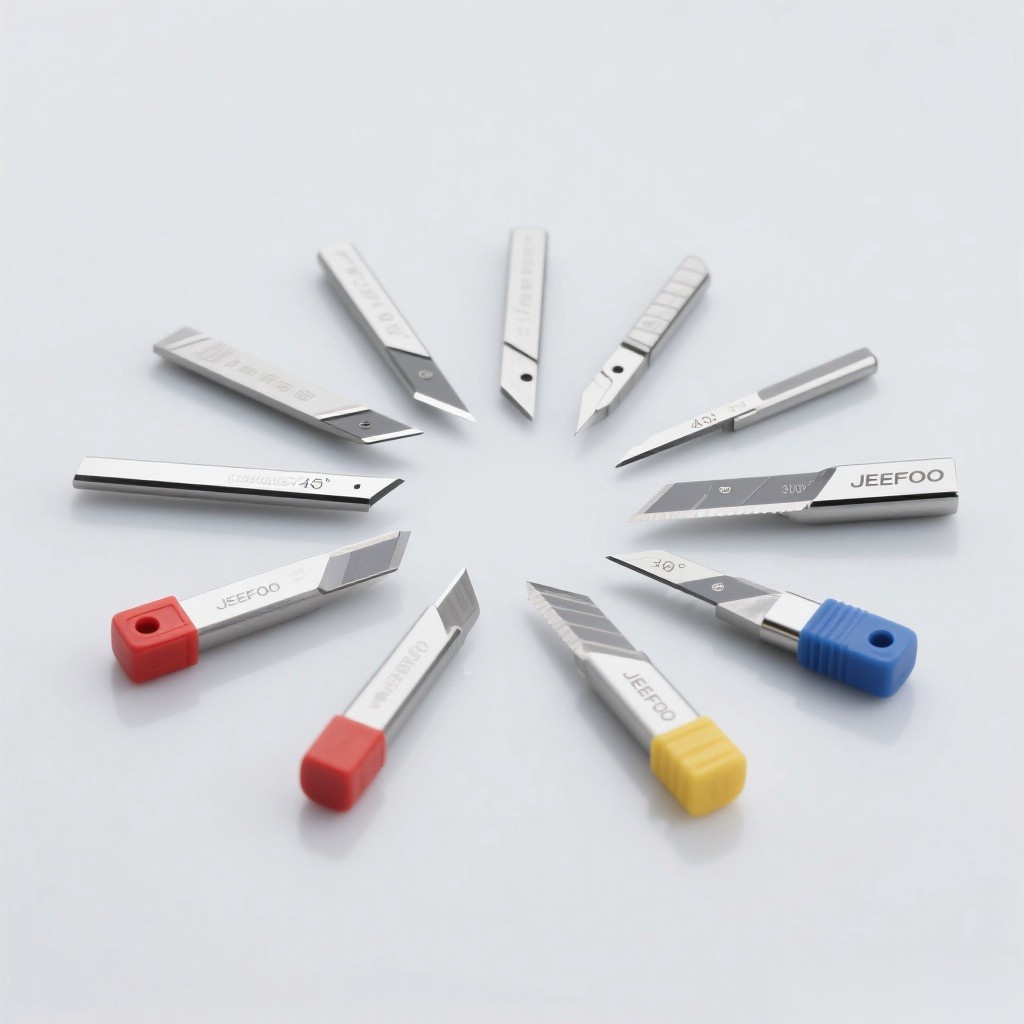
Flat Carving Knife Guide: 9 essential uses
- Leveling high spots: pare raised fibers until adjacent surfaces meet cleanly.
- Smoothing planes: use shallow slicing cuts to leave a controlled, faceted finish.
- Defining outlines: place the corner precisely to establish a sharp design boundary.
- Background removal: lower broad areas around relief-carved subjects in small stages.
- Creating facets: form intentional planes that catch light and communicate volume.
- Cutting stop lines: make a shallow barrier before removing waste toward it.
- Cleaning intersections: use a corner to remove fibers where two cuts meet.
- Trimming joints: pare small shoulders, recesses, and fitting surfaces.
- Texture work: vary cut direction and width for energetic, brushstroke-like marks.
How does it differ from a gouge and V-tool?
| Tool | Edge profile | Best result |
|---|---|---|
| Flat carving knife | Straight | Planes, paring, borders, and background removal |
| Gouge | Curved sweep | Hollows, channels, rounded forms, and scoops |
| V-tool | V-shaped | Decorative lines, lettering, and narrow separation cuts |
Choose the right width and bevel
Use this Flat Carving Knife Guide to match width to the feature, not the overall workpiece. Narrow edges improve access and corner control; medium widths handle general relief carving; wide edges level broad areas efficiently. A single-bevel edge registers against a surface and is useful for precise paring. A double-bevel edge enters from either direction and suits general carving. Thin edges slice easily but need lighter cuts, while thicker edges tolerate heavier work.
Use the tool with control
- Read the grain and cut with or diagonally across it when possible.
- Anchor the work securely before bringing the edge to the surface.
- Keep both hands behind the cutting edge and use a controlled slicing motion.
- Remove thin layers rather than forcing one deep cut.
- Establish stop cuts before approaching a fragile boundary.
- Reverse direction when fibers begin to lift or tear.
For powered equipment and workshop controls, follow the OSHA machine-guarding guidance. For production-oriented cutting solutions, review JeeFoo precision cutting tools.
Avoid common carving defects
- Torn grain: reverse the cutting direction, reduce depth, and sharpen the edge.
- Rounded boundaries: make a stop cut and keep the bevel angle consistent.
- Chatter marks: shorten the stroke, support the tool, and take thinner slices.
- Edge digging in: lower the handle and use a skewed slicing approach.
- Burnished but uncut fibers: hone to a clean apex instead of increasing force.
Sharpening and maintenance
Flatten the back near the edge, maintain the established bevel angle, and remove the burr on a fine stone or strop. Inspect for chips before every session. Store the knife with an edge guard, keep steel dry, and avoid using a fine carving edge as a pry bar. A sharp edge requires less force and gives the carver more control.
Selection checklist
- Feature width and access
- Wood hardness and grain behavior
- Single- or double-bevel preference
- Handle size, grip, and balance
- Steel hardness and ease of sharpening
- Required finish: smooth, faceted, or textured
Frequently asked questions
Can a flat carving knife replace a gouge?
No. It excels at planes and straight boundaries, while a gouge is better for hollows and curved channels. Most relief-carving kits benefit from both.
Should the bevel face up or down?
Bevel-up cuts are useful for general slicing and lifting waste. Bevel-down positioning can help the flat back register against a surface during controlled paring.
Why does the knife tear the wood?
The usual causes are cutting against the grain, taking too deep a cut, or using a dull edge. Reverse direction, reduce depth, and hone the blade.

发表回复
要发表评论,您必须先登录。