
A carbide drill bit is the right choice when high hardness, heat resistance, dimensional accuracy, and long tool life matter more than toughness. This Carbide Drill Bit Selection Guide explains how to match grade, geometry, coating, diameter, coolant, and cutting data to metal, composite, PCB, and other demanding materials.
What is a carbide drill bit?
A carbide drill bit uses cemented tungsten carbide at the cutting edge or throughout the solid tool. Compared with high-speed steel, carbide maintains hardness at higher temperature and can cut faster with less wear. It is also more brittle, so rigid workholding, accurate alignment, and controlled entry are essential.
Carbide Drill Bit Selection Guide: 9 expert tips
- Match the substrate: choose a carbide grade that balances wear resistance and toughness for the work material.
- Select the diameter: account for hole tolerance, runout, coating thickness, and any finishing allowance.
- Choose point geometry: split points reduce walking, while specialized angles improve entry in particular alloys or laminates.
- Check flute length: use only the reach required because excessive length reduces rigidity.
- Plan chip evacuation: match flute form, pecking strategy, and coolant delivery to hole depth.
- Use the right coating: select coating according to heat, abrasion, adhesion, and coolant conditions.
- Control runout: clean the collet, holder, spindle taper, and tool shank before setup.
- Set cutting data: calculate spindle speed and feed from tool diameter, cutting speed, and feed per revolution.
- Verify with a test hole: inspect size, roundness, burrs, chips, sound, and tool wear before production.
Solid carbide versus carbide-tipped drills
Solid carbide drills provide maximum rigidity, accuracy, and speed in stable CNC setups. Carbide-tipped drills place carbide at the cutting zone while retaining a tougher steel body, which can be useful for larger diameters or less rigid conditions. Indexable drills offer replaceable inserts for high-volume, larger-hole production. Choose according to diameter, machine power, tolerance, and cost per hole.
Choose geometry for the material
- Steel: use a stable point and wear-resistant coating with reliable coolant delivery.
- Stainless steel: prioritize sharp geometry, positive cutting action, and steady feed to avoid work hardening.
- Aluminum: polished flutes and a nonferrous geometry help prevent built-up edge.
- Cast iron: abrasion resistance and controlled dust or chip management are important.
- Composites and PCB materials: use sharp, application-specific geometry to limit delamination and fiber pullout.
Calculate speed and feed
For metric calculations, spindle speed can be estimated as RPM = (cutting speed × 1000) ÷ (π × drill diameter). Feed rate equals RPM × feed per revolution. Start with the tool supplier’s data, then adjust for machine rigidity, holder runout, hole depth, coolant, and material condition. Avoid dwelling because it rubs the edge and concentrates heat.
Coolant and chip evacuation
Through-tool coolant is valuable for deep holes because it cools the cutting edge and pushes chips out of the flutes. For shallow holes, external coolant or an approved dry process may be adequate. Never alternate unpredictably between wet and dry cutting, because thermal shock can damage carbide. Use peck cycles only when the application requires them.
Prevent breakage and poor hole quality
- Chipped corners: reduce runout, check entry stability, and verify feed.
- Oversize holes: inspect spindle, holder, tool runout, and workpiece movement.
- Built-up edge: improve lubrication, geometry, speed, or flute polish.
- Packed flutes: improve coolant flow, reduce unsupported depth, or revise the cycle.
- Rapid flank wear: confirm grade, coating, cutting speed, and material hardness.
Inspection and safety checklist
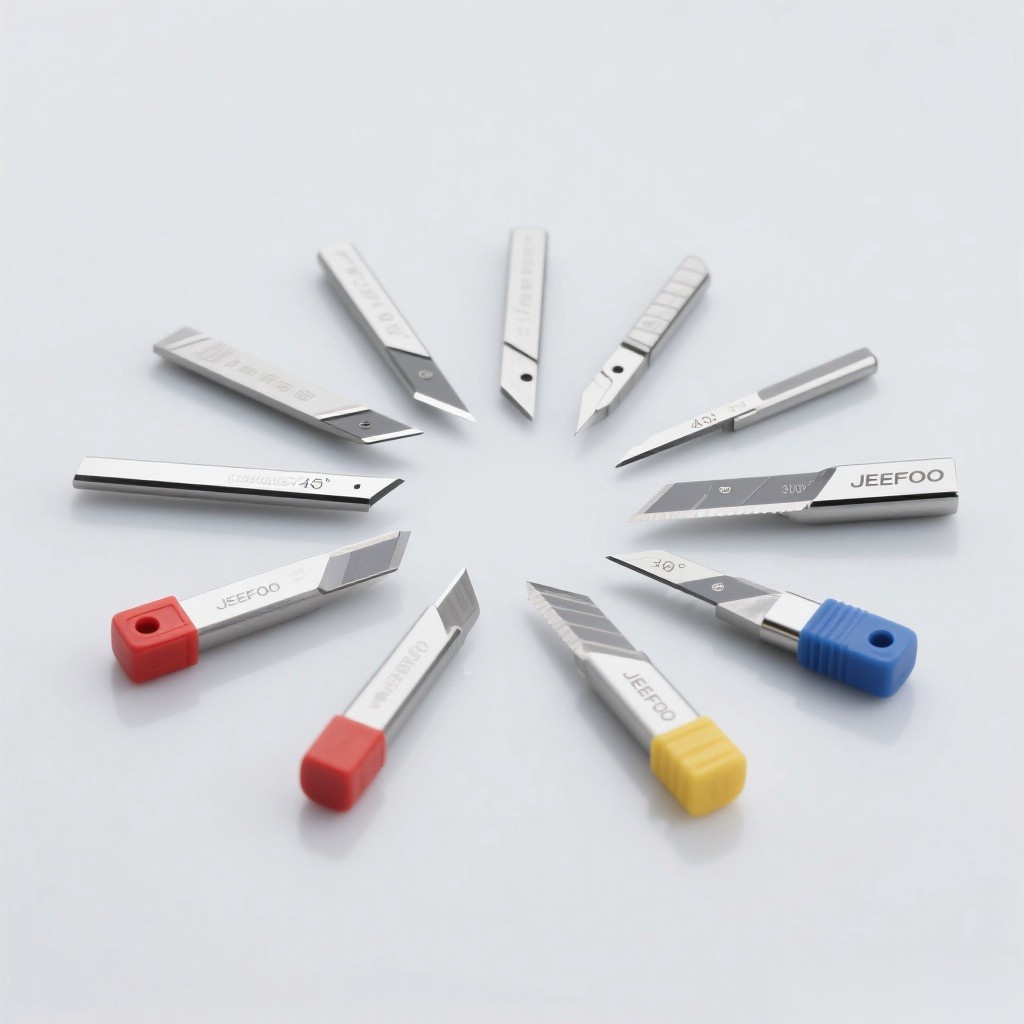
Measure runout close to the cutting edge, verify tool clamping, and inspect the first hole with suitable gauges. Enclose the cutting zone, control sharp chips, and wear required eye protection. Follow the machine and tool manufacturer’s instructions. For general drilling-machine safety principles, consult the OSHA machine guarding guidance. Explore JeeFoo precision cutting tools for compatible tooling options.
Frequently asked questions
Can carbide drill bits be used in a hand drill?
They can be used only when the specific tool permits it, but solid carbide is brittle and performs best in a rigid, accurately aligned machine. A carbide-tipped design may tolerate less stable conditions better.
When is carbide better than high-speed steel?
Carbide is preferable for higher speed, abrasive materials, tight repeatability, and longer production runs. High-speed steel is often more forgiving under vibration, interrupted contact, or manual use.
Why does a carbide drill bit break?
Common causes include excessive runout, poor clamping, misalignment, chip packing, incorrect feed, unstable entry, thermal shock, and using too much unsupported tool length.


发表回复
要发表评论,您必须先登录。