
End mills can face, shoulder, slot, pocket, profile, contour, ramp, chamfer, engrave, and finish when their geometry and toolpath match the job. A flat end mill is versatile for floors and shoulders, ball nose tools excel on 3D surfaces, and specialized cutters handle roughing, chamfers, or engraving. This End Mill Applications Guide explains nine common uses.
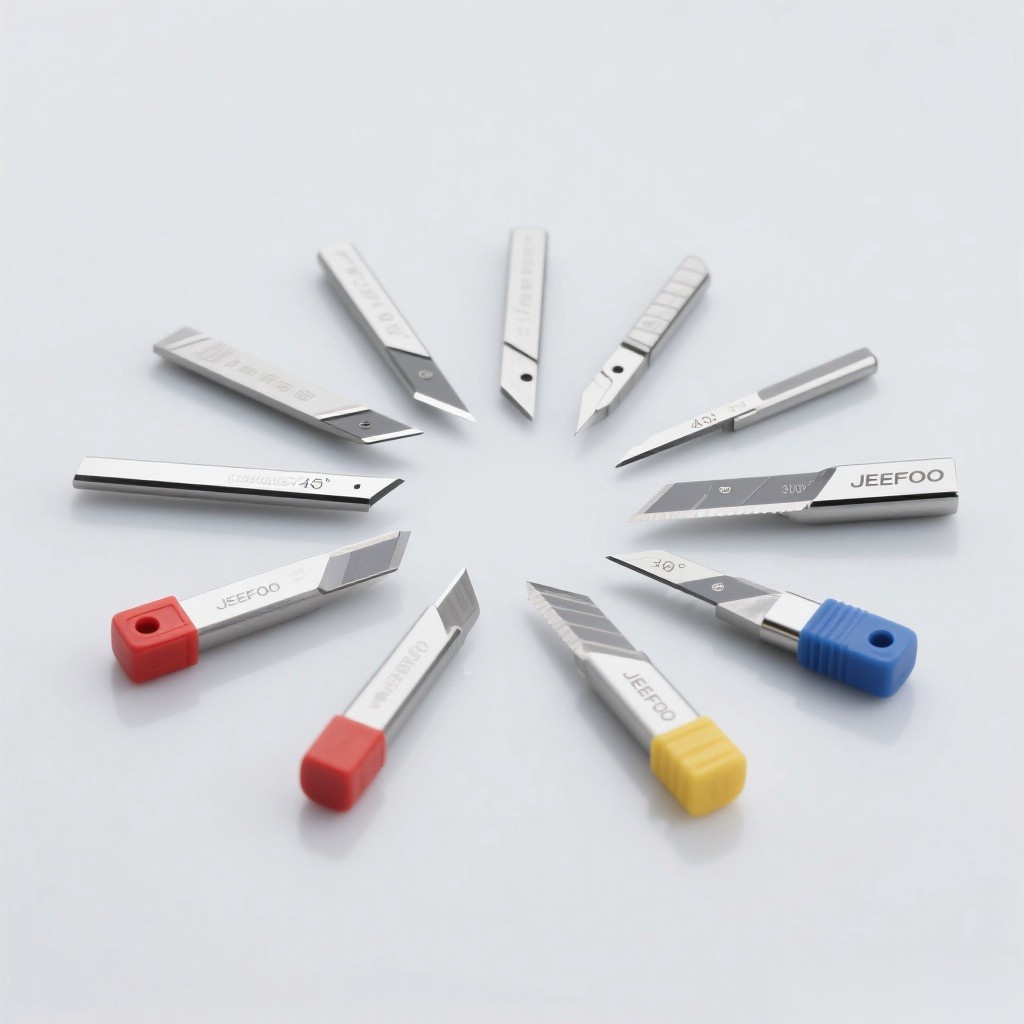
End Mill Applications Guide: quick selection
- Flat end mill: square shoulders, flat pocket floors, slots, profiles, and general milling.
- Ball nose end mill: 3D contours, molds, dies, sculpted surfaces, and smooth finishing paths.
- Corner-radius end mill: stronger corners and radiused floor-to-wall transitions.
- Roughing end mill: high-volume material removal with chip-breaking serrations.
- Chamfer or engraving mill: bevels, deburring, marking, fine lines, and small features.
- Single-flute end mill: large chip space for many plastics, aluminum, wood, and routing operations.
1. Face milling small surfaces
An end mill can face small workpieces, bosses, and local pads when a dedicated face mill is too large. Use a suitable diameter and toolpath overlap, keep the tool rigid, and verify that the cutter can reach the full surface. For broad faces, a face mill may provide better efficiency and insert economy.
2. Mill shoulders and outside profiles
Flat and corner-radius end mills create external contours and 90-degree or radiused shoulders. Choose flute length only as long as required, minimize overhang, and use multiple axial levels for deep walls. Climb milling often improves finish on rigid CNC machines, subject to machine and process requirements.
3. Cut full-width slots
Slotting loads both sides of the cutter and leaves limited chip space. Reduce feed or engagement from side-milling values, provide strong evacuation, and avoid recutting. Single- or two-flute tools may help in soft materials, while tougher multi-flute geometry can suit steels when chip control is adequate.
4. Produce pockets and cavities
The End Mill Applications Guide recommends helical ramping, pre-drilling, or an approved center-cutting plunge strategy to enter a pocket. Adaptive or constant-engagement toolpaths can stabilize load. Leave controlled stock for a separate wall and floor finishing pass when tolerance and finish matter.
5. Machine 3D contours
Ball nose and tapered ball nose end mills follow freeform surfaces in molds, dies, prototypes, reliefs, and sculptures. Surface quality depends on effective cutting diameter, stepdown, stepover, slope, runout, tool deflection, and toolpath direction. Use simulation to avoid holder or shank collisions.
6. Create chamfers and deburr edges
Chamfer mills and pointed end mills can break edges, countersink, deburr, or create a specified bevel. Confirm included angle, tip diameter, depth reference, and cutter runout. A small axial error can significantly change chamfer width, especially with steep angles.
7. Engrave text and fine details
V-bits, tapered engraving tools, ball nose tools, and micro end mills create text, logos, serial marks, and fine reliefs. Select tip diameter and angle for line width and depth. Use minimal runout, shallow passes, stable fixturing, and conservative entry to protect the delicate tip.
8. Ramp, helix, and interpolate holes
Center-cutting end mills may ramp or helix into material, and circular interpolation can produce bores larger than the cutter. Verify maximum ramp angle, axial capability, chip evacuation, and machine interpolation accuracy. For tight hole tolerances, leave stock for finishing and measure the actual bore.
9. Rough and finish efficiently
Separate roughing and finishing when production volume justifies it. A rougher emphasizes chip breaking and edge strength; a finisher uses sharp, stable geometry and controlled stock. Record tool life by operation so a worn rougher does not compromise the finishing allowance.
End Mill Applications Guide setup checklist
- Define feature, material, tolerance, and finish.
- Select end shape, flute count, diameter, and corner geometry.
- Use only the required flute length and minimum overhang.
- Verify holder, runout, workholding, and collision clearance.
- Set speed, feed per tooth, engagement, and entry from supplier data.
- Plan chip, dust, coolant, or air control.
- Inspect wear, dimensions, burr, and finish.
- Review JeeFoo end-mill resources for application-specific options.
Common problems and corrections
- Chatter: shorten overhang, improve clamping, change speed, or reduce engagement.
- Poor floor finish: check runout, tool corner, axial stock, and step-over pattern.
- Chip recutting: improve evacuation and adjust flute count or toolpath.
- Wall taper: reduce deflection, use step-down passes, and finish with controlled stock.
- Edge chipping: review entry, toughness, runout, vibration, and load.
Safe use and maintenance
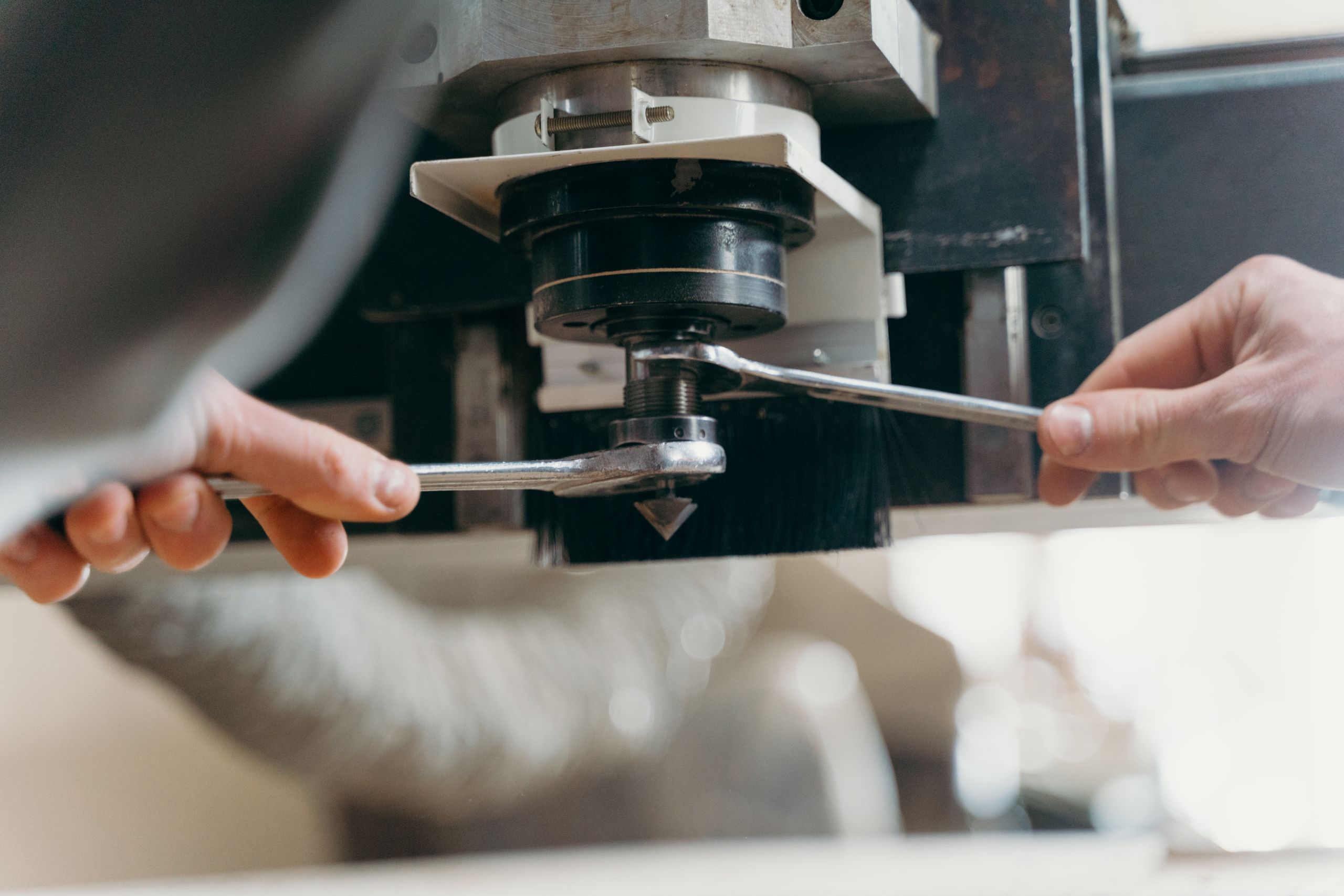
Inspect cutters and holders before use, keep guards and enclosures in place, and clear chips only after motion stops with approved tools. Isolate machine energy before tool or spindle service. Follow the machine procedure and the OSHA hazardous-energy guidance.
Frequently asked questions
Can every end mill plunge straight down?
No. Only center-cutting geometry designed for axial cutting should plunge, and the allowed feed and depth may be limited. Ramping or helical entry is often smoother.
Which end mill is best for engraving?
It depends on line width, depth, material, and detail. V-bits suit variable-width lines, micro end mills create flat narrow channels, and ball nose tools suit 3D reliefs.
Can one end mill rough and finish?
Yes for some low-volume work, but dedicated roughing and finishing tools often improve cycle time, stability, surface quality, and predictable tool life.
Conclusion
Use the End Mill Applications Guide to connect each feature with the correct cutter shape, flute count, reach, holder, entry, and toolpath. An end mill is versatile, but reliable results come from application-specific geometry and controlled cutting conditions.

发表回复
要发表评论,您必须先登录。