
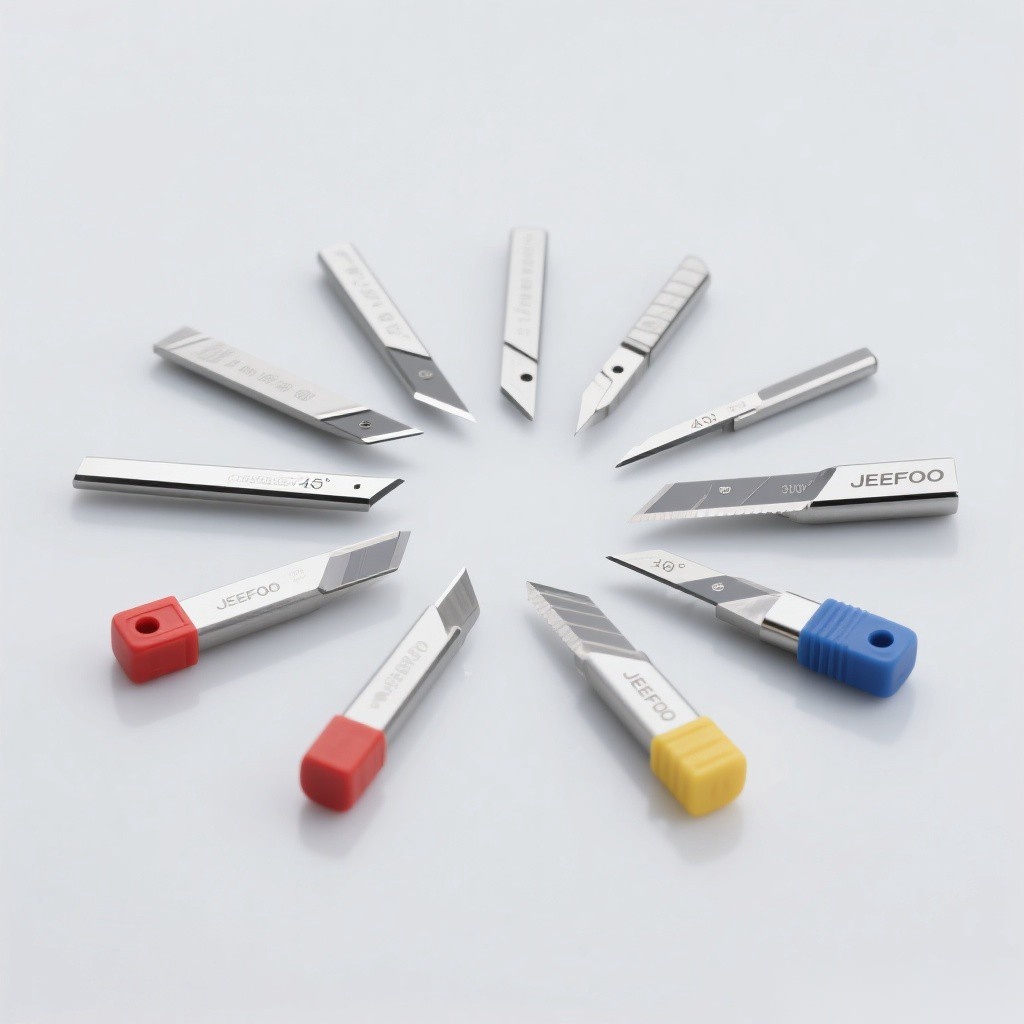
Choose a round-card shoe knife when the machine holder uses a circular locating interface and smooth rotational alignment is the priority; choose a square-card shoe knife when the holder uses flat faces for fixed orientation and anti-rotation positioning. Neither design is universally better. This Round vs Square Shoe Knife Guide compares compatibility, accuracy, materials, maintenance, and cost.
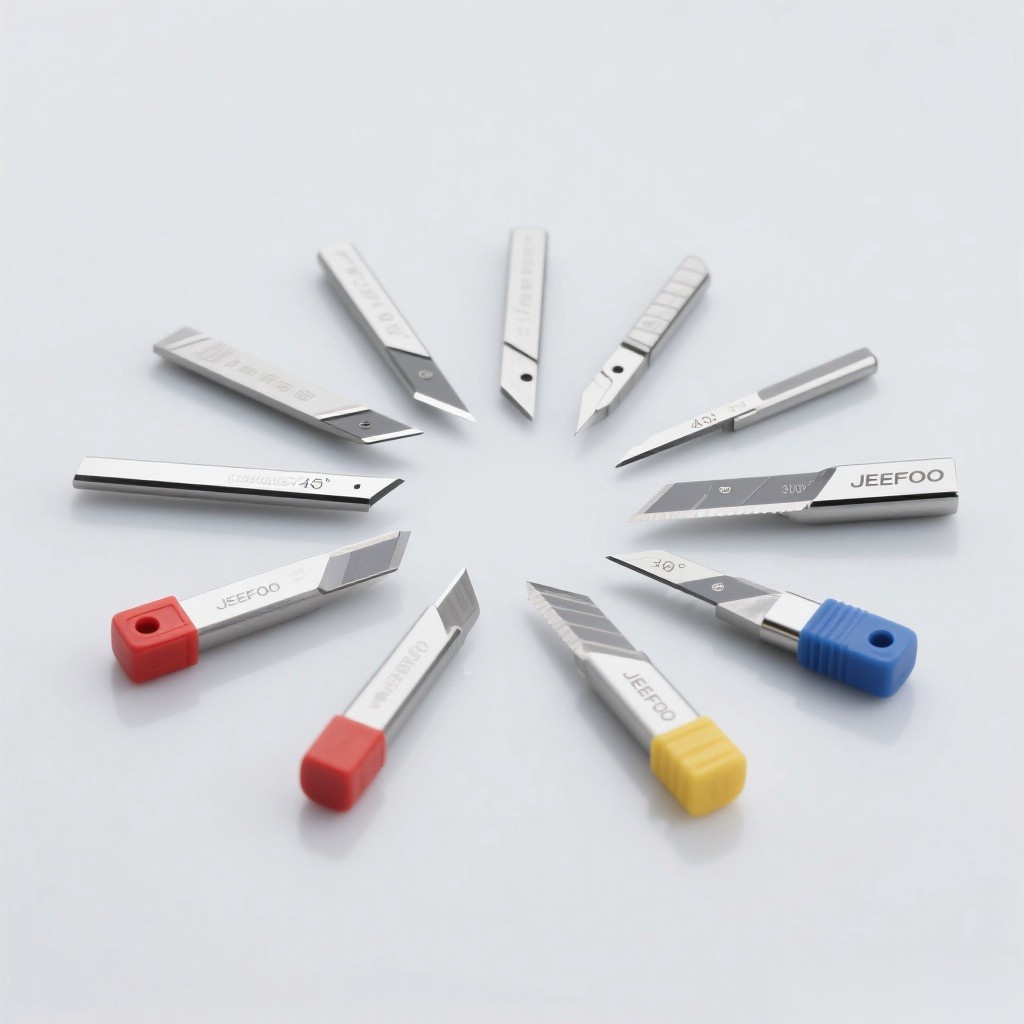
Round vs Square Shoe Knife Guide: quick comparison
- Round-card interface: circular mounting geometry, easy centering, and suitability for holders designed around radial location.
- Square-card interface: flat-sided location, positive orientation, and resistance to unwanted rotation in a matching holder.
- Critical rule: the card shape must match the machine, holder, clamp, and specified dimensions.
- Cut quality: edge geometry, blade material, offset, exposure, force, speed, and workholding matter more than card shape alone.
- Best choice: the verified OEM-compatible interface with the correct blade profile for the shoe material.
1. Confirm what “card” means in the machine
In shoe-cutting equipment, the card or mounting section locates the knife in the holder. Its outline, thickness, hole pattern, shoulder, and orientation determine fit. Terminology differs among manufacturers, so use the machine manual, holder drawing, or an approved sample rather than ordering from a name alone.
2. Compare round-card positioning
A circular interface can center uniformly and may allow convenient insertion in a compatible holder. The holder must provide the required orientation or rotation control. Inspect the diameter, concentricity, shoulder contact, and clamping surface; a worn or undersized interface can introduce movement and inaccurate contours.
3. Compare square-card positioning
Flat faces can establish a fixed angular position and resist rotation when supported by a matching pocket or clamp. Verify width across flats, corner radius, thickness, squareness, and seating depth. Burrs or debris on a flat can tilt the knife even when the nominal size appears correct.
4. Match the knife to footwear materials
The Round vs Square Shoe Knife Guide separates mounting choice from edge choice. Leather, synthetic leather, rubber, EVA foam, fabric, felt, laminated uppers, and reinforcement sheets have different toughness, abrasiveness, compressibility, and adhesive content. Select point angle, bevel, thickness, edge finish, and blade material for the actual stack.
5. Evaluate blade material and coating
Tool steel offers toughness and economical sharpening, high-speed steel improves wear and hot hardness, and carbide can provide strong wear resistance in stable equipment. Low-friction or wear-resistant coatings may help with adhesive or abrasive materials, but a coating cannot correct the wrong edge geometry or poor holder fit.
6. Check dimensional and cutting accuracy
Measure holder fit, blade projection, runout or tilt, cutting offset, and repeatability. Use a standard contour with straight lines, tight radii, corners, and small features. Compare dimensional error, edge quality, layer separation, and weeding or part removal before approving production.
7. Optimize force, speed, and depth
Start with the machine and blade supplier’s settings. Use the minimum force and exposure that completes the cut, then adjust speed for curves and small details. Thick or dense shoe materials may require staged depth, oscillation, or a different point geometry instead of excessive pressure.
8. Diagnose common defects
- Knife movement: confirm card dimensions, clamp condition, seating, and contamination.
- Inaccurate corners: verify orientation, offset, blade exposure, and tip wear.
- Torn or fuzzy edges: inspect sharpness, bevel direction, support, and speed.
- Incomplete depth: check material stack, projection, force, and cutting sequence.
- Adhesive buildup: use a compatible cleaning method and review blade finish or coating.
9. Maintain and change knives safely
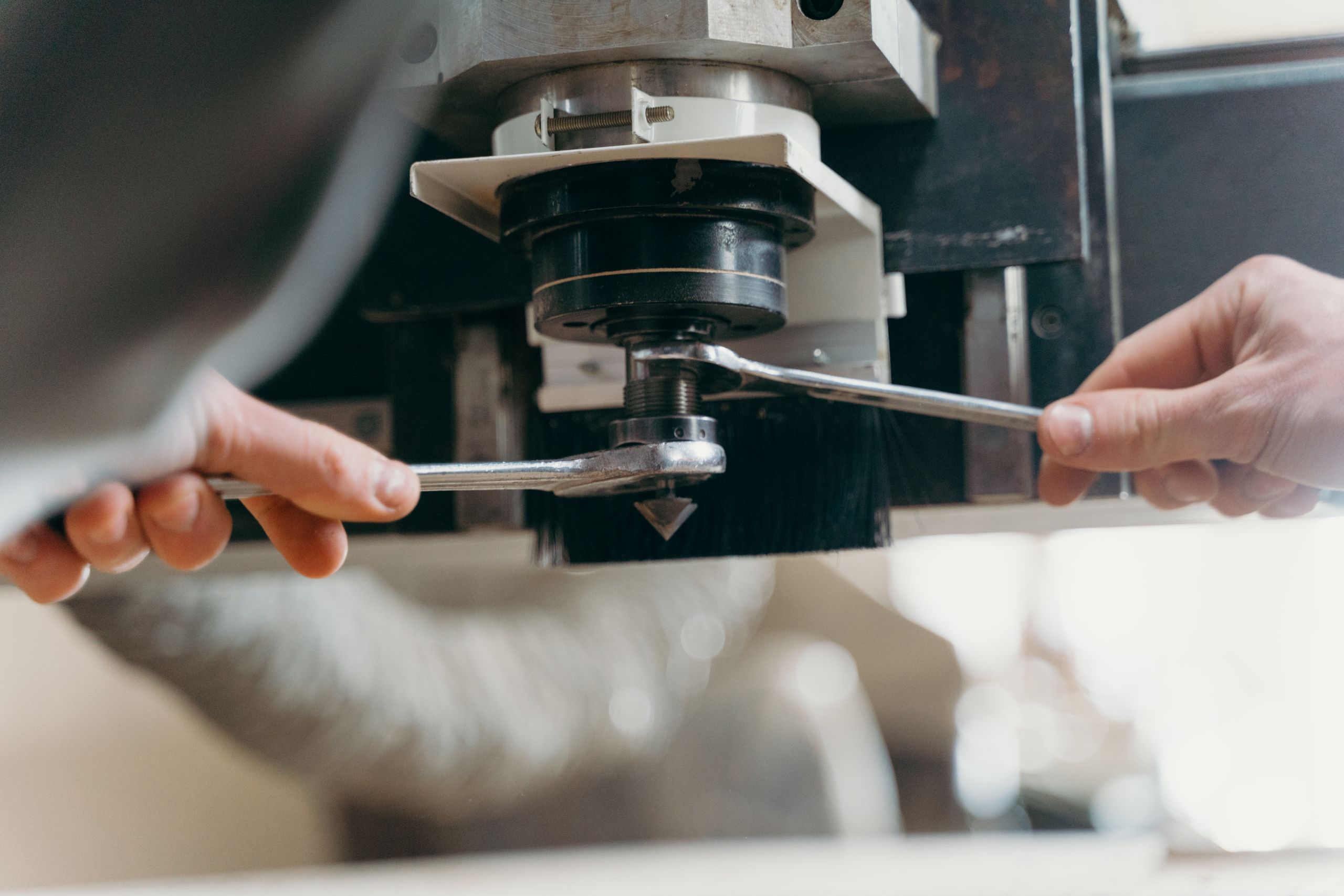
Isolate the machine before reaching into the cutting area, use cut-resistant handling methods appropriate to the task, protect exposed edges, and dispose of damaged knives in a rigid container. Follow the machine procedure and the OSHA hazardous-energy guidance during servicing.
Round vs Square Shoe Knife Guide checklist
- Identify the machine model and holder part number.
- Confirm round or square interface dimensions from a drawing.
- Match point, bevel, thickness, and material to the shoe component.
- Inspect holder condition and clean all seating surfaces.
- Run a standard contour test on the production stack.
- Record force, speed, depth, offset, quality, and blade life.
- Approve the option with the lowest stable cost per cut.
- Review JeeFoo shoe-knife resources for compatible blade options.
Frequently asked questions
Can a round-card knife replace a square-card knife?
Not unless an approved holder or adapter is designed for that conversion. Improvised mounting can allow movement, incorrect orientation, poor accuracy, and unsafe release.
Which shape gives better cutting quality?
When both are correctly mounted, card shape alone does not determine quality. Edge geometry, blade material, holder rigidity, offset, force, speed, and material support are usually more important.
When should a shoe knife be replaced?
Replace or professionally sharpen it when force rises, edges tear, dimensions drift, adhesive buildup recurs, or inspection shows chipping, rounding, bending, or damage to the mounting card.
Conclusion
Use the Round vs Square Shoe Knife Guide to prioritize verified holder compatibility, then choose the edge, material, coating, force, and speed for the footwear material. Test both quality and blade life on the real production stack before standardizing the process.

发表回复
要发表评论,您必须先登录。