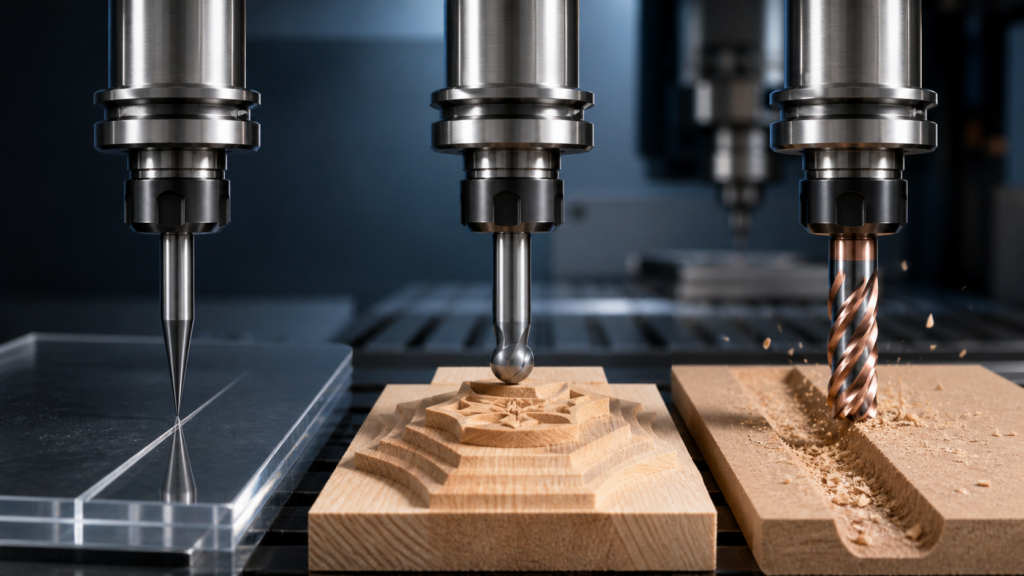
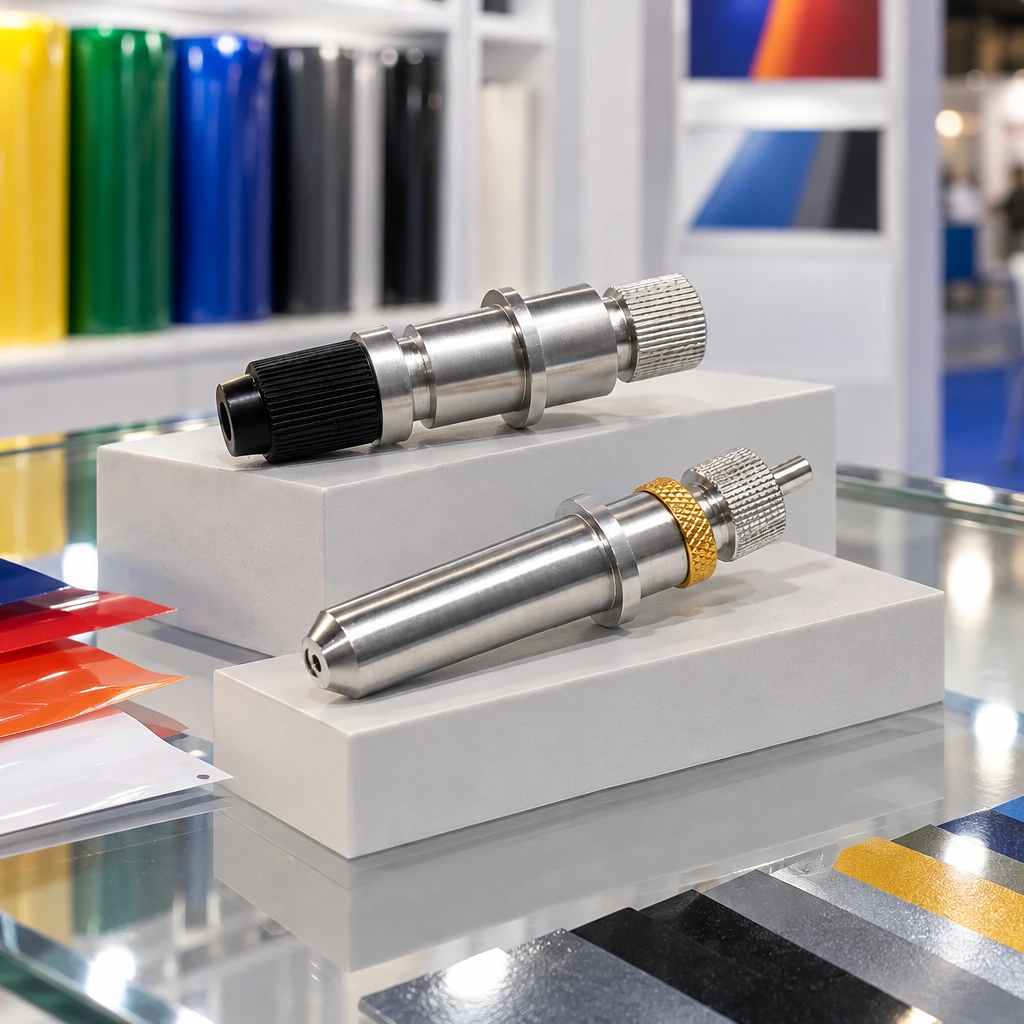
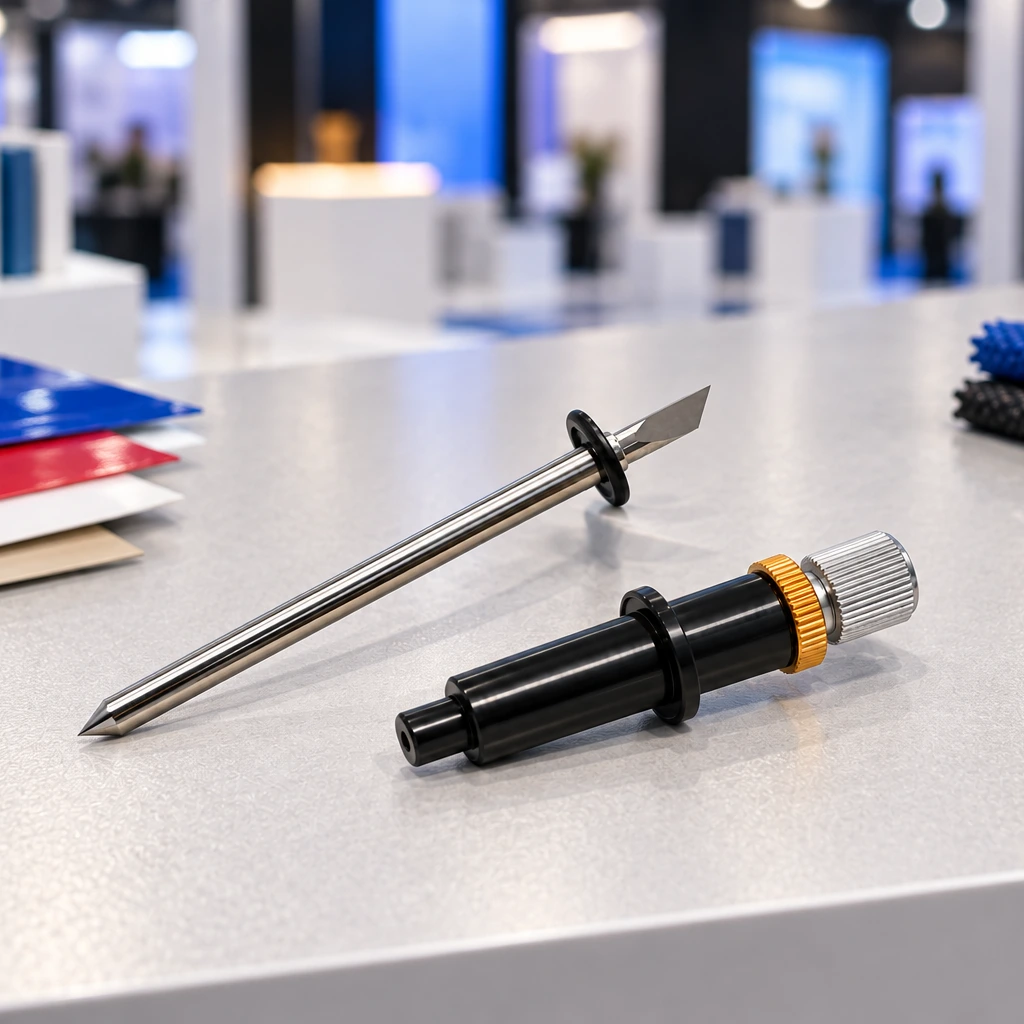
Engraving knife types can be compared by the process they perform: plotter blades cut an intended contour in suitable sheet material, CNC engraving cutters remove material to form details, and milling tools machine features such as slots or profiles. These are practical process groups, not three universally interchangeable products. Start with the machine, material and required result before selecting an exact tool reference.
1. Engraving knife types for plotter film cutting
A plotter blade works in its specified holder and tool assembly to follow the programmed path. It should not be described as a low-speed milling tool or installed in a rotating CNC spindle. Confirm whether the actual equipment uses the blade mechanism and holder specified for the proposed component. The same machine brand may include different tool assemblies, so a familiar catalogue name does not establish universal compatibility.
For adhesive-film work, distinguish a kiss cut from a through cut. A kiss-cut job normally aims to separate the intended face material while retaining the backing to the required standard. The supported material construction and operating procedure must come from the applicable equipment and blade documentation. Check the real film, adhesive, backing and any laminate rather than assuming that every thin-looking sheet belongs to the same application.
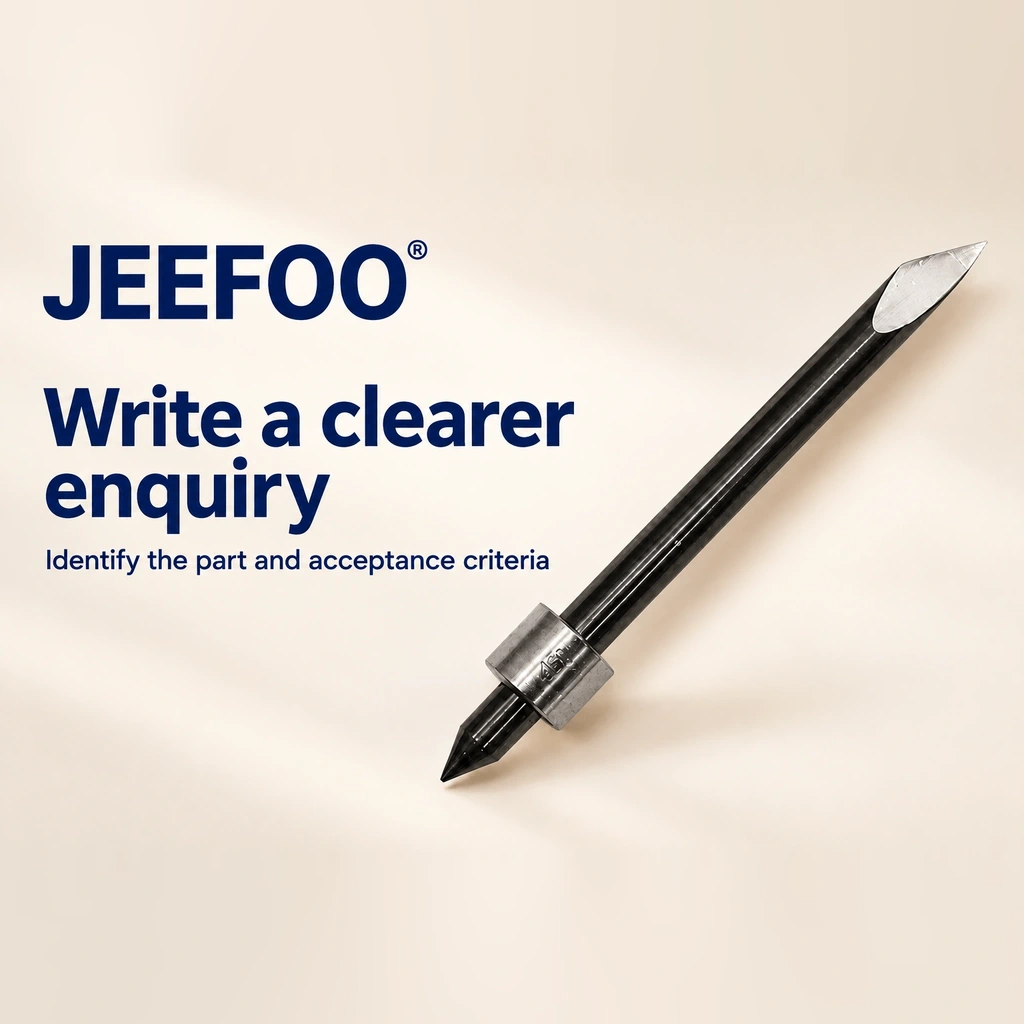
Use the JEEFOO cutting plotter blade catalogue to identify an enquiry family. Provide the installed holder and current blade references, then request confirmation of the exact offered item. The Roland DG cutting-conditions guide is a manufacturer example of relating specific blades to materials and verifying conditions by a test cut. Its numerical values are not universal settings for all engraving knife types.
2. Engraving knife types for rotating CNC detail work
A CNC engraving cutter removes material using a rotating cutting process. Its geometry and machine setup must support the intended feature. Relevant information can include the tip form, included angle, shank and required cutting depth, but the exact specification depends on the offered tool. A pointed, flat-tipped or radius-tipped design should be identified from documentation rather than inferred from a small photograph.
Do not promise that one angle produces clean detail in every material or that a tapered cutter automatically creates vertical walls. Define the desired line, groove or surface and check whether the proposed geometry can create it under the machining procedure. Harvey Performance’s CNC engraving guide discusses tip form and engraving angle for rotating tools. That discussion belongs to CNC engraving and should be kept separate from plotter-blade angle labels.
3. Milling tools for slots, profiles and material removal
Milling cutters are another process group often included under broad engraving terminology. They may be considered for features requiring material removal, but their suitability depends on geometry, workpiece, machine capacity, workholding and the approved toolpath. Do not assume that every cutter is double-edged, flat-bottomed, suitable for drilling or usable on all boards and metals. Confirm the capabilities of the specific tool before programming the operation.
Describe the feature to the supplier using the drawing or a clear requirement: slot, profile, pocket or surface detail. State the actual workpiece material and the intended dimensions and finish. Keep machine and holder information with that request. Comparing engraving knife types is useful only when the comparison leads to an identifiable candidate for the actual process rather than a generic promise that one tool can replace all others.
How to select and approve engraving knife types
First identify the process and installed interface. Then define the material construction and the smallest important feature. Obtain the offered tool reference and relevant application guidance, and resolve unknown dimensions or compatibility questions before installation. Test a representative sample by the appropriate machine procedure. For film work, include separation and weeding; for CNC work, compare the machined feature with the drawing and acceptance requirement.
Retain the accepted sample, tool and holder references, material, artwork or program version and recorded conditions. Recheck approval if the assembly, material or feature changes. Keep unverified candidates apart from accepted stock. This gives purchasing and production the same evidence when discussing engraving knife types and avoids treating a broad category name as a technical specification.
Engraving knife types: common questions
Can a plotter blade mill acrylic board?
Do not treat a plotter blade as a rotating milling cutter. Use a tool and machine combination documented for the required board-machining operation.
Does the blade angle identify the complete tool?
No. The exact reference, interface, tip geometry and application guidance are still needed. An angle alone cannot confirm fit or performance.
What information should a supplier receive?
Provide machine and holder references, current tool identification, material and intended feature through the JEEFOO contact page. Request a confirmed candidate and a defined trial.