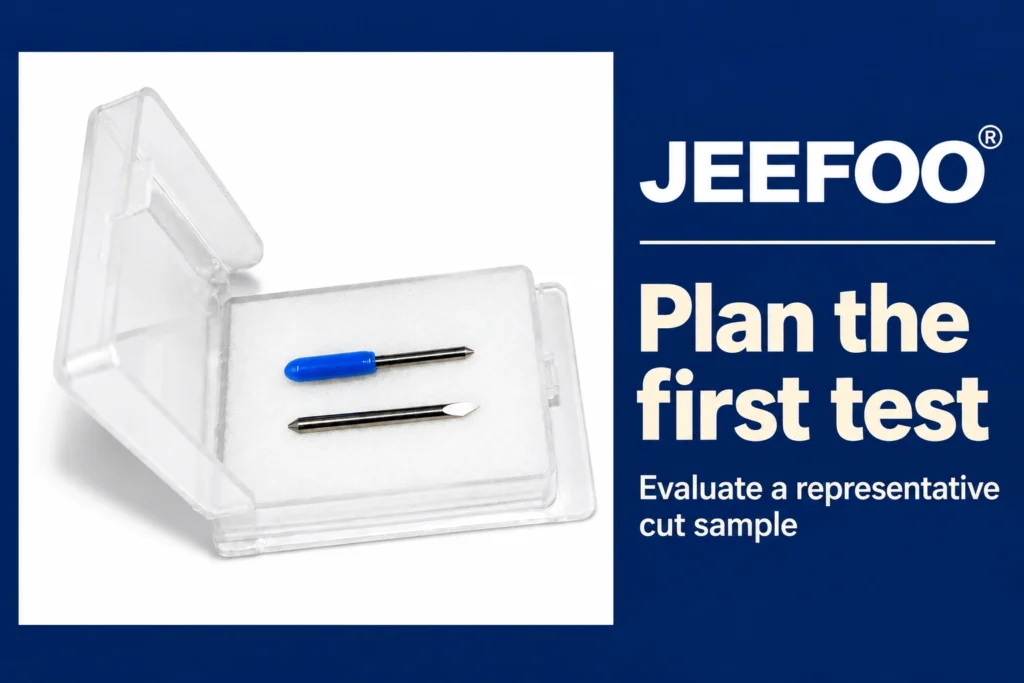
Mimaki plotter blades deserve a first test that answers a practical question: can this confirmed blade and holder combination produce the required result on this material? A visually sharp tip is not an acceptance test. Prepare a small trial with clear success criteria before committing the production design or a valuable sheet to the new setup.
1. Test Mimaki plotter blades on representative artwork
Choose a sample that includes the features most likely to be troublesome in the actual artwork: a closed contour, a curve, a change of direction and a small internal detail where relevant. Use material from the production supply, including the same liner or backing structure. A large uncomplicated square may prove that the blade reaches the film while revealing little about how the finished lettering will separate during weeding.
2. Establish a safe starting condition
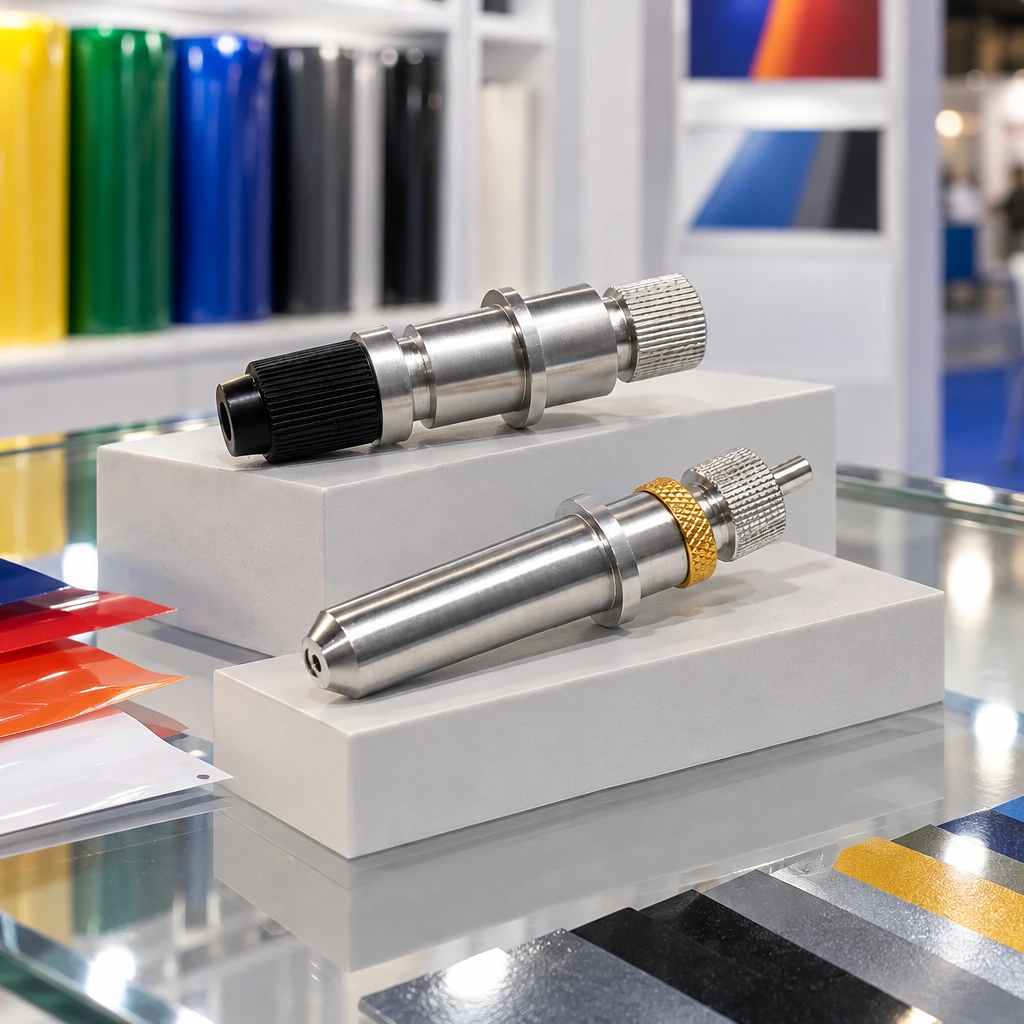
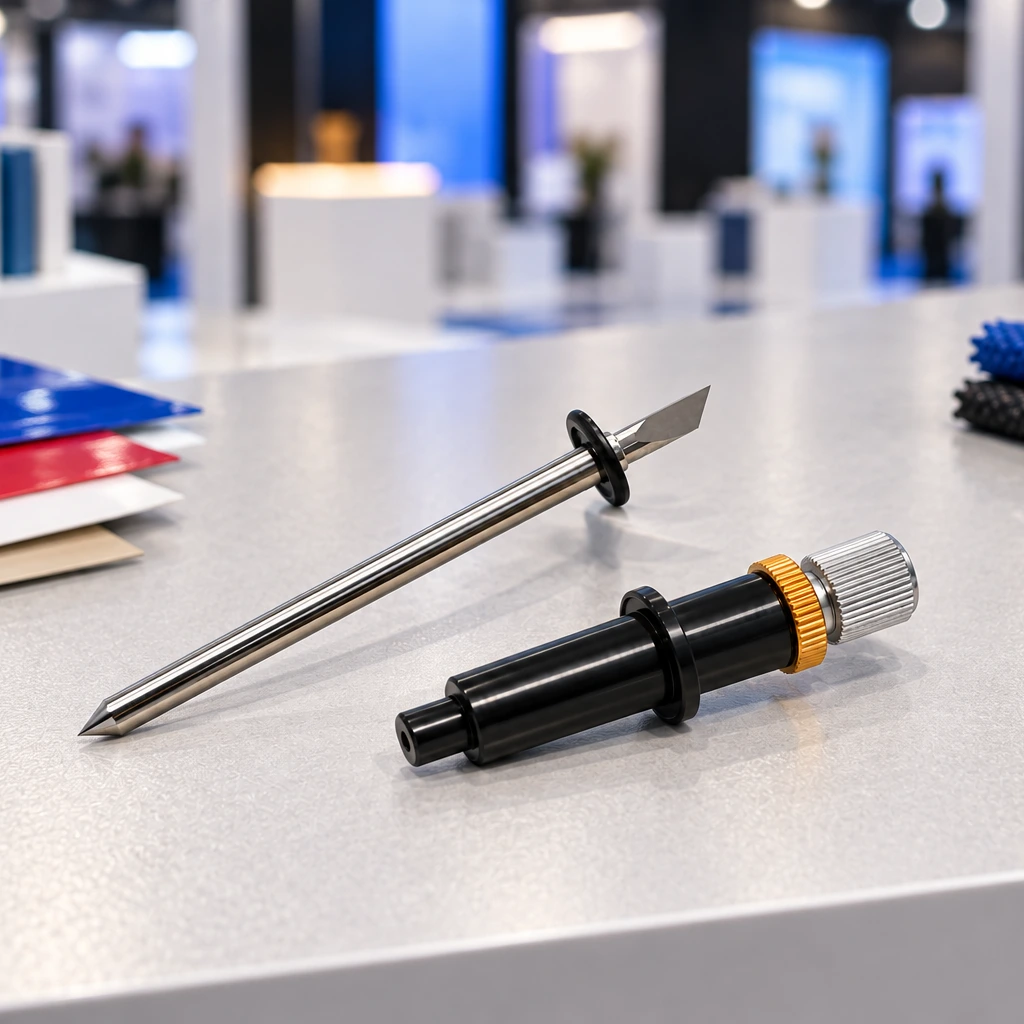
Confirm the exact blade reference and holder against the equipment instructions before installation. The JEEFOO® Mimaki category identifies a product family; it does not establish universal compatibility with every machine bearing that brand. Follow the prescribed stopping and installation procedure, then set exposure and initial cutting conditions using the applicable guidance. Do not carry over a previous operator’s settings without checking which material and blade they were intended for.
3. Read the cut before changing it
Inspect the sample while it is still supported, then remove waste carefully. Look for uncut bridges, lifted details, distorted corners and unwanted damage to the backing. Record where each problem occurs rather than describing the sample only as “good” or “bad.” If the film does not separate, determine whether the failure follows the whole contour or a local area. Those observations help distinguish a setup problem from a material or artwork issue.
4. Approve the result at the next meaningful scale
Adjust only one permitted variable between comparisons and retain the samples in order. When the small trial passes, check a representative portion of the real design before releasing the full job. Include the intended weeding method in that evaluation. A setting that produces a visible outline but leaves fragile details difficult to handle is not yet an approved production condition. Save the accepted sample with the job information.
A useful first cut creates evidence for a production decision. Confirm the interface, test representative details and evaluate the separated result before treating any Mimaki-family replacement as ready for the job.
Mimaki plotter blades: first-test questions
Which instructions should guide the test cut?
Use the manual for the actual machine, holder and blade. The official Mimaki CG-AR test-cut instructions explain how to perform and evaluate that model’s built-in test. They are a model-specific reference, not settings for every Mimaki plotter. Combine the appropriate built-in check with representative artwork when a job contains fine corners, narrow strokes or internal details that the basic test does not include.
How should replacement Mimaki plotter blades be identified?
Use the machine model, installed holder reference and exact offered blade code. The JEEFOO Mimaki blade category helps route a product enquiry, but photographs or a shared brand label do not prove compatibility. Resolve interface questions before installation. Keep packaging and the accepted sample linked so a later production order can be compared with the same supplied reference.
What makes a trial acceptable for production?
The cut must meet the requirements defined for that job: intended contours separate, important details remain intact, backing condition is acceptable and the waste can be removed by the planned method. Record the material, artwork size, assembly identity and permitted settings with the accepted sample. Recheck after changing material or blade geometry. A successful small test supports the tested conditions rather than a blanket claim about all Mimaki plotter blades.