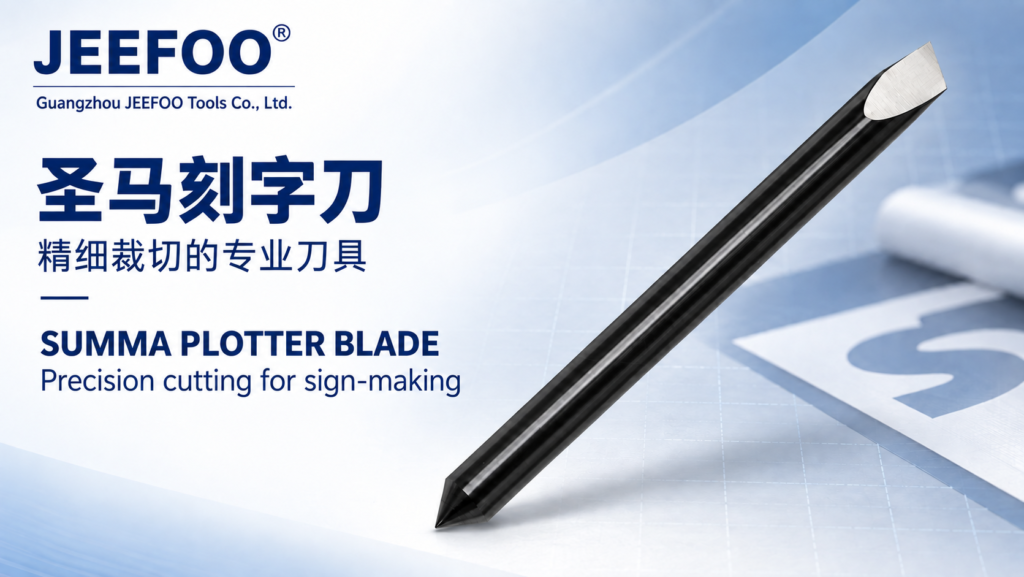
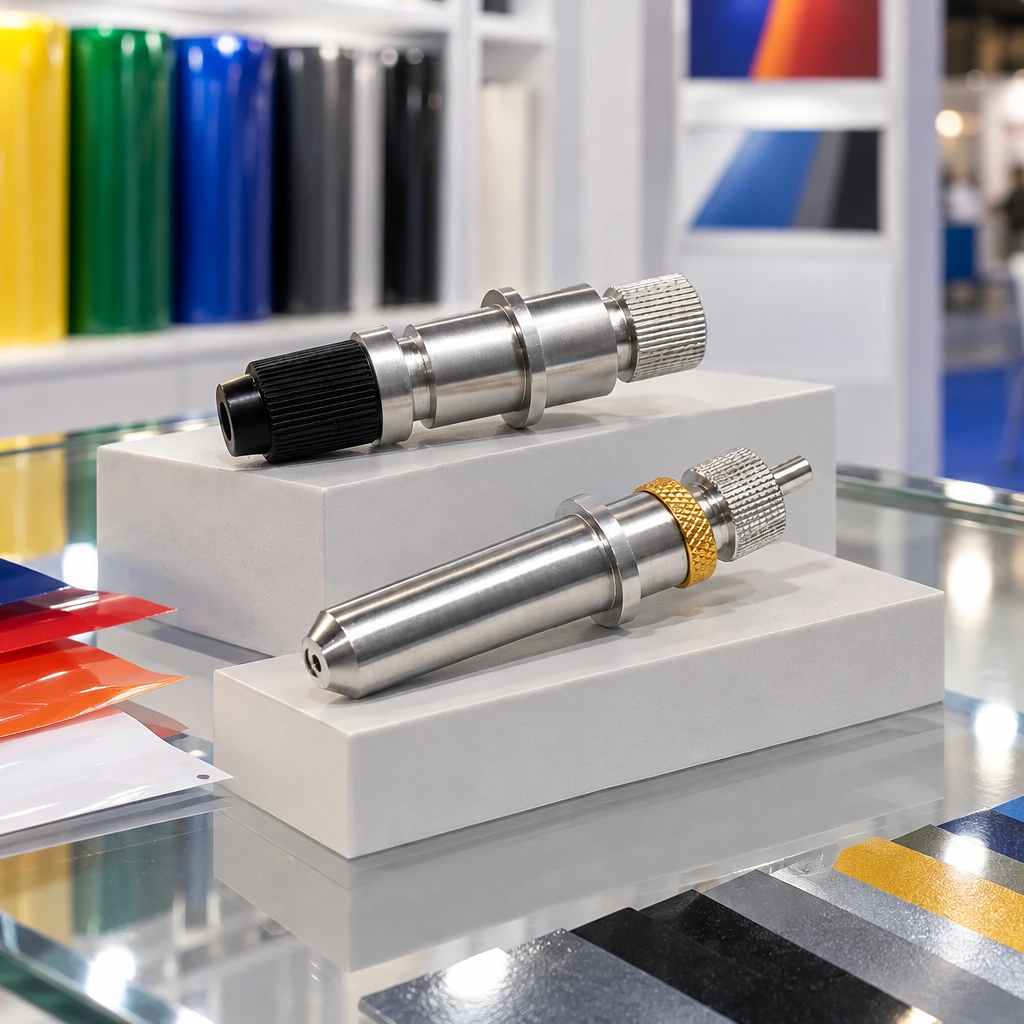
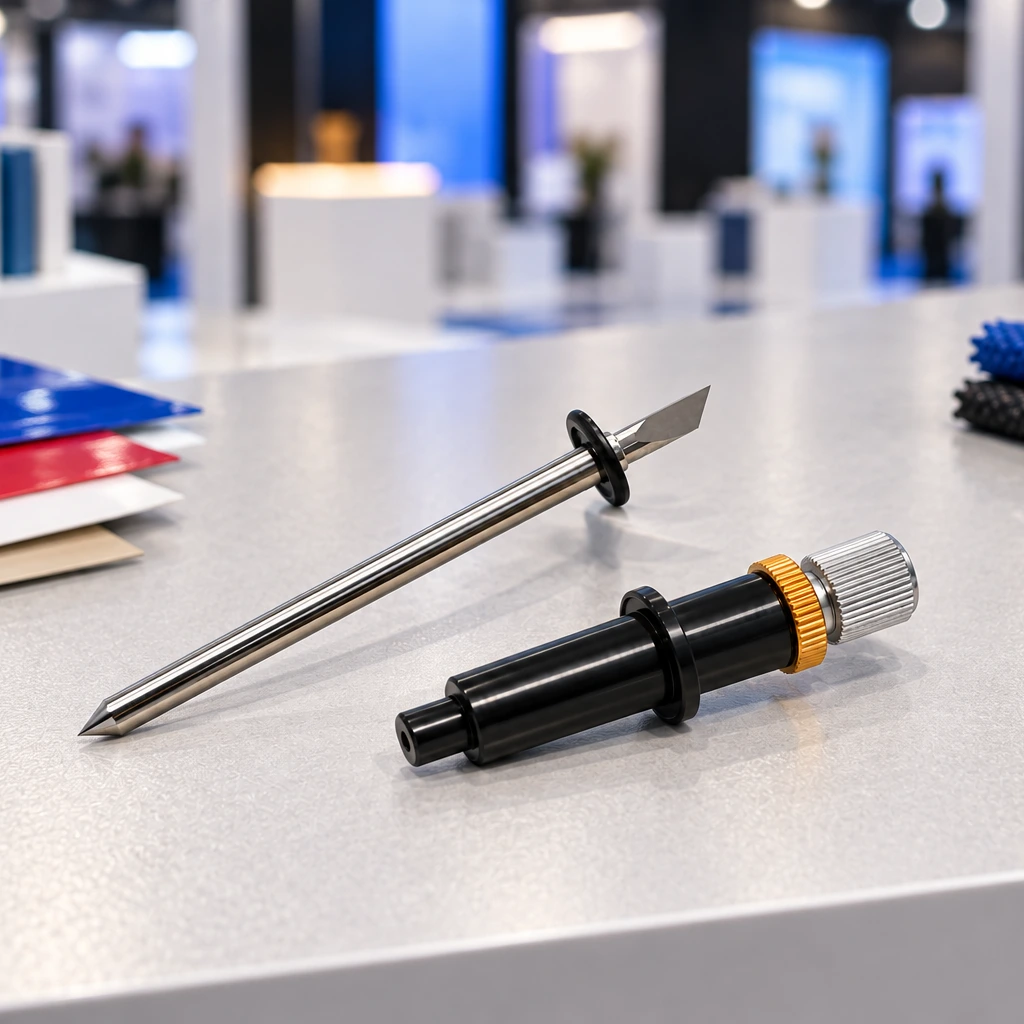
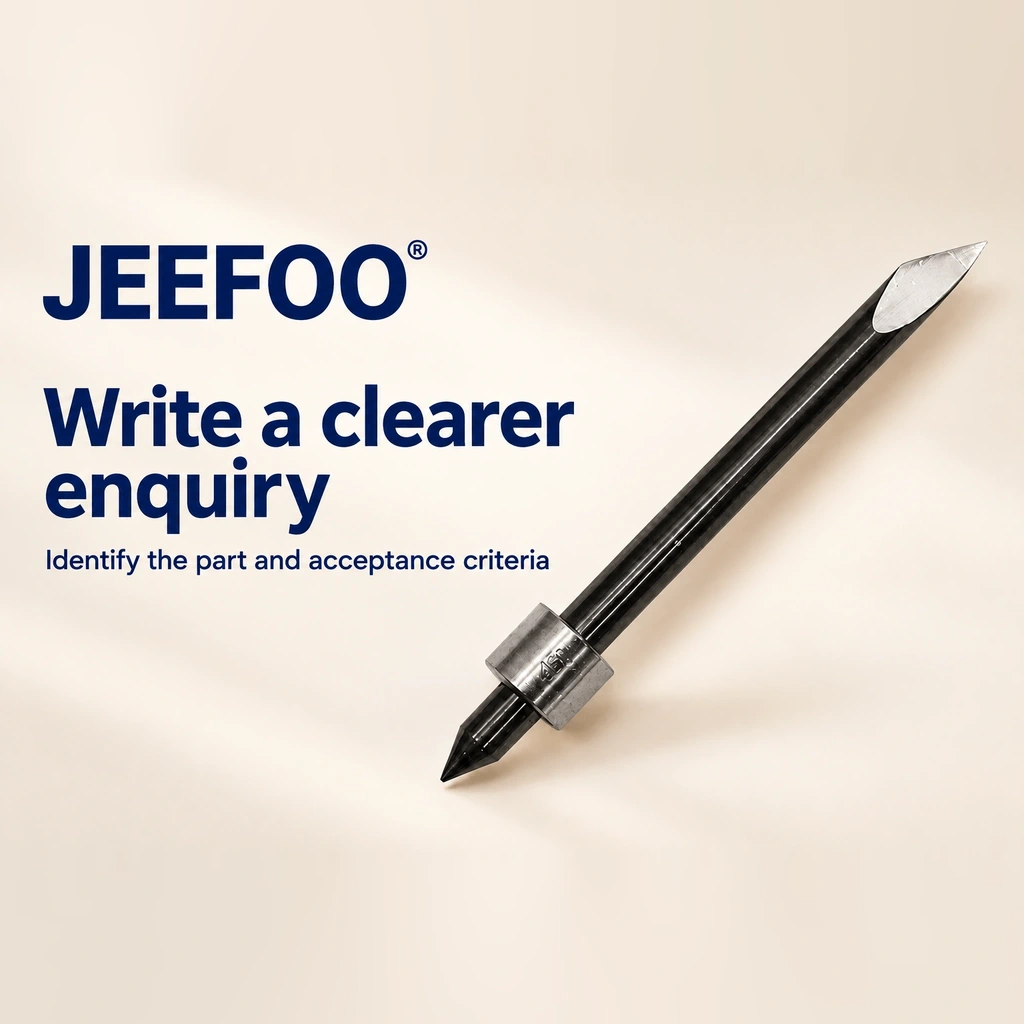
A Summa engraving knife should be selected by the exact blade reference, installed holder, intended material and a representative test cut. The term is used here for a plotter cutting blade, not a rotating CNC milling cutter. JEEFOO® offers a Summa blade category for product enquiries; the supplied item and matching requirements must be confirmed before purchase or installation.
1. Identify the Summa engraving knife and installed assembly
Record the full machine model, the tool holder actually fitted and any readable code on the existing blade packaging. A holder changed during maintenance may differ from the assembly originally supplied with the machine. Photograph the identifying features and keep the information with the purchasing record. If a reference is missing, mark it as unknown rather than guessing from the protective cap colour or the cutting tip.
Use Summa’s official support resources to locate the applicable model documentation. Confirm whether the machine and tool assembly use the cutting method described for the proposed component. A common brand name does not prove that all blade types or holders are interchangeable. The exact instructions take priority over a general product description when checking installation, adjustment and intended use.
2. Compare Summa engraving knife geometry using actual specifications
Angle descriptions are useful only when their meaning and the exact part reference are clear. A blade labelled 30°, 45° or 60° should not be assigned a universal material range or durability ranking. Ask for the specification of the offered item, its holder requirements and the application guidance. Tip shape, offset and other relevant geometry need to be considered with the equipment rather than reduced to the angle alone.
Similarly, confirm the stated tool material for the specific supplied reference. Do not infer service life, impact resistance or original-equipment status from a generic carbide or tungsten-steel description. The JEEFOO Summa blade catalogue provides an enquiry route, not evidence that every listed item fits every Summa assembly. Request clarification of any mismatch between the catalogue wording and your existing component.
3. Match the material and required cutting result
Describe the actual film or other permitted medium, including the backing, adhesive and any laminate. For a kiss-cut label job, the intended result is separation of the face material while preserving the backing to the required standard. Confirm that both the machine and proposed blade are intended for that construction. A Summa engraving knife described for plotter work must not be treated as a substitute for a CNC tool that mills acrylic, metal or wooden board.
Include the artwork features that determine acceptance: small lettering, isolated dots, narrow internal spaces or closed contours. Explain the intended waste-removal and transfer method. A visible outline does not by itself show that the finished graphic can be handled reliably. Defining the result before the trial helps separate blade selection from problems caused by artwork, loading, holder condition or later handling.
4. Approve a Summa engraving knife through a controlled trial
Install and adjust the confirmed assembly according to the applicable equipment procedure. Test suitable scrap from the planned production material before releasing a valuable sheet or full job. Inspect the contour, retained details, backing and waste separation. If the result needs adjustment, change one permitted variable at a time and keep the samples in order. This creates an interpretable comparison instead of a sequence of undocumented settings.
Retain the accepted sample with the blade reference, holder, material, artwork version and settings. If the material or assembly changes, review whether the previous approval still applies. Before a repeat order, confirm that the offered reference matches the tested Summa engraving knife. Agree any substitutions in writing so the purchasing description and the component used in production remain connected.
Summa engraving knife: common questions
Does a 60° label guarantee better durability?
No. An angle label alone does not establish tool life or suitability. Use the exact specification and compare representative results under documented conditions.
Does a successful cut prove the blade fits every Summa machine?
No. Acceptance applies to the identified holder, machine, material and conditions. A different assembly requires its own compatibility check.
What should I send when requesting a replacement?
Provide machine and holder references, current blade identification, photographs, material and job requirements through the JEEFOO contact page. Request confirmation of the offered reference before arranging a sample.