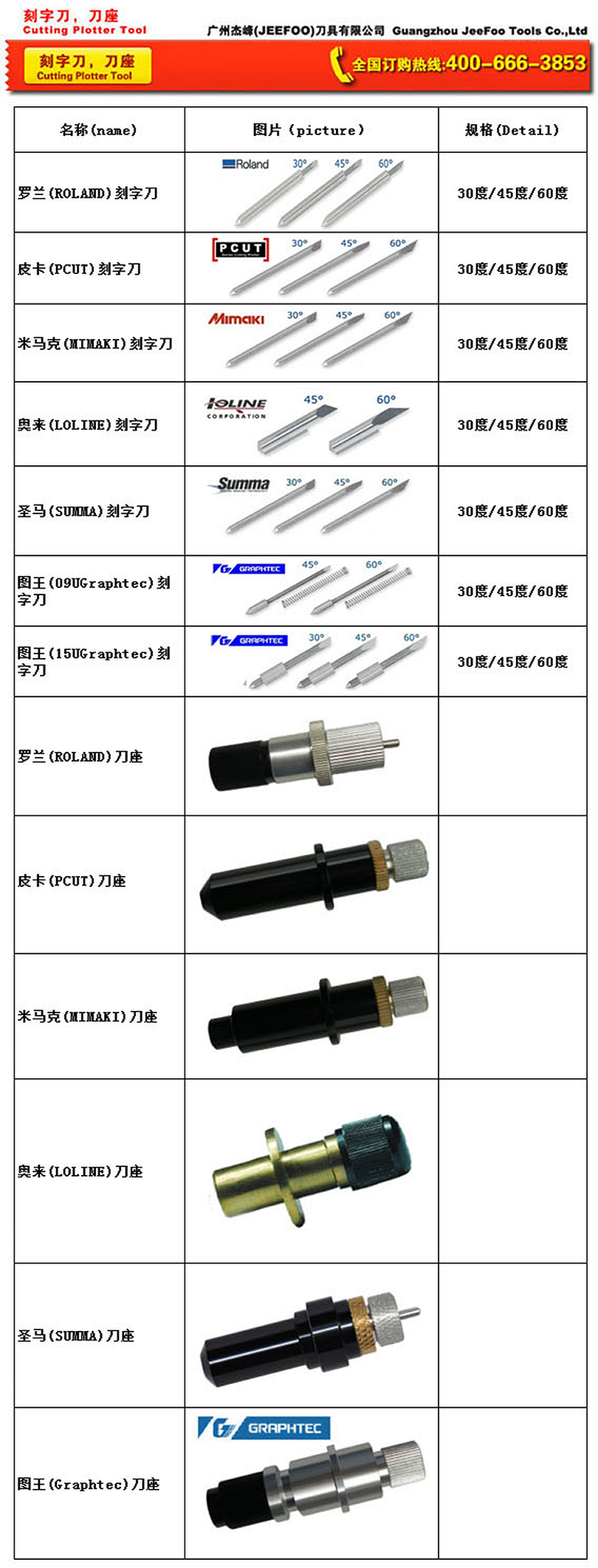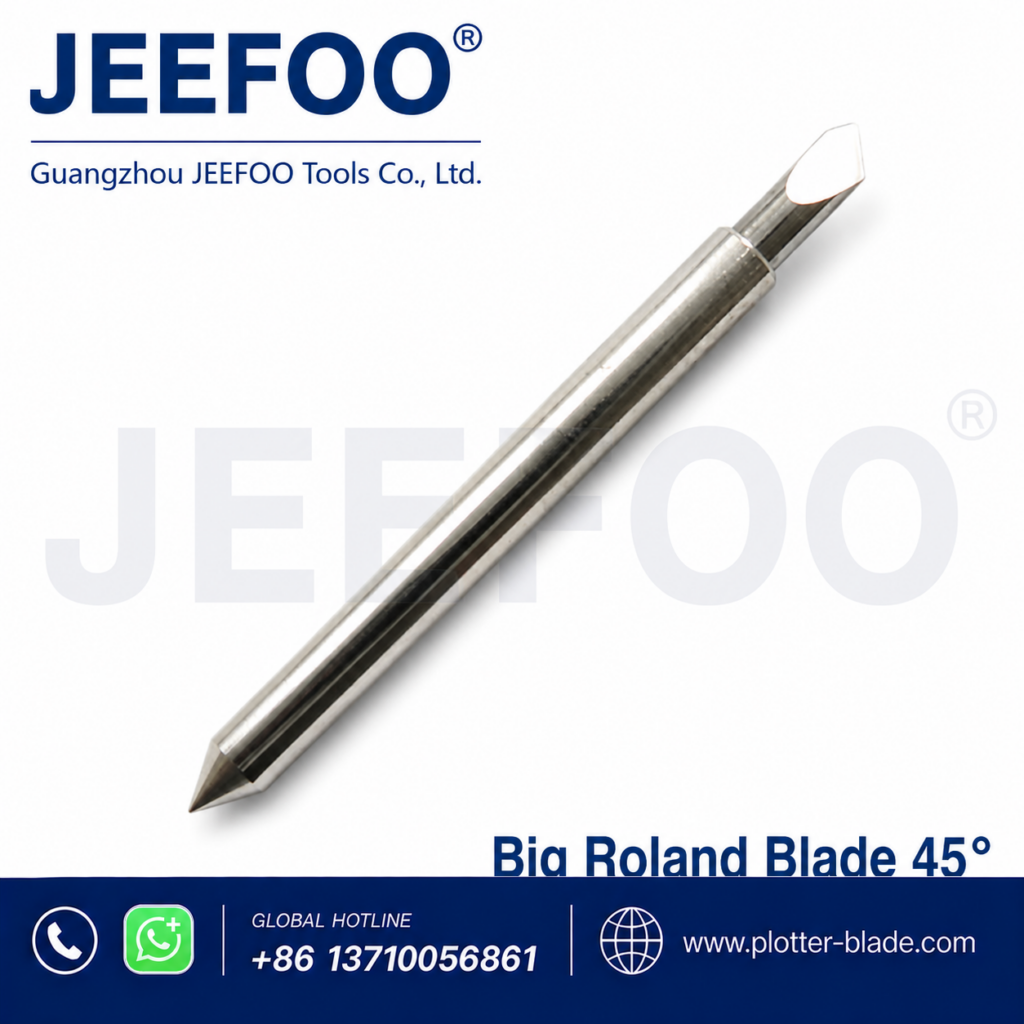
45 degree Big Roland blade for cutting-plotter vinyl graphics and precision sign work.
Detail information: cutting thickness:0.25mm

How to Use a 45 Degree Big Roland Blade
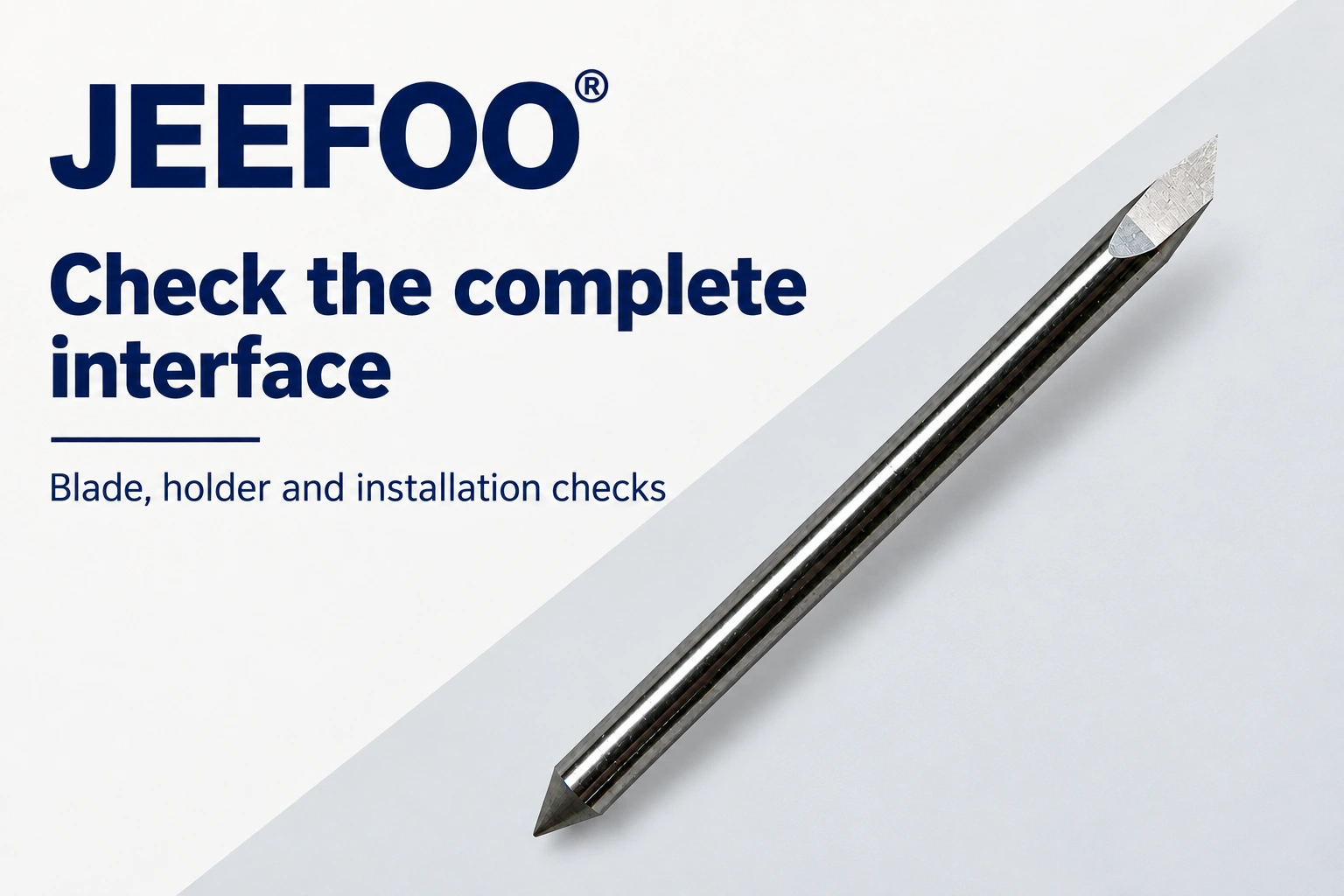
A 45 degree Big Roland blade is intended for routine vinyl-cutting work where clean outlines and dependable tracking matter. The listed cutting thickness for this item is 0.25 mm. Before production, confirm that the blade and holder match the specific cutter model, then use a small test pattern to establish a safe starting point.
1. Start with a controlled test cut
Install the blade according to the cutting-plotter manufacturer’s instructions. Extend only enough tip to cut the face material without deeply marking the release liner. Run a square, circle, or small lettering test. The vinyl should weed cleanly, while the backing remains intact. If corners lift or strokes fail to separate, adjust one setting at a time.
2. Balance force, speed, and blade exposure
The 45 degree Big Roland blade performs best when blade exposure, cutting force, and speed are balanced for the actual film. Excessive exposure can create drag and rounded corners. Excessive force may score the liner, while too little force can leave incomplete cuts. Slower test speeds are useful for small graphics and detailed text because they make setup problems easier to identify.
3. Match the blade to the job
Use the 45 degree Big Roland blade for common sign vinyl, labels, window graphics, decals, and similar plotter-cut applications after confirming material suitability. Film construction and adhesive systems vary, so settings from one roll may not transfer perfectly to another. Make a fresh test whenever the material, laminate, design scale, or environmental conditions change.
4. Protect fine lettering and corners
For small characters, reduce speed and inspect whether narrow counters and sharp corners remain attached to the liner. Clean the holder so the blade can rotate freely, and remove adhesive residue before it affects tracking. A smooth swivel action helps the 45 degree Big Roland blade follow direction changes without pulling delicate elements away from the sheet.
5. Check the finished cut before weeding
Examine several parts of the design, not only the first corner. Look for continuous cut lines, consistent depth, and complete separation around letters. Weed a small section before running the full quantity. This simple check reduces wasted vinyl and helps operators confirm that the 45 degree Big Roland blade is producing repeatable results across the usable cutting width.
6. Maintain safe operating practices
Keep hands away from moving carriage parts, power down equipment before servicing the holder, and follow the cutter manufacturer’s safety instructions. General machine-guarding guidance can also support a safer work area. Store loose blades in protective containers and dispose of worn sharp parts using an appropriate method.
7. Information to provide when ordering
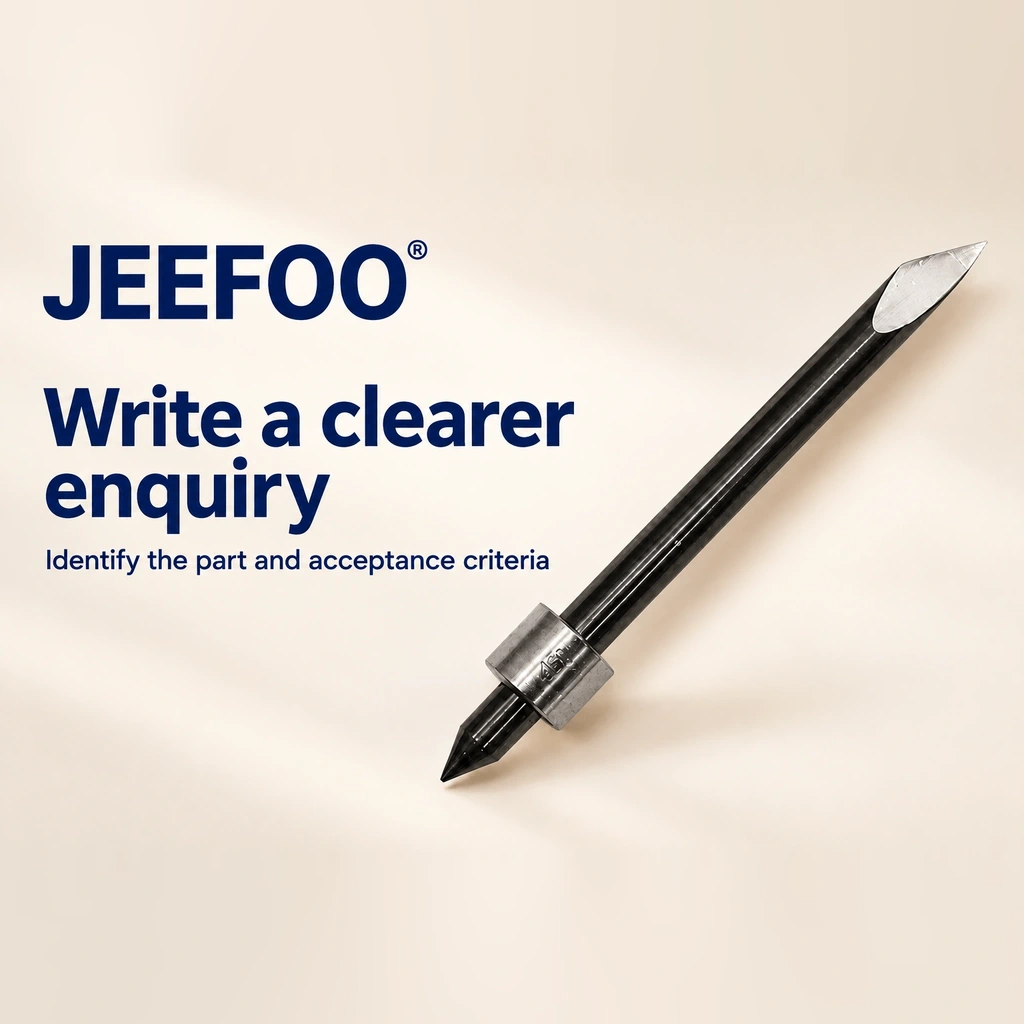
To confirm a 45 degree Big Roland blade, provide the plotter model, holder type, material name, typical graphic size, and expected cutting thickness. Clear application details reduce compatibility errors and make recommendations more useful. JEEFOO in Guangzhou, China supports buyers comparing plotter blades and related cutting tools for signage and vinyl-processing workflows.
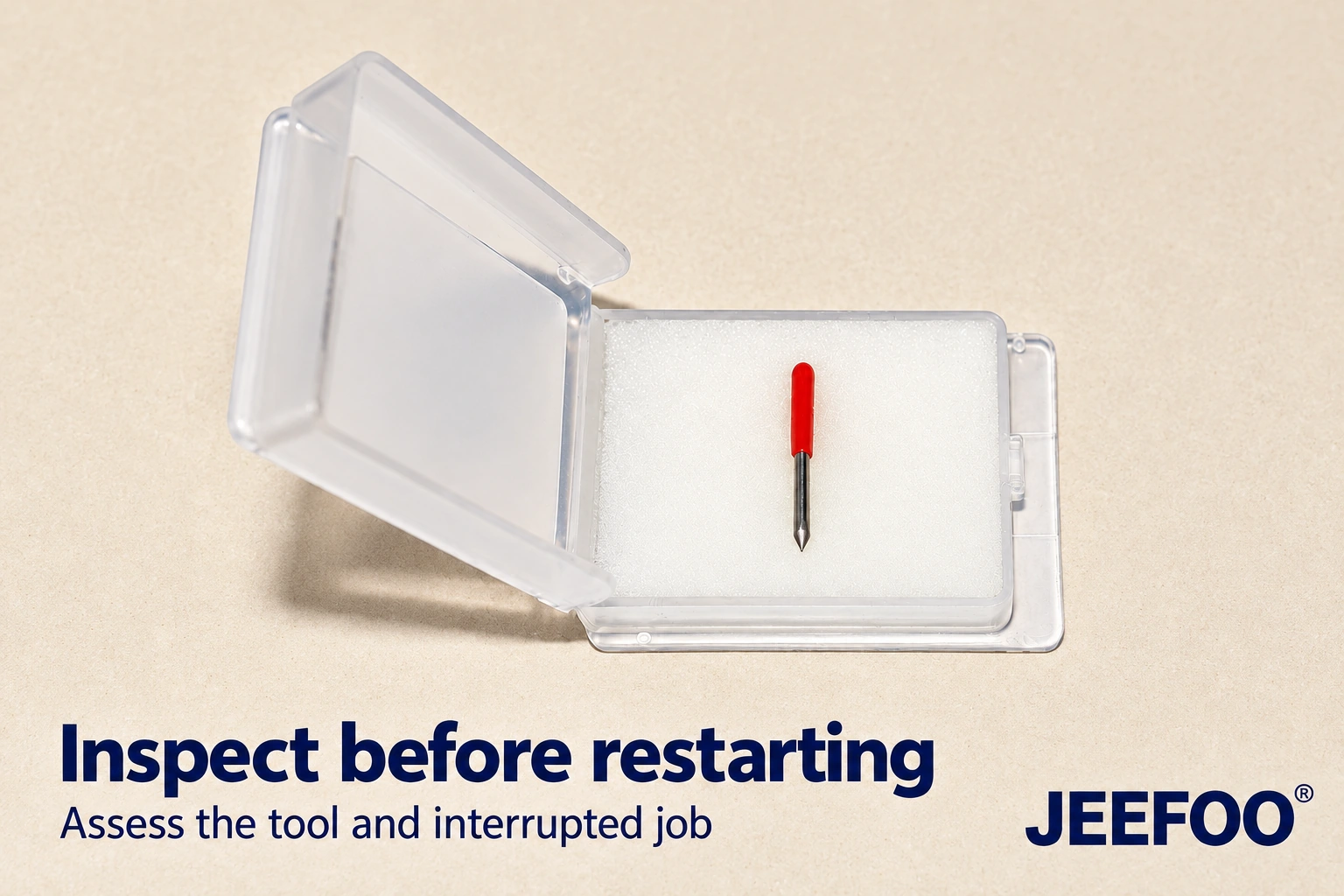
Routine inspection is equally important. Replace a blade when increased force no longer restores clean cutting, when corners become visibly distorted, or when the tip has been damaged. With correct setup, test cutting, and maintenance, the 45 degree Big Roland blade can remain a practical option for everyday vinyl graphics.