Engraving Tools for Lettering
Engraving Tools for Lettering are selected by font size, stroke width, engraving depth, workpiece, and desired edge shape. V-bits are the standard choice for sharp, variable-width letters, while fine-point and flat-bottom cutters serve small text and recessed lettering.
Table of Contents
Which Tool Should You Choose?
- V-bit: signs, chamfered letter edges, and variable-width strokes.
- Fine-point cutter: small fonts, thin lines, and detailed logos.
- Flat-bottom cutter: recessed letters with a level base and consistent width.
- Ball-nose cutter: rounded grooves, relief lettering, and three-dimensional effects.
Match tip angle, tip width, diameter, flute length, material, feed, speed, and depth to the design. Rigid workholding and low runout prevent broken tips and uneven strokes. A knowledgeable cutting tool manufacturer can recommend geometry; review engraving fundamentals before producing fine text.
Lettering Tool FAQ
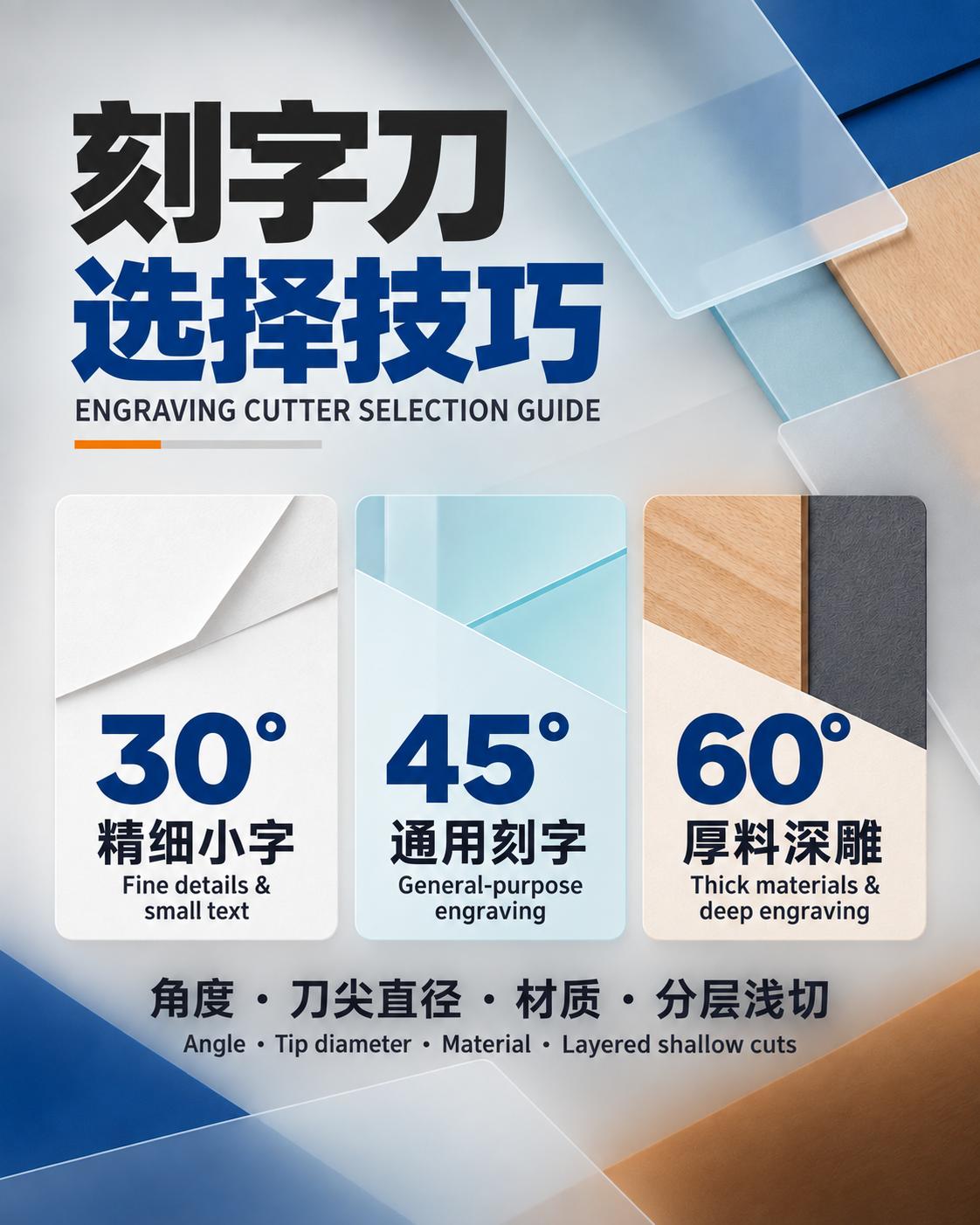
What V-bit angle is best for small letters? A narrower angle, such as 30 or 45 degrees, generally supports finer details when tip width and machine accuracy are suitable.
Why do engraved letters have uneven width? Common causes include an uneven surface, poor workholding, spindle runout, inconsistent depth, or a worn tip.