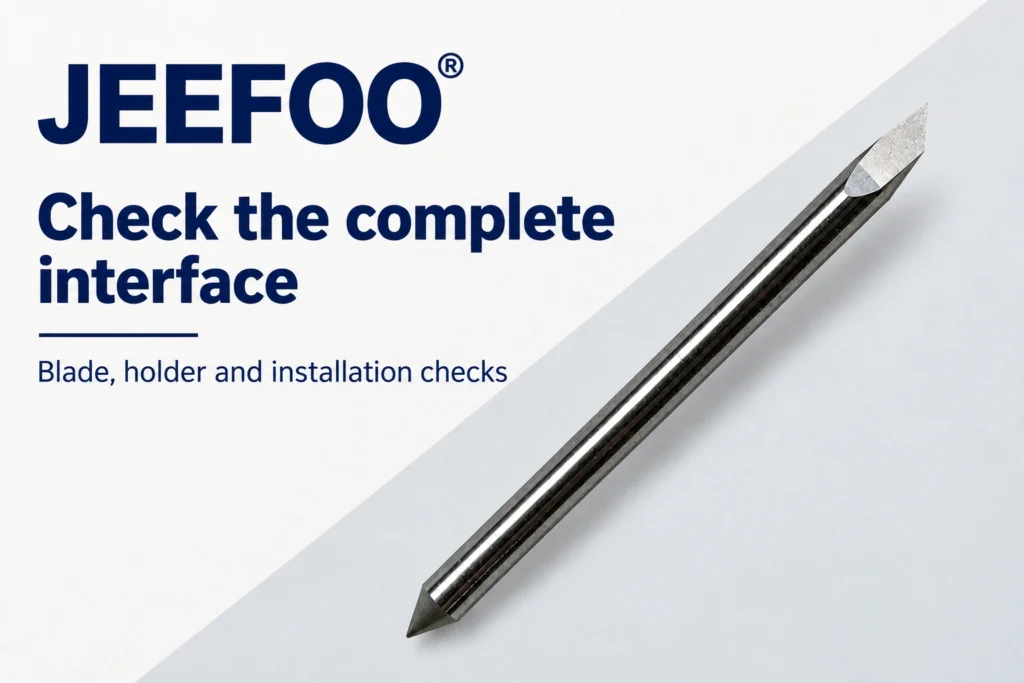
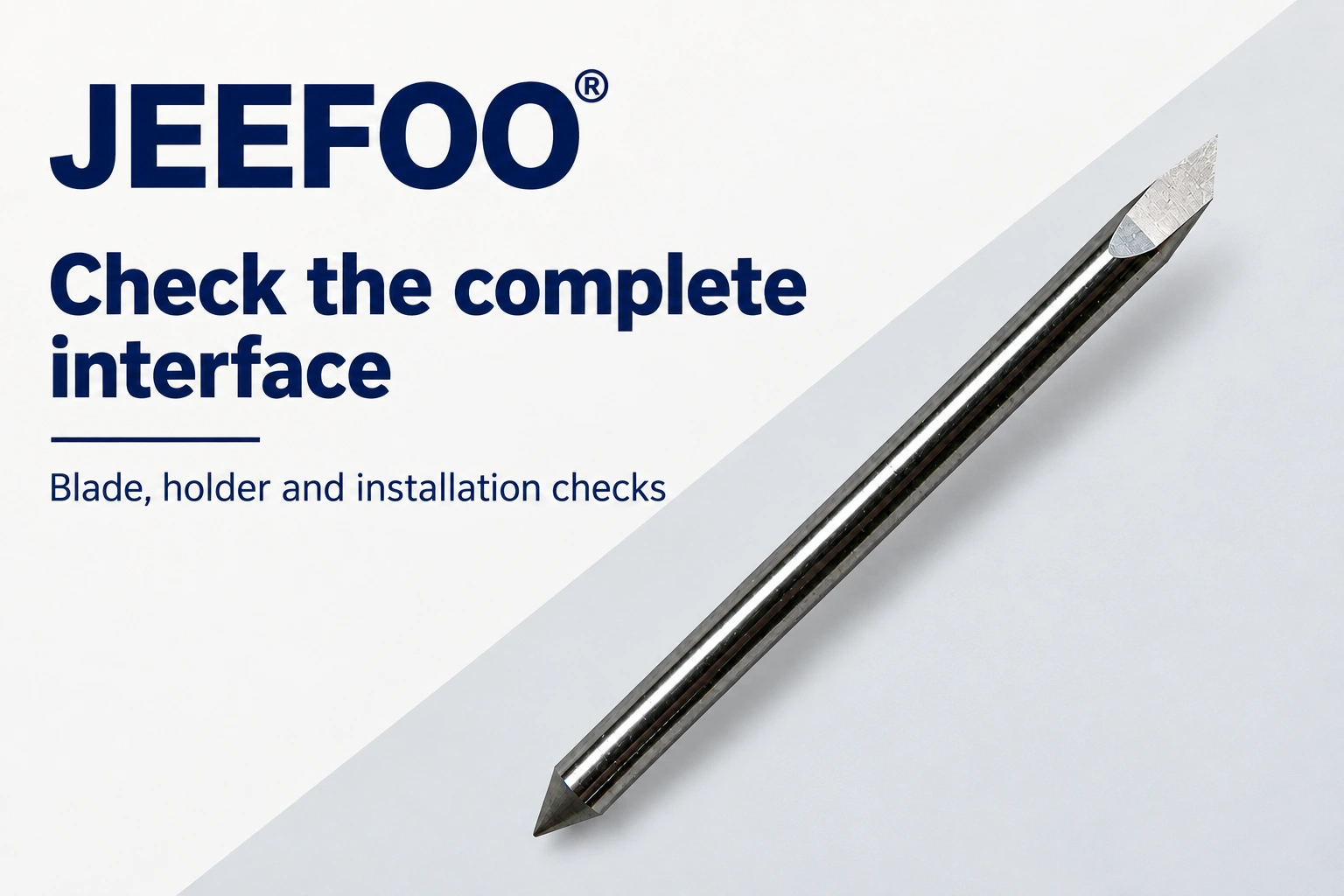
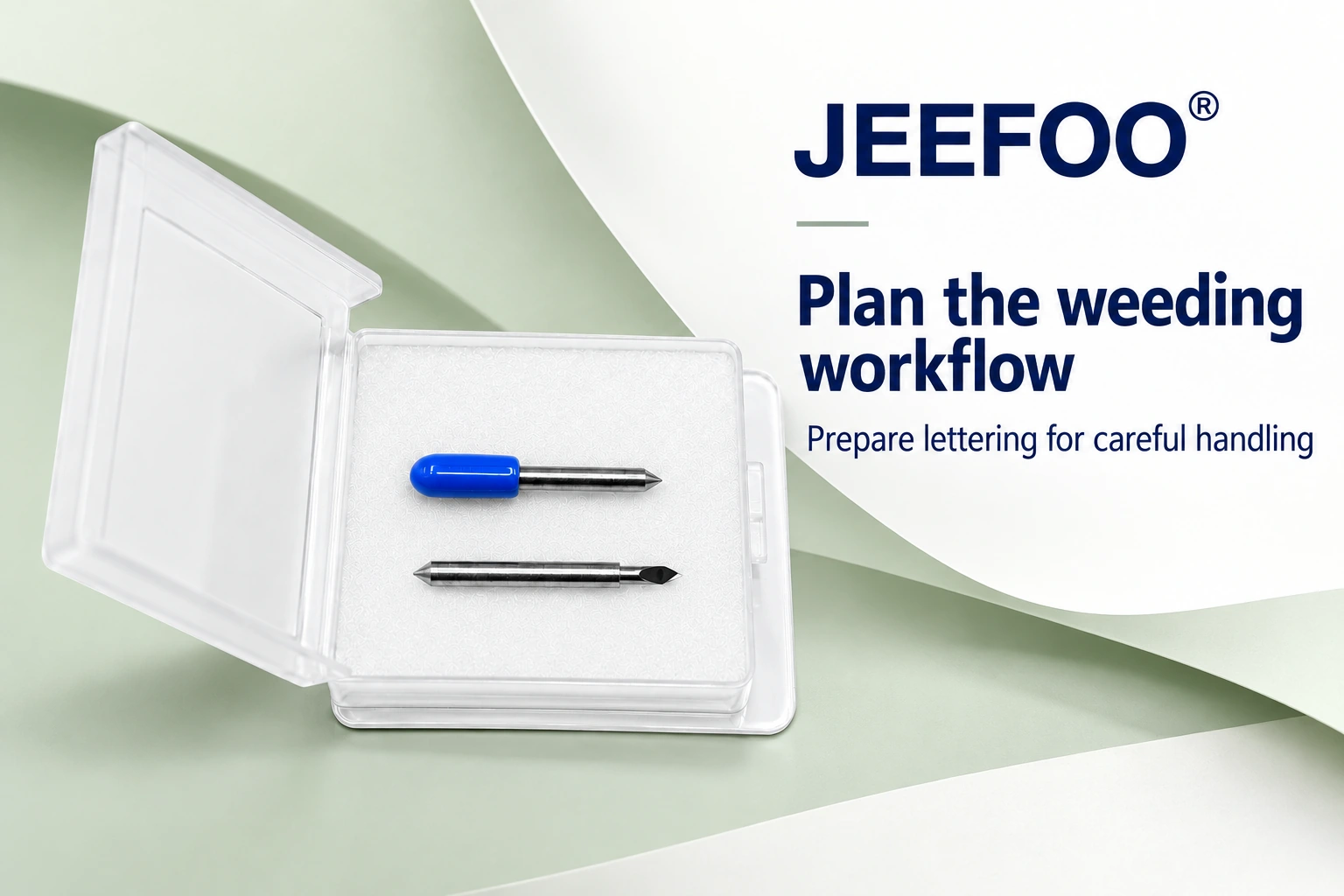
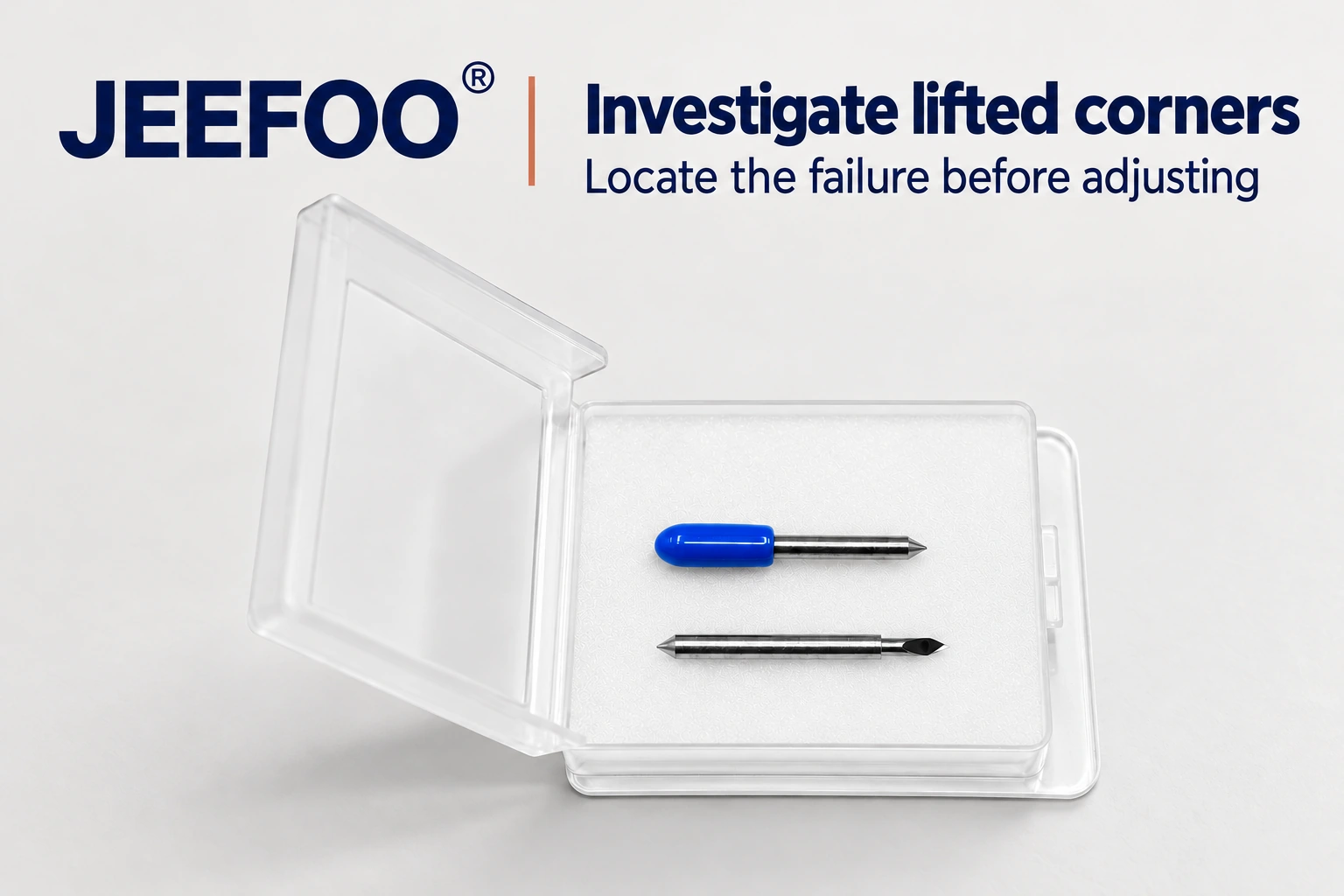
PCUT blades must work as part of a correctly identified holder assembly. A replacement that resembles the old blade is only a candidate until the interface has been checked. For maintenance teams, separating the blade’s physical fit from the holder’s condition prevents a worn or obstructed assembly from being mistaken for a faulty replacement.
Describe the complete assembly
Record the machine model, holder reference and current blade identification together. If the holder has been changed, the original machine specification may no longer describe the assembly on the bench. JEEFOO® lists a PCUT blade category and a corresponding holder category, but category names are not a complete compatibility statement. Ask for confirmation of the exact offered reference when a label, marking or supplier description leaves room for doubt.
Compare the interface rather than the silhouette
Using the documented inspection method, compare the relevant shank, locating and retention features with the approved reference. Check that the offered item is the same type of component, rather than judging it only by tip shape. Photographs can help identify a mismatch, but perspective cannot verify an exact dimension. If a required measurement or specification is unavailable, leave the replacement unapproved until the supplier or equipment documentation resolves it.
Inspect the holder as an independent component
After stopping and removing the assembly according to the machine instructions, inspect accessible areas for debris, damage and signs of incorrect seating. Use only the approved cleaning and handling procedure. Do not force a blade into a resistant opening or attempt to modify a holder to make a doubtful part fit. Any required movement should be assessed by the prescribed method, keeping fingers away from the cutting edge throughout the inspection.
Separate installation acceptance from cutting acceptance
First confirm that installation meets the manufacturer’s procedure without improvised packing or extra force. Only then evaluate a representative cut on suitable scrap from the planned material. If the outcome is poor, note whether the symptom appears immediately or develops during movement. A correctly identified, known-good assembly can help isolate the cause where the equipment instructions allow that comparison. Keep rejected or uncertain components clearly separated from usable stock.
Understanding the interface turns a vague “PCUT blade problem” into a checkable assembly question. Confirm the supplied reference, inspect the holder separately and require both correct installation and an acceptable cut before production use.