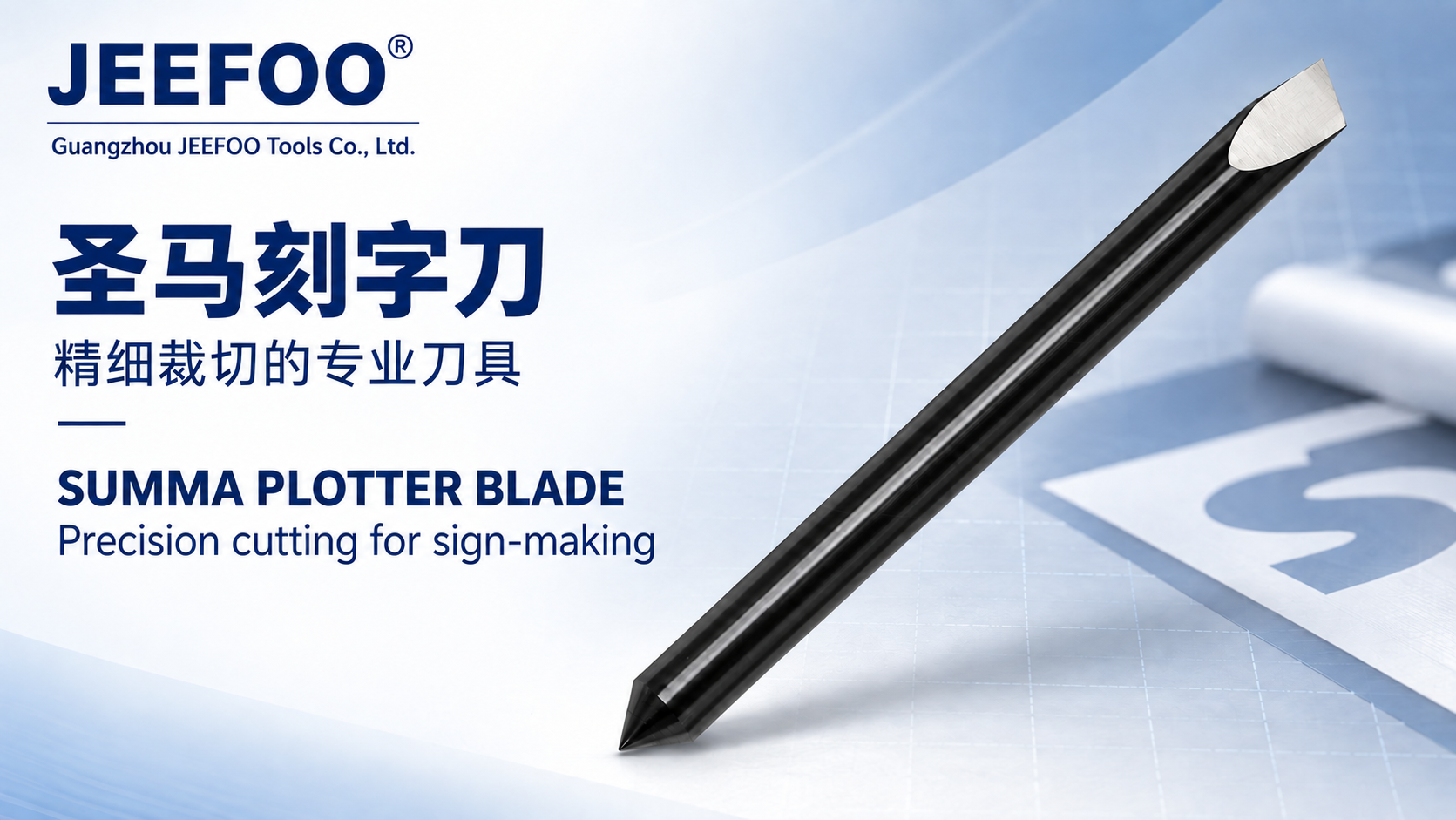
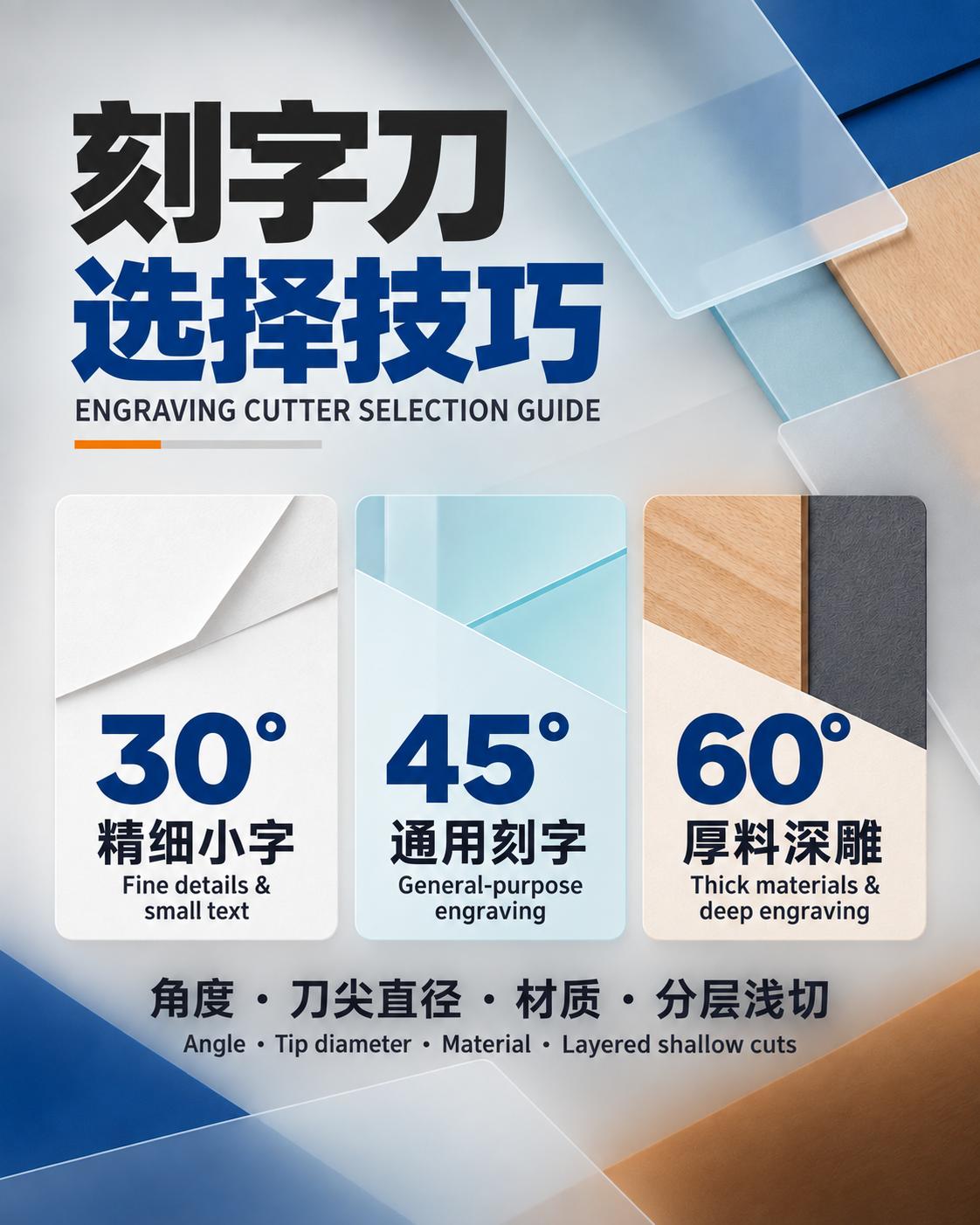
A pointed-nose knife is a fine-tip cutting or engraving tool used for narrow lines, V-grooves, lettering, scoring, detail carving, film cutting, and precise corner work. Choose it by included angle, tip width or radius, cutting-edge length, shank, holder, workpiece, depth, and machine type. This Pointed Nose Knife Selection Guide explains nine essential checks.

Pointed Nose Knife Selection Guide: quick answer
- Smaller angle: fine lines and deeper narrow features, but a more delicate tip.
- Larger angle: stronger tip and wider groove growth with depth.
- Smaller tip width: finer details but lower strength and greater runout sensitivity.
- Drag knife: requires correct offset, exposure, force, and holder rotation.
- Rotary engraving tool: requires correct spindle direction, runout, speed, feed, and depth.
- Critical rule: confirm whether the tool is stationary/swiveling or spindle-driven before choosing parameters.
1. Identify the pointed-knife type
“Pointed nose” can describe a swivel plotter blade, fixed oscillating knife, V-bit, tapered engraving cutter, or pointed carving tool. These tools use different holders and cutting motions. Verify the machine, shank, blade head, rotation, offset, and supplier drawing before installation.
2. Choose the included angle
The included angle determines strength and how quickly groove width increases with depth. A narrow angle reaches fine details but can break more easily. A wide angle supports the tip and creates broader chamfers or lettering. Confirm whether the catalog lists full included angle or angle per side.
3. Specify tip width or tip radius
No physical tip is infinitely sharp. Tip width, flat, or radius controls the minimum line and bottom geometry. For V-carving, depth changes line width even with the same tool. Inspect the real tip under magnification and enter the measured or certified value in CAM when precision matters.
4. Match edge material to the workpiece
The Pointed Nose Knife Selection Guide compares tool steel, high-speed steel, carbide, and diamond-based edges according to hardness, toughness, abrasion, heat, and chemical compatibility. Carbide is common for engraving and routing; diamond tools suit selected abrasive nonferrous and nonmetal materials, not general steel cutting at high temperature.
5. Control depth and line width
For a V-shaped tool, deeper cutting creates a wider line. Surface flatness, Z-zero, tool length, tip wear, and material thickness therefore affect graphics and text. Use a surface map, touch-off routine, pressure foot, or controlled work support when the application requires consistent line width.
6. Minimize runout or calibrate offset
A rotary pointed tool needs a clean holder, minimum overhang, correct insertion, and low runout. A swivel drag knife needs free rotation and correct tip offset. Runout widens rotary engraving and overloads one edge; wrong offset leaves hooks, tails, or open corners in drag-knife work.
7. Set conservative entry and parameters
Start with supplier speed, feed, force, and depth recommendations for the exact tool and material. Use shallow passes, ramping, or a gradual approach when a delicate tip cannot tolerate shock. Too little rotary feed can rub and heat; excessive drag-knife force damages the tip and backing.
8. Diagnose common defects
- Line too wide: check depth, angle, tip size, runout, and surface flatness.
- Broken tip: reduce shock, overhang, runout, force, or depth per pass.
- Open drag-knife corners: verify offset and holder rotation.
- Fuzzy engraving: inspect edge sharpness, feed direction, work support, and chip removal.
- Uneven depth: review Z-zero, fixture, material thickness, cutting strip, and tool projection.
9. Inspect and handle safely
Pointed tips are fragile and can puncture skin. Store each tool in a protective container, inspect it under suitable magnification, and dispose of damaged blades in a rigid sharps container. Isolate the machine during service and follow the OSHA hazardous-energy guidance and machine procedure.
Pointed Nose Knife Selection Guide checklist
- Identify drag, oscillating, fixed, or rotary operation.
- Define line width, depth, angle, corner, and finish.
- Confirm included angle, tip width/radius, cutting length, and shank.
- Match edge material and coating to the workpiece.
- Calibrate offset or minimize rotary runout and overhang.
- Validate force or speed/feed with shallow test cuts.
- Record tip life, line-width drift, and replacement criteria.
- Review JeeFoo pointed-knife resources.
Frequently asked questions
Is a pointed knife the same as a V-bit?
Sometimes the term describes a V-shaped rotary tool, but it can also mean a drag or oscillating blade. The machine motion and holder must be identified first.
Why does line width change with depth?
The conical sides move farther apart as the tool penetrates. Angle, tip width, and actual depth together determine the resulting line width.
When should the pointed knife be replaced?
Replace or service it when the tip chips or rounds, line width drifts, corners deteriorate, force rises, or the shank or holder interface is damaged.
Conclusion
Use this Pointed Nose Knife Selection Guide to identify the cutting motion first, then match angle, tip, material, depth, offset or runout, and parameters. Clear tool definitions prevent broken tips and inconsistent lettering.