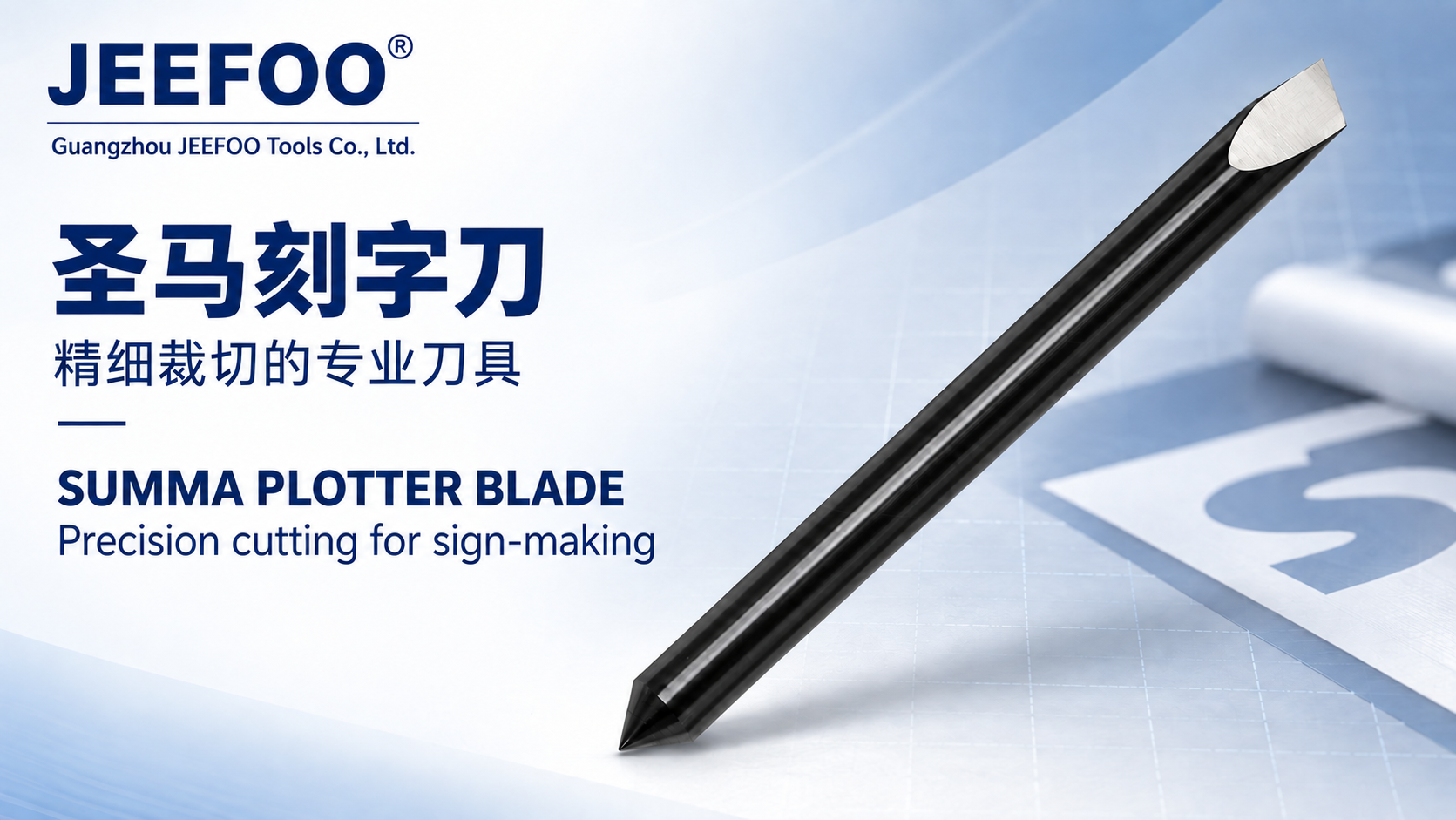
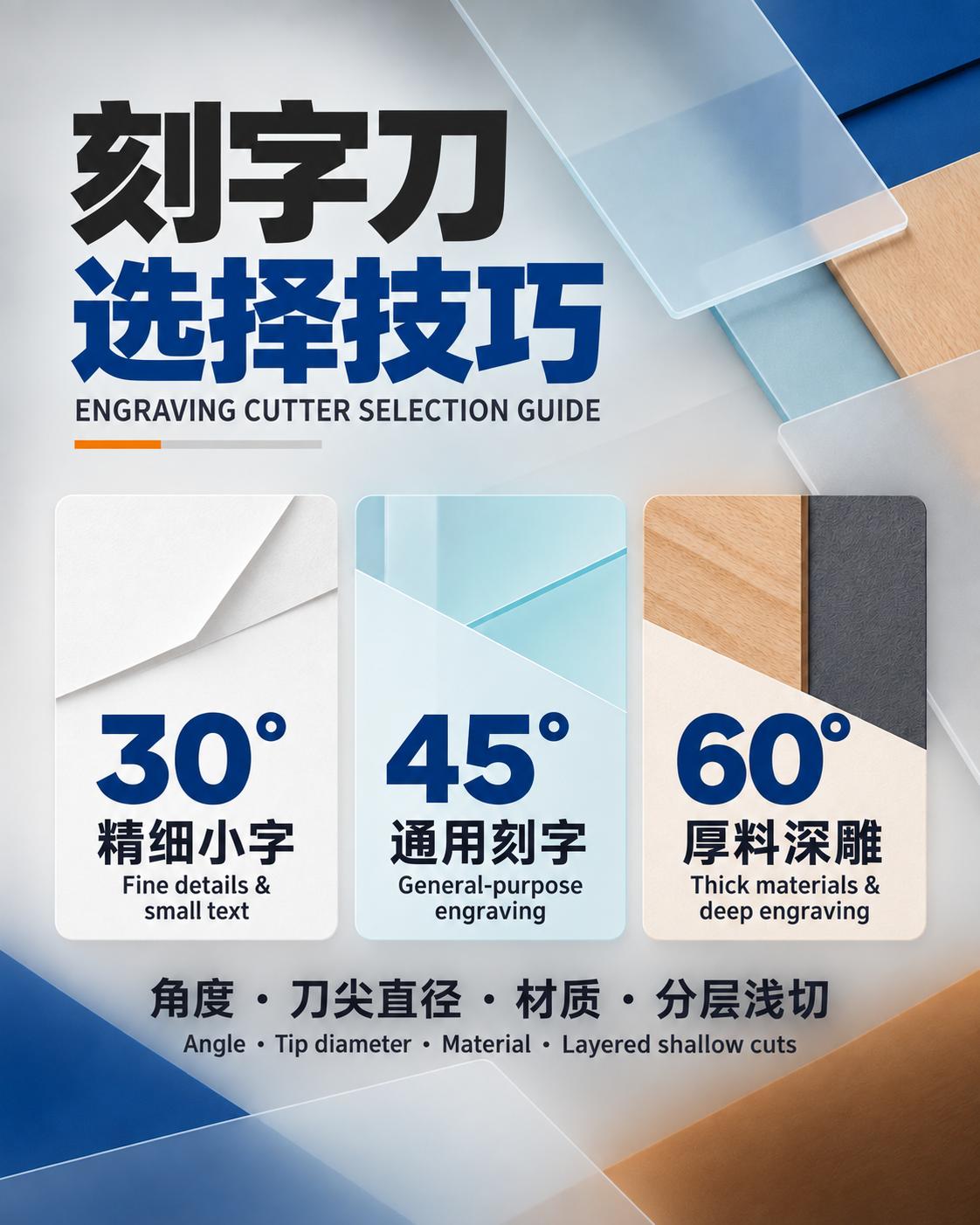
A tungsten carbide sharp engraving knife is a pointed or flat-tip finishing cutter used for 2D engraving, fine cutting, 3D corner cleanup, lettering, and detail work. It can machine ABS two-color board, acrylic, plastics, wood, and—when the tool geometry, machine, lubrication, and cutting data permit—copper, aluminum, and other metals. Choose the widest tip that fits the smallest detail to improve strength and productivity.

What Is a Carbide Sharp Engraving Knife?
The tool uses a rigid tungsten carbide cutting section with a fine point, flat tip, or angled edge. Its narrow geometry reaches small text, corners, and relief details that larger end mills cannot access. Carbide provides wear resistance and stiffness, but the fine tip is sensitive to runout, impact, excessive depth, and long overhang.
Main Functions
- 2D plane engraving and lettering.
- Fine 2D cutting and outline work.
- 3D corner clearing after rough machining.
- Small chamfers, V-grooves, and decorative lines.
- Detail finishing in acrylic, ABS sheet, wood, plastic, and selected metals.
Material Selection Guide
| Material | Tool priority | Process note |
|---|---|---|
| ABS two-color board | Sharp point and clean top edge | Use light depth and effective chip removal |
| Acrylic | Polished sharp geometry | Avoid rubbing, melting, and chip recutting |
| Wood/MDF | Tip strength and dust clearance | Use extraction and support delicate grain |
| Aluminum/copper | Polished carbide and rigidity | Use appropriate lubrication or mist |
| Steel/iron | Application-specific grade and machine | Use conservative data and suitable coolant |
How to Choose Tip Width and Angle
- Start with the smallest detail. Tip width must fit the narrowest line or corner.
- Use the widest practical tip. A wider tip is stronger and can support faster feed.
- Match the included angle. Smaller angles reach fine detail; larger angles create stronger edges and wider grooves.
- Check cutting depth. Deeper V-cuts become wider, so model the actual geometry in CAM.
- Limit overhang. Clamp the shank securely and use only the reach needed.
- Verify runout. A fine tip magnifies collet and spindle error.
Metal Engraving Setup
For metal, use the engraving knife maker’s starting speed, feed, depth, and coolant recommendation. Suitable cutting oil, mist, or coolant can reduce built-up edge and heat, but the machine must be designed and guarded for that fluid. Use shallow passes, rigid workholding, and continuous feed rather than dwelling at the tip.
Setup Checklist
- Clean the collet, nut, shank, and spindle interface.
- Use the exact collet size and minimize projection.
- Set Z height on a flat, supported workpiece.
- Make a test cut to confirm actual line width and depth.
- Use dust, air, mist, or coolant appropriate to the material.
- Inspect tip wear frequently under magnification.
Common Problems and Fixes
| Problem | Likely cause | Correction |
|---|---|---|
| Broken tip | Excess depth, impact, runout, narrow tip | Use wider tip and lighter passes |
| Uneven line width | Warped stock, wrong Z zero, runout | Surface/support stock and reset Z |
| Acrylic melting | Rubbing or poor chip removal | Correct chip load and evacuation |
| Metal buildup | Heat or insufficient lubrication | Use suitable geometry and lubrication |
| Fuzzy engraving | Dull edge or weak material support | Replace tool and improve hold-down |
Browse related engraving tools in the JeeFoo cutter library. Follow the machine manual and applicable OSHA machine-guarding guidance.
Frequently Asked Questions
Why use the widest possible tip?
A wider tip is stronger and often permits higher feed, but it must still fit the smallest required detail and line width.
Can a carbide sharp knife engrave metal?
Yes, when the exact tool is rated for the metal and the setup provides rigidity, suitable speed/feed, shallow passes, and proper lubrication.
Why does engraving width change with depth?
On an angled cutter, deeper penetration engages a wider part of the tool. CAM geometry and Z height therefore control final width.
What causes a carbide tip to break?
Common causes include runout, excessive overhang, heavy depth, abrupt entry, poor clamping, chip recutting, and choosing a tip that is too narrow.