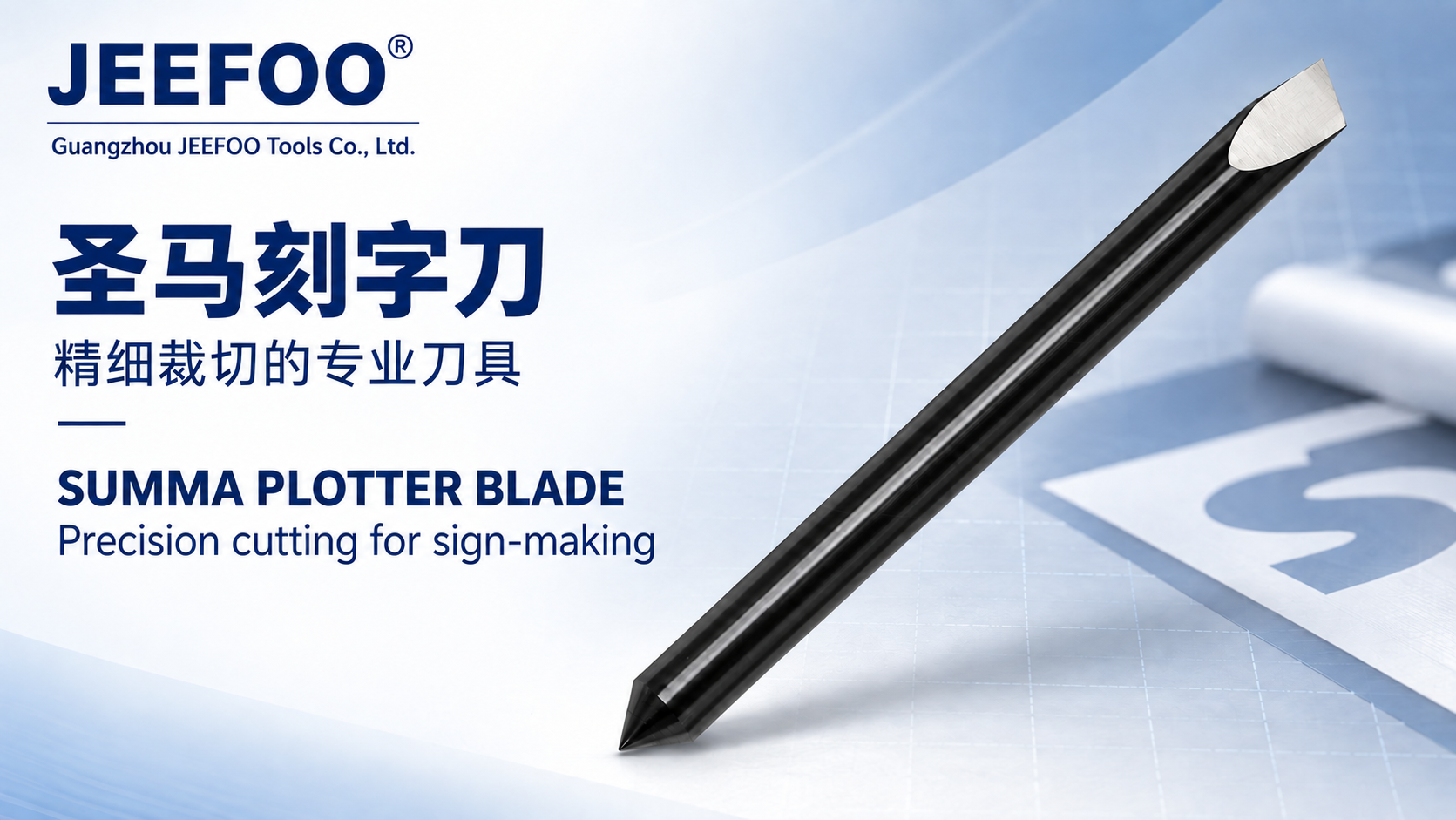
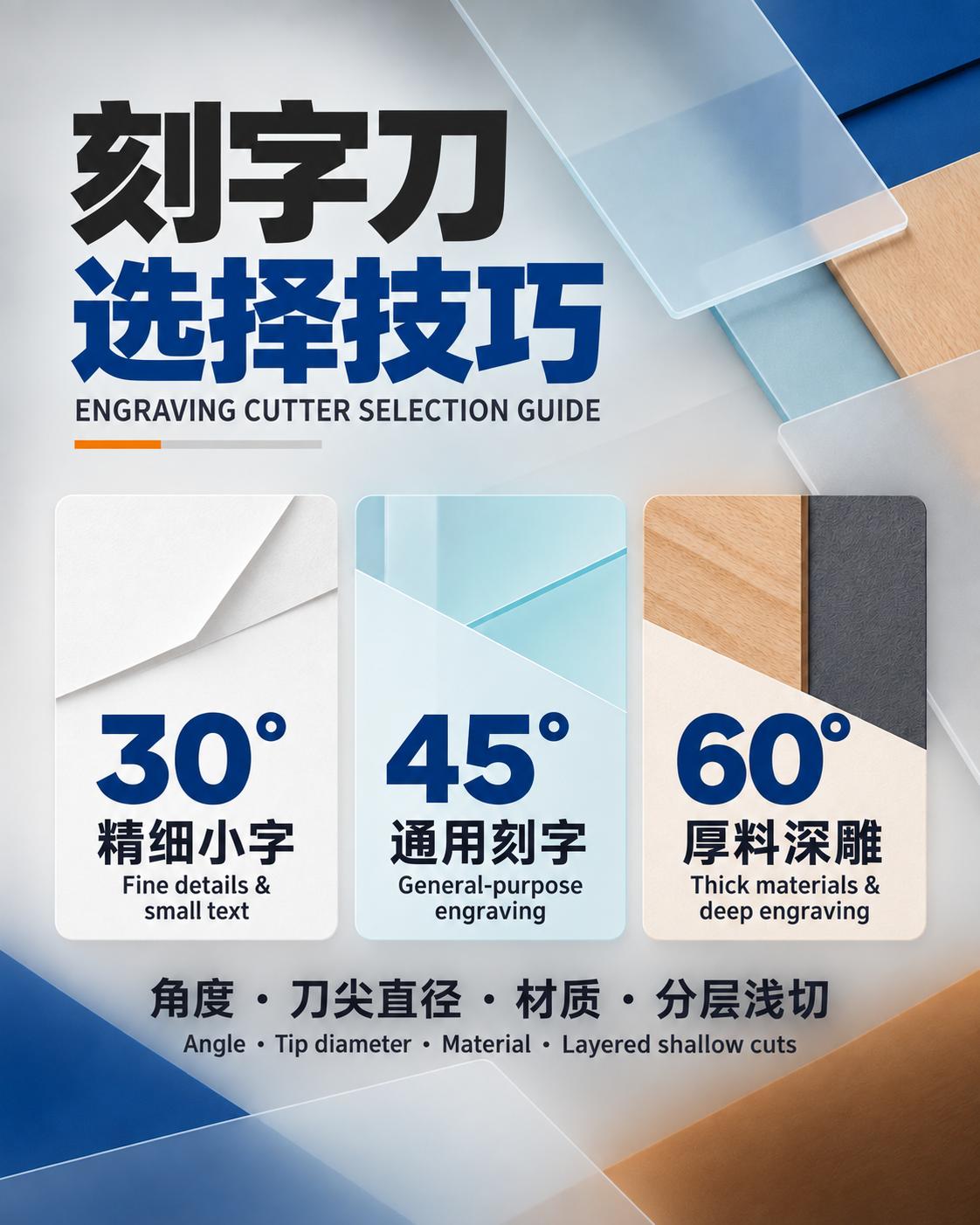
A single edge column cutter is a carbide straight-sided routing tool for two-dimensional cutting, vertical-wall grooves, profiles, and inlay work. Unlike a pointed engraving knife, its cylindrical cutting geometry produces walls without a deliberate slope, making it useful for accurate fitting parts.
Table of Contents

1. What is a single edge column cutter?
The tool has one cutting edge and a straight cylindrical profile. A large flute provides room for chips, while solid carbide supplies rigidity and wear resistance. The geometry is intended to leave vertical sidewalls in two-color board, plastic sheet, and manufacturer-approved acrylic.
2. Seven essential features
- One sharp edge for low cutting pressure.
- Large flute space for chip evacuation.
- Straight walls without V-shaped taper.
- Carbide rigidity for dimensional accuracy.
- Clean profiles in suitable sheet materials.
- Geometry appropriate for inlay preparation.
- Multiple diameters for different groove widths.
3. Materials and applications
| Material | Typical use | Main concern |
|---|---|---|
| Two-color board | Signs, profiles, and inlays | Burr control |
| Plastic board | 2D cutting and slots | Heat and chip evacuation |
| Acrylic under approved thickness | Profiles and grooves | Melting and edge finish |
| Soft non-ferrous sheet | Approved light routing | Lubrication and rigidity |
4. Column cutter vs. pointed knife
A pointed knife creates tapered walls and fine V-shaped details. A column cutter removes material with a constant diameter, so the wall remains vertical. This difference matters for inlays, fitted letters, pockets, and components where sidewall angle affects assembly.
5. How to select the right size
Match diameter to groove width and the smallest internal radius. Choose only the cutting length needed for the material and minimize overhang. Verify shank size, edge direction, maximum depth, material approval, and collet compatibility. A stronger diameter is preferred when fine detail does not require a smaller tool.
6. Speed, feed, and chip load
Start with the cutter maker’s parameters. Because the tool has one edge, feed calculations must use one flute. Proper chips carry heat away. Fine dust, melted plastic, discoloration, or squealing can indicate rubbing, excess speed, low feed, a dull edge, or poor chip evacuation.
7. Setup checklist
- Inspect the edge and clean the collet and shank.
- Clamp the sheet flat and support thin areas.
- Minimize runout and cutter overhang.
- Confirm toolpath, direction, depth, and clearance.
- Use suitable vacuum extraction or air blast.
- Make a test cut and measure wall angle and groove width.
- Use guarding, eye protection, and hearing protection.
Troubleshooting
Burrs can result from a dull edge, weak support, or unsuitable cutting direction. Melting suggests heat, rubbing, or chip recutting. Oversized grooves may indicate runout or tool deflection. Tapered walls can come from spindle misalignment, workpiece movement, or using the wrong tool geometry.
For a related straight-edge option, see our single flute straight edge tool guide. Operators should also follow recognized machine guarding guidance.
Frequently asked questions
Why is this tool suitable for inlays?
Its constant diameter produces vertical sidewalls, helping mating pieces fit more accurately than grooves made with a tapered knife.
Can it cut acrylic?
Yes, when the cutter maker approves the thickness and parameters. Sharp edges, real chip load, and good evacuation help prevent melting.
How can burrs be reduced?
Use a sharp tool, rigid support, low runout, correct direction, stable feed and speed, and a light finishing pass when appropriate.
Summary
A single edge column cutter is a practical carbide tool for vertical-wall profiles, grooves, and inlays. Correct diameter, chip load, workholding, evacuation, and runout control determine accuracy, edge quality, and tool life.