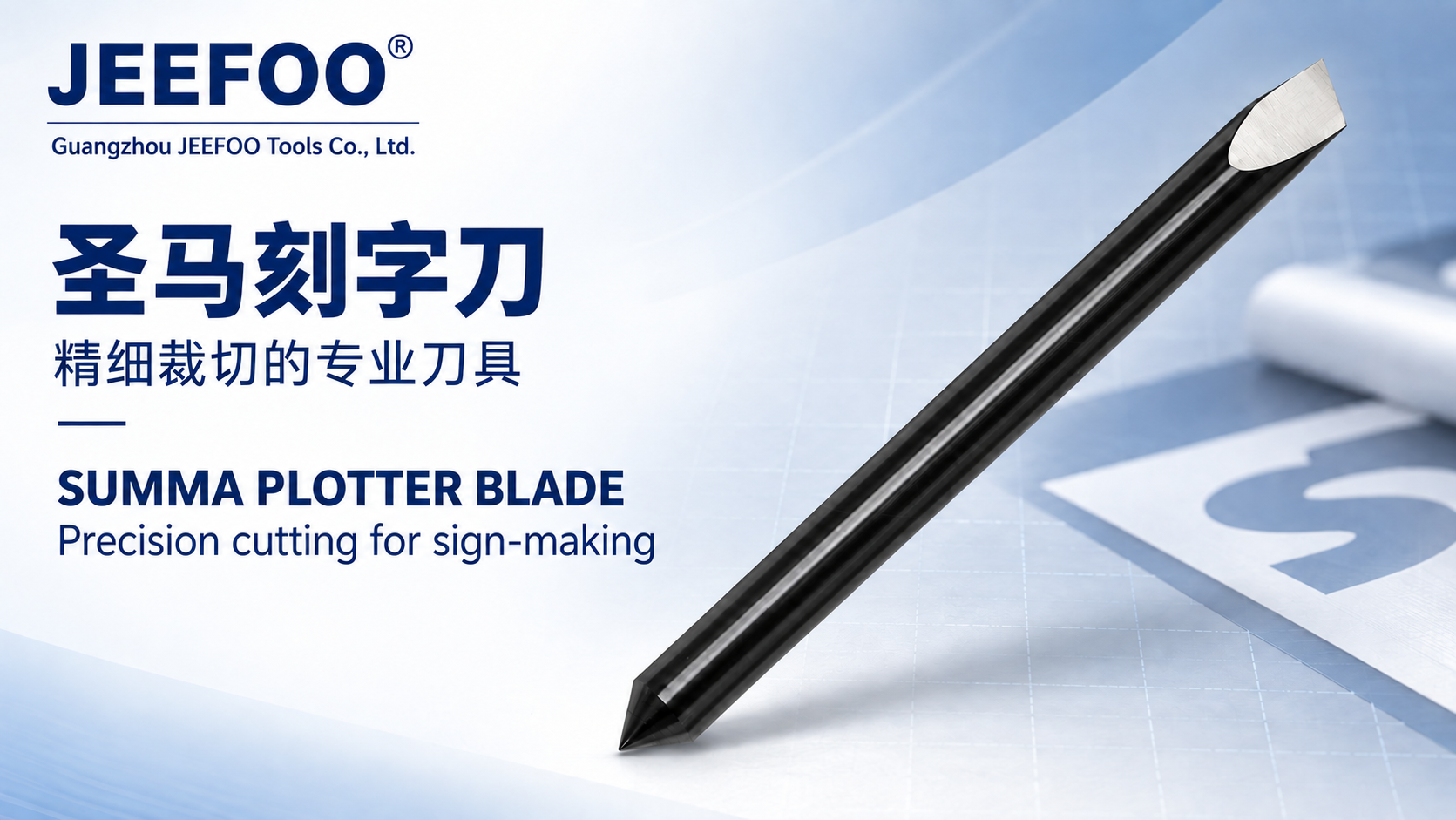
A single-edged cone knife is a precision carbide conical engraving tool used to create chamfers, V-grooves, lettering, relief details, and clean internal corners. Its pointed geometry converts tool depth into groove width, making accurate setup essential for consistent three-dimensional results.
Table of Contents

1. What is a single-edged cone knife?
A single-edged cone knife is often a solid-carbide V-bit or tapered engraving cutter. The angle, tip width, cutting-edge length, and shank size determine the detail it can produce. Carbide provides the stiffness and wear resistance needed for accurate engraving, but the pointed tip must be protected from impact and excessive runout.
2. Main uses
- Three-dimensional corner cleaning and detail finishing.
- V-carved letters, logos, signs, and decorative patterns.
- Chamfering and beveling straight or curved edges.
- Relief engraving and reverse engraving.
- Fine grooves, outlines, and inlay preparation.
3. Suitable materials
The tool is commonly used on acrylic, PVC, MDF, hardwood, softwood, and modeling board. Some geometries can machine non-ferrous metals, but only when the manufacturer specifies that application. Material hardness, abrasiveness, melting tendency, and chip evacuation requirements should guide the choice.
| Material | Typical result | Key control |
|---|---|---|
| Acrylic | Crisp engraved lines | Prevent heat and chip recutting |
| PVC | Clean lettering and bevels | Use sharp edges and adequate feed |
| MDF | Detailed signs and reliefs | Use dust extraction |
| Wood | Decorative carving | Consider grain direction and tear-out |
4. How to choose the geometry
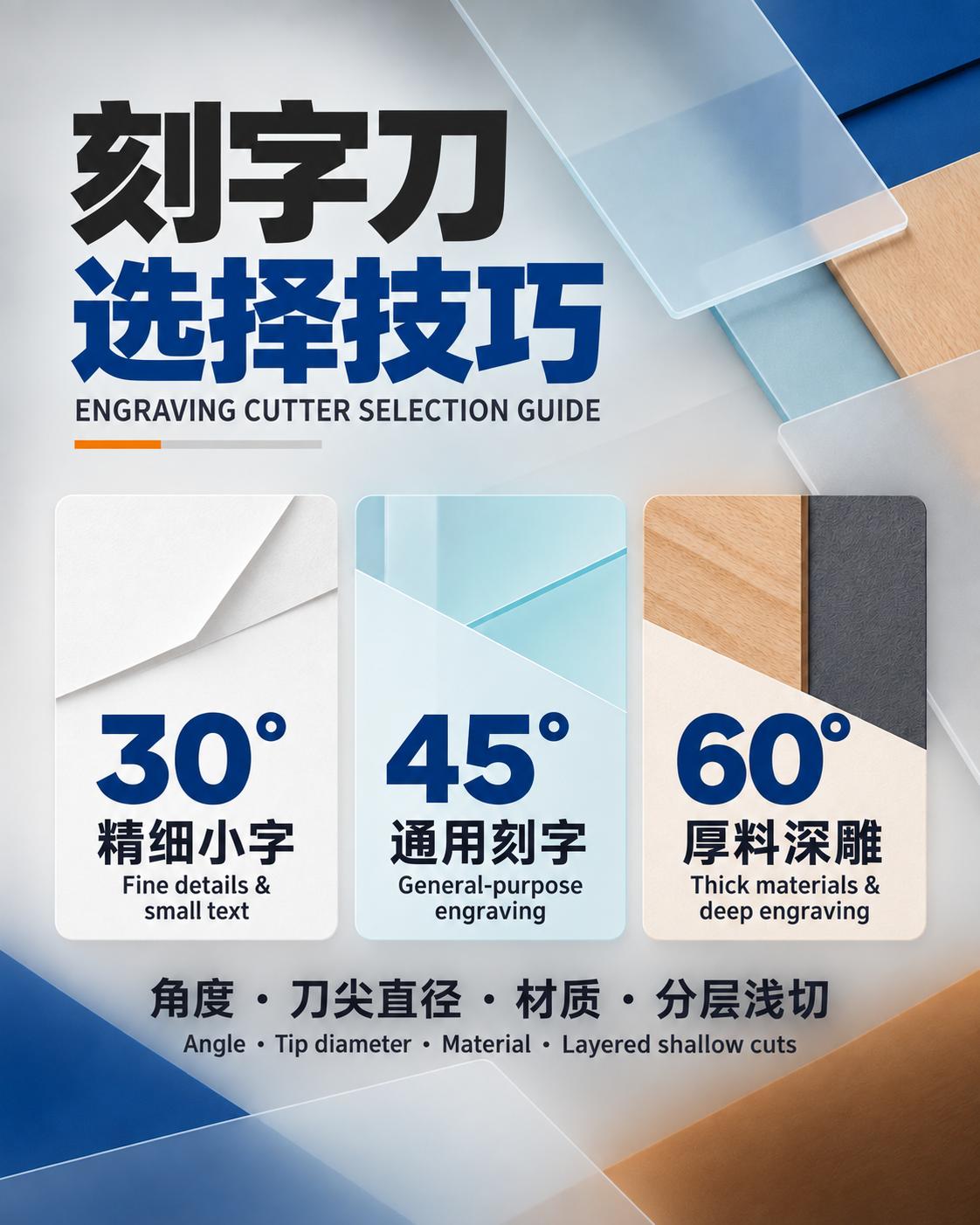
Select the included angle according to the desired groove: a narrow angle produces fine, deep detail, while a wider angle creates broader, shallower features. A small tip width improves detail but is more fragile. Choose a cutting length just sufficient for the design and keep tool overhang as short as possible.
5. Speed, feed, and depth
Begin with the cutter manufacturer’s recommendations and make a test cut in scrap material. Use a conservative depth per pass for a fine tip. Proper feed produces visible chips instead of dust or melted debris. If the tool squeals or burns the workpiece, verify feed, spindle speed, sharpness, runout, and chip removal.
6. Setup checklist
- Confirm the engraving plane is flat and the workpiece is rigidly secured.
- Clean the collet and inspect the carbide tip under good lighting.
- Clamp the shank securely with minimal overhang.
- Measure or probe the surface carefully before setting zero.
- Preview the toolpath and verify angle, depth, and final groove width.
- Use suitable dust extraction or chip evacuation.
- Keep guards in place and wear eye and hearing protection.
7. Common problems and solutions
Uneven groove width usually indicates an unlevel surface, inconsistent zero, or workpiece movement. A broken tip can result from excessive depth, impact, runout, or an aggressive entry move. Fuzzy wood edges may improve with a sharper tool, climb-cut finishing pass, correct grain strategy, and shallower final pass.
For a related spiral cutting option, read our single flute helical cutter guide. Operators should also follow recognized machine guarding guidance.
Frequently asked questions
Which angle is best for detailed carving?
A smaller included angle generally creates finer details, but it is more fragile and may require shallower passes. Match the angle to the artwork, depth, and required line width.
Why must the engraving plane be flat?
With a V-shaped tool, even a small height change alters the groove width. Surfacing the spoilboard, securing the workpiece, and probing accurately are critical for uniform lettering.
How can tool life be extended?
Minimize runout and overhang, use appropriate cutting parameters, remove chips, avoid plunging too aggressively, and store the tool so the carbide tip cannot strike other cutters.
Summary
A carbide single-edged cone knife delivers precise engraving when its angle, tip width, depth, and setup match the design. Flat workholding, accurate zeroing, controlled passes, and effective chip removal are the foundations of clean, repeatable results.