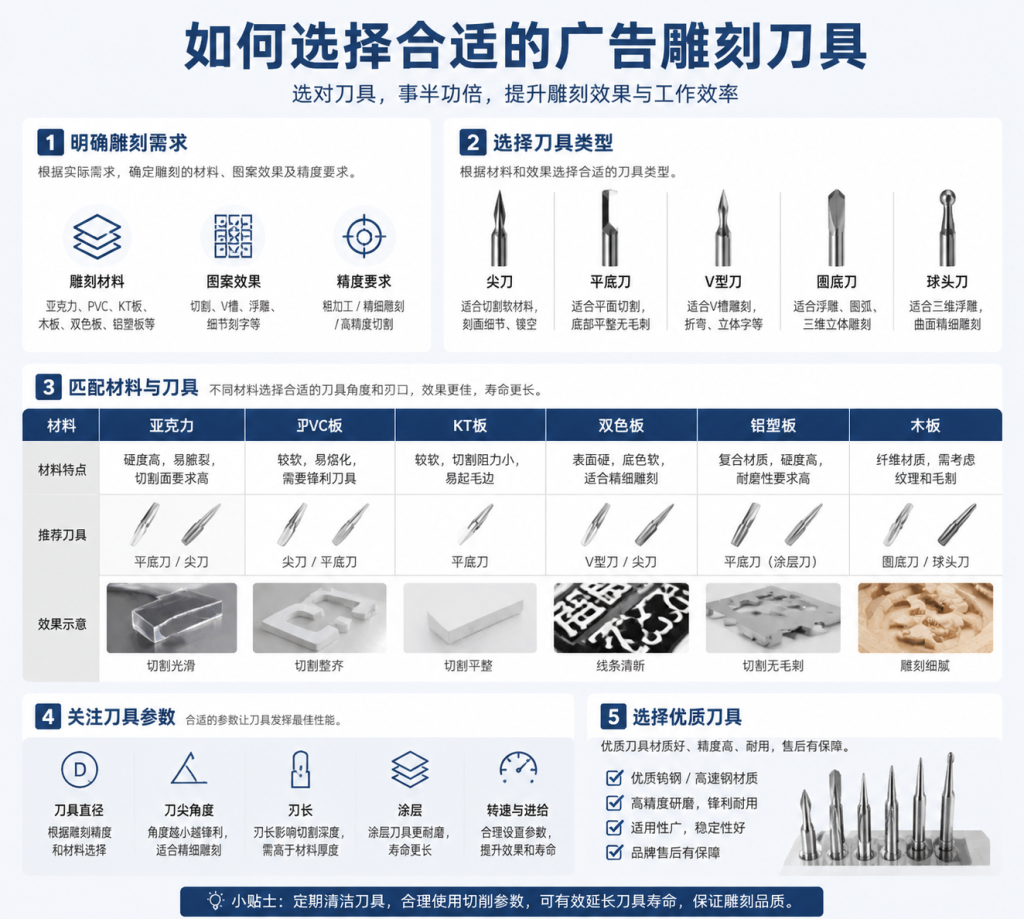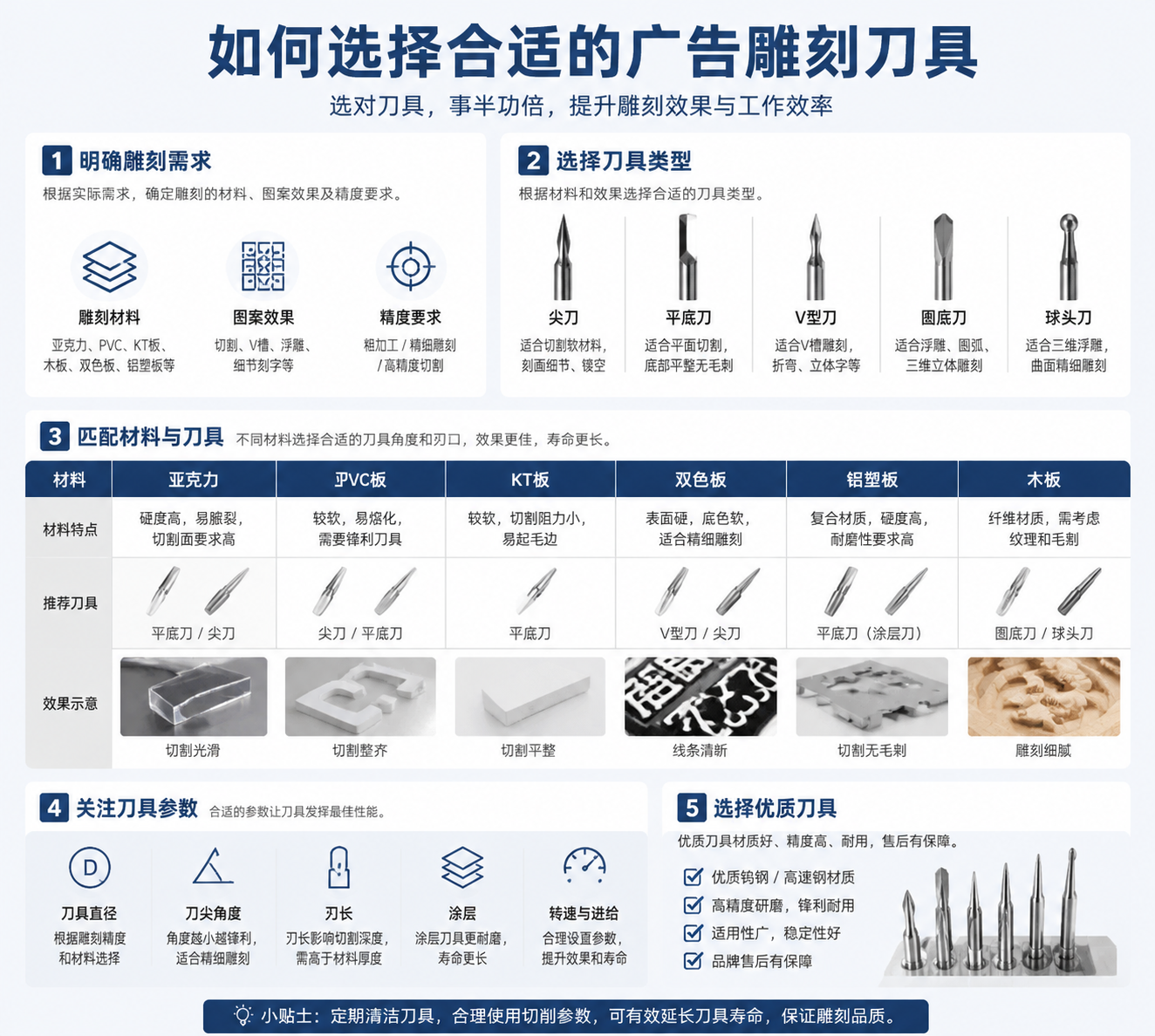
There are various types of materials used in advertising engraving, and the selection of tools must align with the board material and processing techniques. For processing plastic boards such as acrylic, PVC, and plexiglass, single-edge column tools are preferred, as their smooth cutting edges prevent high-temperature melting and sticking, ensuring clean, burr-free cuts. When cutting thin films, adhesive vinyl, or thin sheets, left-hand rotary tools are recommended, as the downward cutting force helps press the material, preventing edge lifting and deformation.
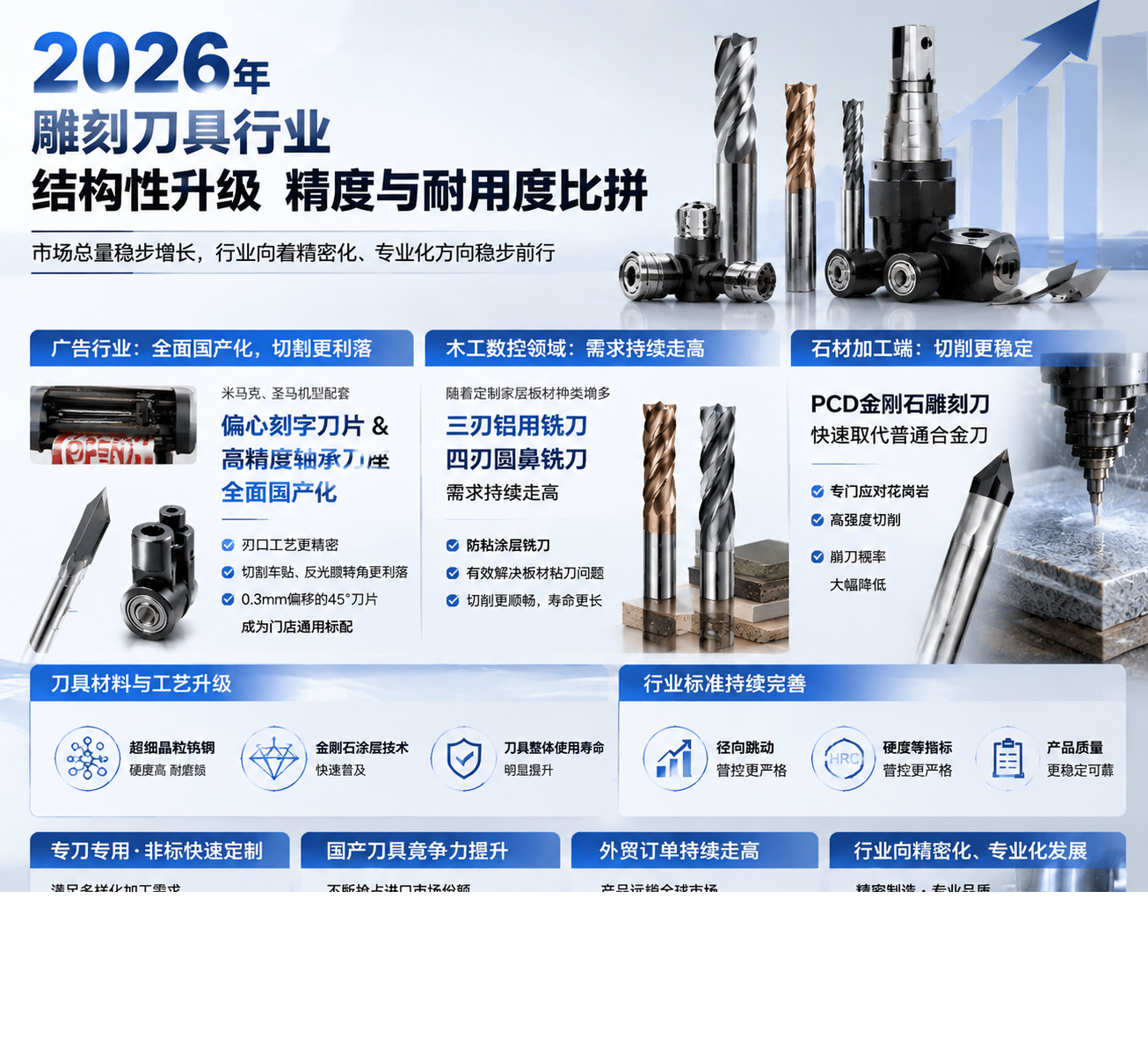
For processing particleboard, solid wood lettering, relief carving, and fine engraving, dual-edge spiral-tip blades ensure smooth chip removal, enabling both rough cutting and fine detailing in one operation. For stone signage processing, only full-tungsten carbide-tip blades should be used to resist impact and prevent tip breakage.
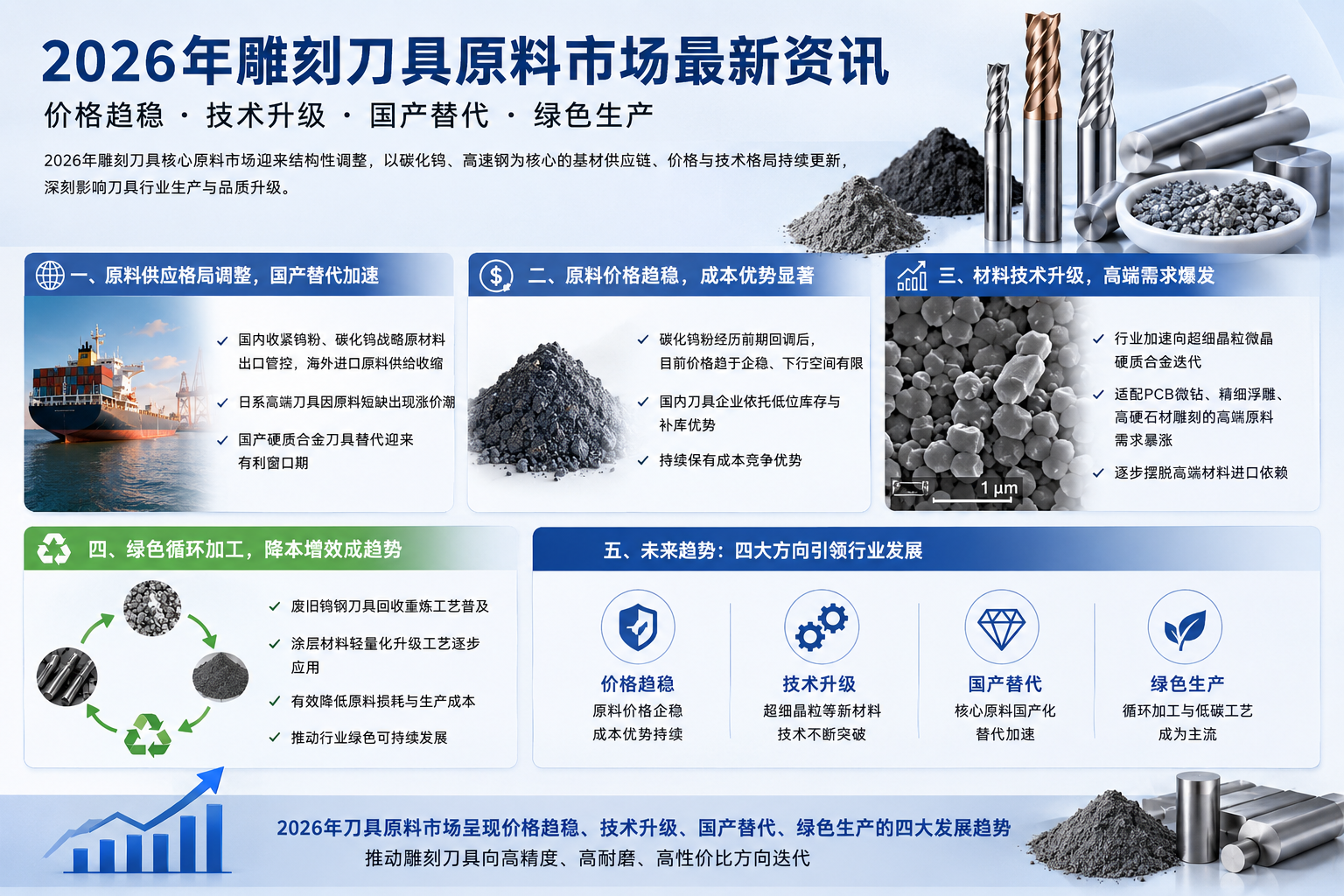
When selecting tools, it is also essential to control the diameter and taper: use large-diameter milling cutters for large-area grooving and small-taper fine-tip cutters for precision fine work. The tool shank size must match the collet of the engraving machine to prevent high-speed vibration. For mass production, prioritize carbide tungsten steel tools for wear resistance and durability; for small-batch prototyping, economical tools can be used. Properly matching the tool type, material, and rotational speed can reduce tool breakage, improve cutting flatness, and lower the scrap rate.