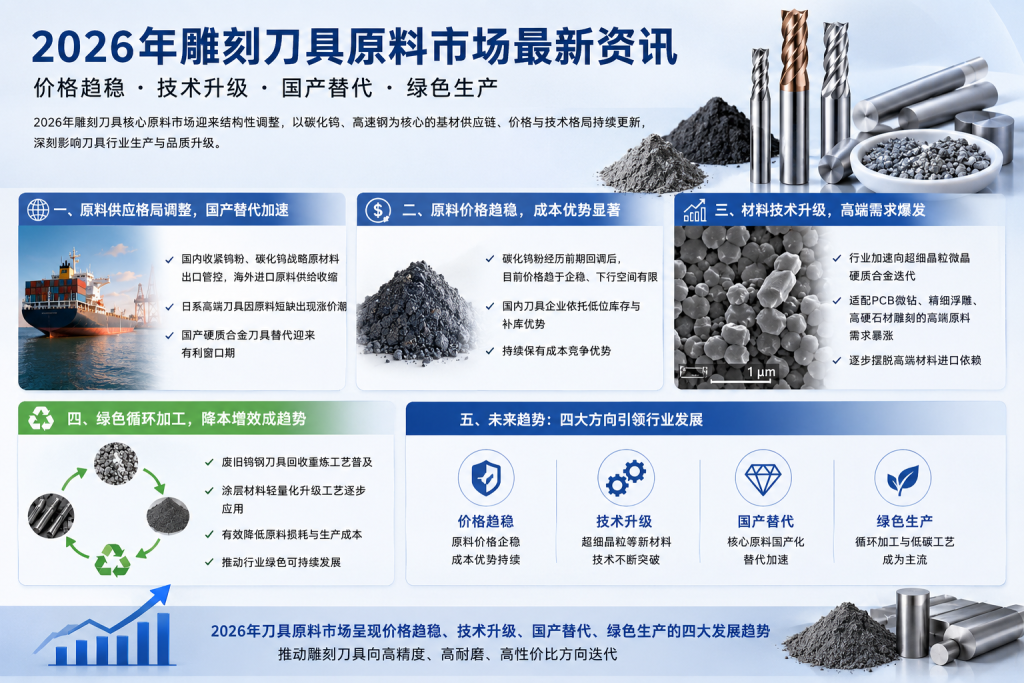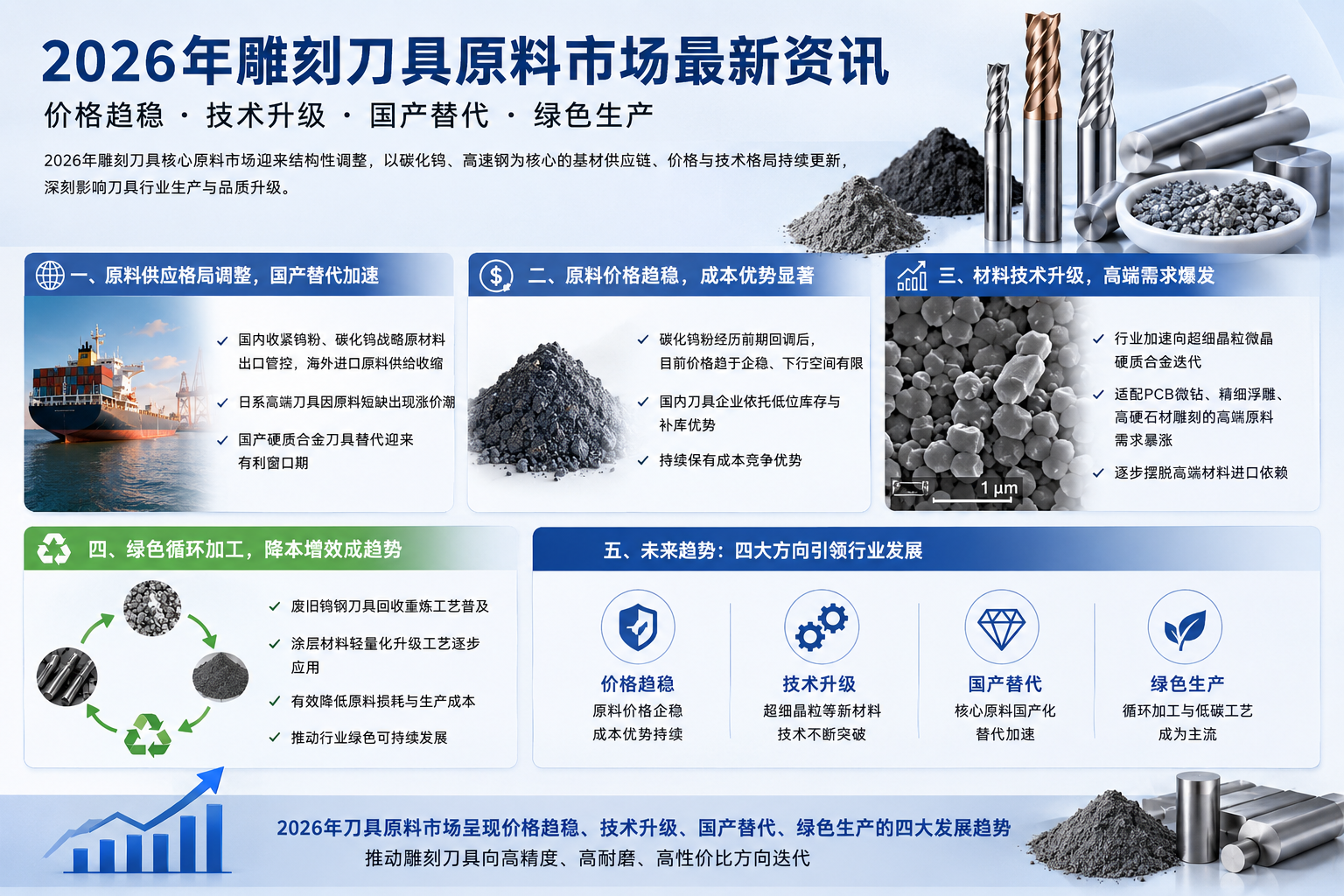
In 2026, the core raw material market for carving cutting tools will undergo structural adjustments, and the supply chain, price, and technological landscape of substrates centered on tungsten carbide and high-speed steel will continue to update, profoundly affecting the production and quality upgrading of the cutting tool industry. This year, the export control of tungsten powder and tungsten carbide strategic raw materials in China has been tightened, and the supply of imported raw materials from overseas has shrunk. Due to the shortage of raw materials, Japanese high-end cutting tools have experienced a wave of price increases, creating a favorable window for the replacement of domestic hard alloy cutting tools. In terms of raw material prices, tungsten carbide powder has experienced a pullback in the early stage, and currently the price tends to stabilize with limited downward space. Domestic tool companies rely on the advantages of low inventory and replenishment to maintain their cost competitive advantage.
At the material technology level, the industry is accelerating the iteration towards ultra-fine grain microcrystalline hard alloys, and the demand for high-end raw materials suitable for PCB micro drills, fine relief, and high hardness stone carving is skyrocketing, gradually breaking away from the dependence on imported high-end materials.
At the same time, green circular processing has become a new trend in the industry, and the recycling and refining of waste tungsten steel cutting tools, as well as the upgrading of lightweight coating materials, are gradually becoming popular, effectively reducing raw material loss and production costs. Overall, in 2026, the cutting tool raw material market will show four major development trends: price stabilization, technological upgrading, domestic substitution, and green production, promoting the iteration of carving tools towards high precision, high wear resistance, and high cost-effectiveness.