The supplier lists its 45° Summa-type vinyl blade in boxes of five.[1] That tells a buyer how to read the pack quantity. It says nothing about which barcode will appear on a parcel. Agree on the labelling arrangement before building a receiving rule around it.
Blade shipments: GTIN names the item, SSCC names the parcel
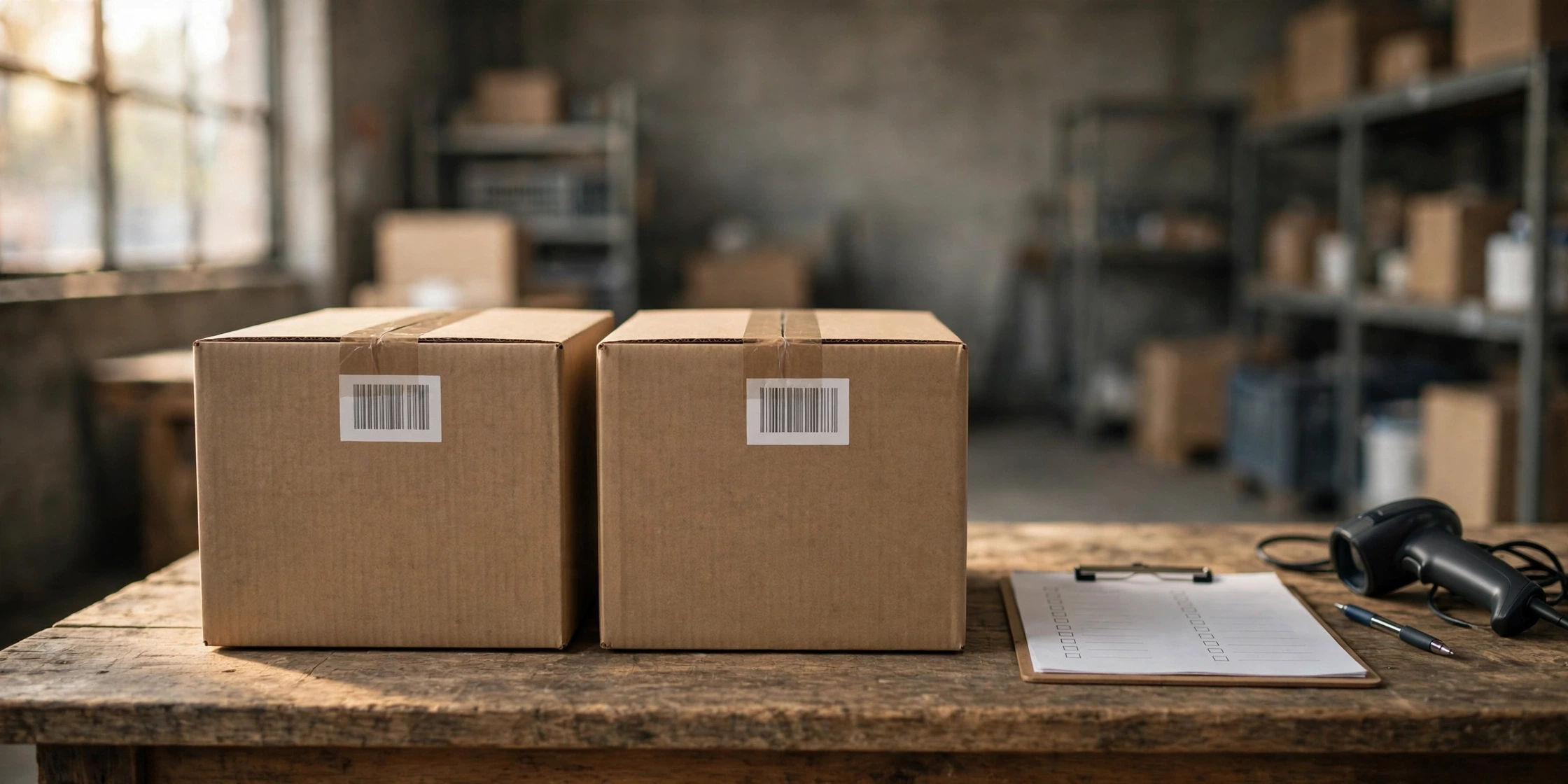
Suppose a buyer orders two identical five-blade boxes and each travels as a separate parcel. Under a GS1 arrangement, the Global Trade Item Number (GTIN) identifies the trade item being ordered. If that item is the five-pack, both boxes can carry the same GTIN.[2] Two scans of that number alone cannot distinguish two boxes from a second scan of the first.
To identify each parcel, use its Serial Shipping Container Code (SSCC). The two separately identified logistic units have different SSCCs. The number itself does not spell out the product or quantity: the receiver can match it to the contents reported in the advance ship notice.[3]
If both ordered boxes travel together as one logistic unit, a single outer SSCC can be correct. At receipt, reconcile the logistic unit with the dispatch record, then check the ordered pack quantity. Counting distinct shipping codes as boxes of blades would give the wrong answer in this second arrangement.[2][3]
Related reading: Spare plotter blade holders: a receiving record that survives the next reorder