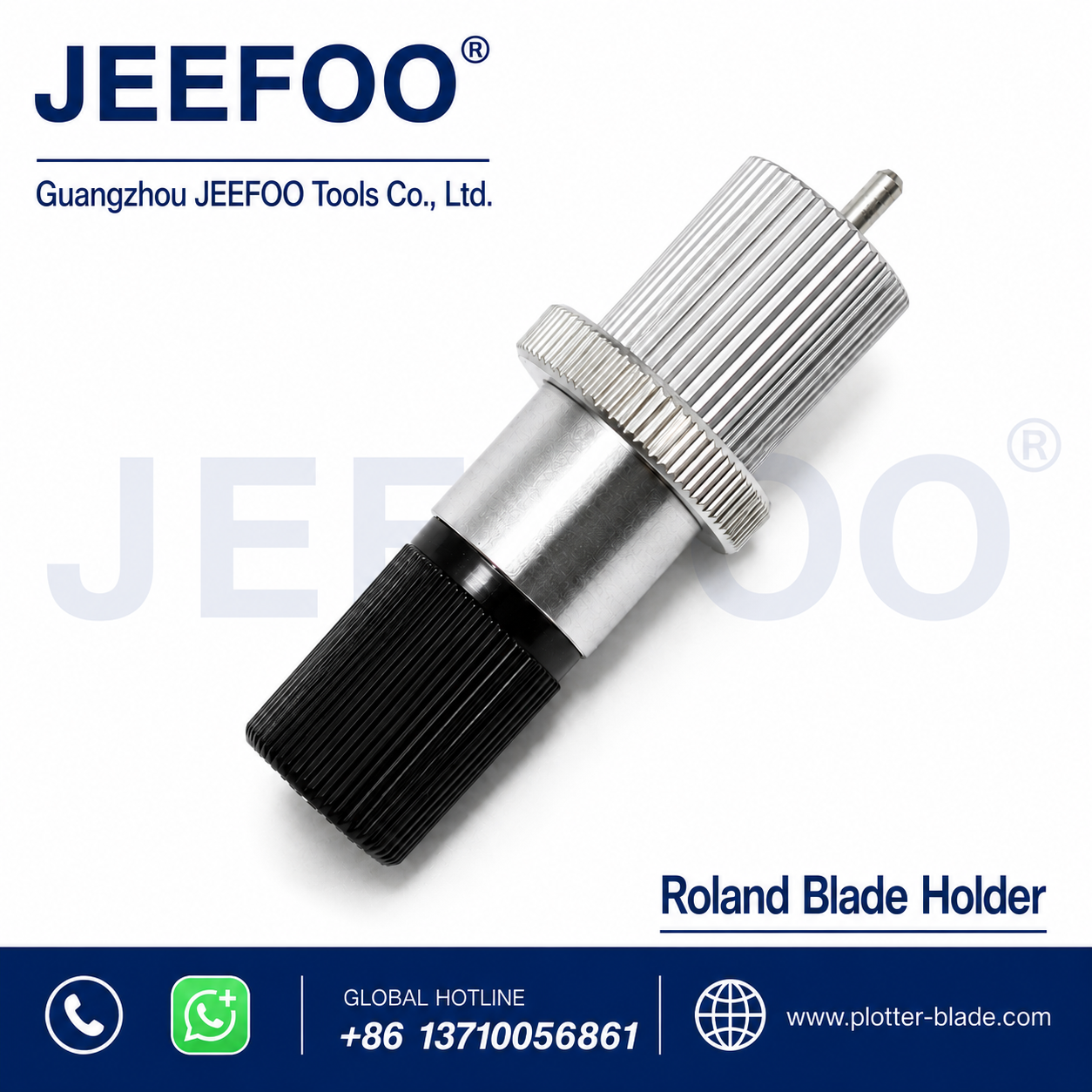
Roland blade holder selection directly affects blade stability, cutting depth, corner accuracy, and vinyl weeding. This practical guide explains compatibility, installation, adjustment, maintenance, and sourcing so sign makers and distributors can choose a dependable holder with confidence.
What Is a Roland Blade Holder?
A Roland blade holder is the precision component that secures a compatible plotter blade and controls how far its cutting tip projects. A well-machined holder lets the blade rotate freely while keeping it centered. This reduces torn corners, uneven curves, lifting vinyl, and premature blade wear. It is used for adhesive vinyl, heat-transfer film, masking media, paper, and other materials supported by the cutting plotter.
Key Specifications to Check
- Machine compatibility: confirm the holder body, collar, and clamp position match the Roland cutter model.
- Blade diameter: this holder is designed for approximately 2 mm blades; verify the exact blade specification before ordering.
- Holder dimensions: the referenced design is about 25 mm high with an 11.5 mm clip diameter.
- Adjustment: the depth ring should turn smoothly and stay fixed during long production runs.
- Bearing movement: the installed blade must rotate without wobble, drag, or side play.
How to Install and Adjust It
First, power down or pause the plotter and remove the existing holder. Insert a clean, compatible blade into the Roland blade holder, then adjust the cap until only a tiny blade tip is visible. The blade should cut the vinyl face but barely mark the backing liner. Place the holder in the carriage, seat it fully, and tighten the clamp without excessive force.
Run the plotter’s test-cut pattern before production. If the square does not weed cleanly, increase blade exposure or cutting force in very small steps. If the backing paper is deeply scored, reduce blade exposure first. Excessive exposure is a common cause of broken tips, distorted corners, and damaged cutting strips.
Choosing Blade Angle and Material
A 45-degree blade is a practical general-purpose choice for standard sign vinyl. A 60-degree blade may perform better on thick, reflective, flock, or detailed media, while a 30-degree blade can suit thin material and larger graphics. Blade angle alone does not determine quality: offset, force, speed, holder condition, and media all work together. Always test the complete setup.
Maintenance for Consistent Cutting
Remove adhesive dust and small vinyl particles regularly. Inspect the cap opening because debris can restrict blade rotation. Do not use heavy oil that attracts contamination. Replace a chipped or dull blade promptly, and inspect the holder if cut quality remains inconsistent after installing a new blade. Store spare holders in a clean, dry container to protect the bearing and adjustment thread.
Troubleshooting Common Problems
- Incomplete cuts: check blade exposure, force, blade sharpness, and whether the holder is fully seated.
- Jagged curves: clean the holder and verify that the blade rotates freely.
- Lifted corners: reduce speed, confirm offset, and use a sharp blade suitable for the media.
- Uneven depth: inspect the cutting strip and confirm the holder adjustment is not slipping.
Buying for Production or Wholesale
Buyers should request dimensional drawings, compatible blade details, sample testing, packaging information, and batch consistency data. For wholesale purchasing, compare machining tolerance and bearing performance instead of judging only by price. A reliable holder can reduce setup time, material waste, and operator intervention across repeated jobs. Browse our cutting plotter holder range or review general manufacturer guidance from Roland DGA Support.
Frequently Asked Questions
Does every Roland cutter use the same holder?
No. Carriage design and holder dimensions can vary. Confirm the plotter model and physical measurements before purchase.
How far should the blade extend?
Only enough to cut the material layer. Minimal exposure protects the blade, backing liner, and cutting strip.
When should the holder be replaced?
Replace it when blade rotation remains rough, adjustment slips, or side play causes inconsistent cuts after cleaning and blade replacement.