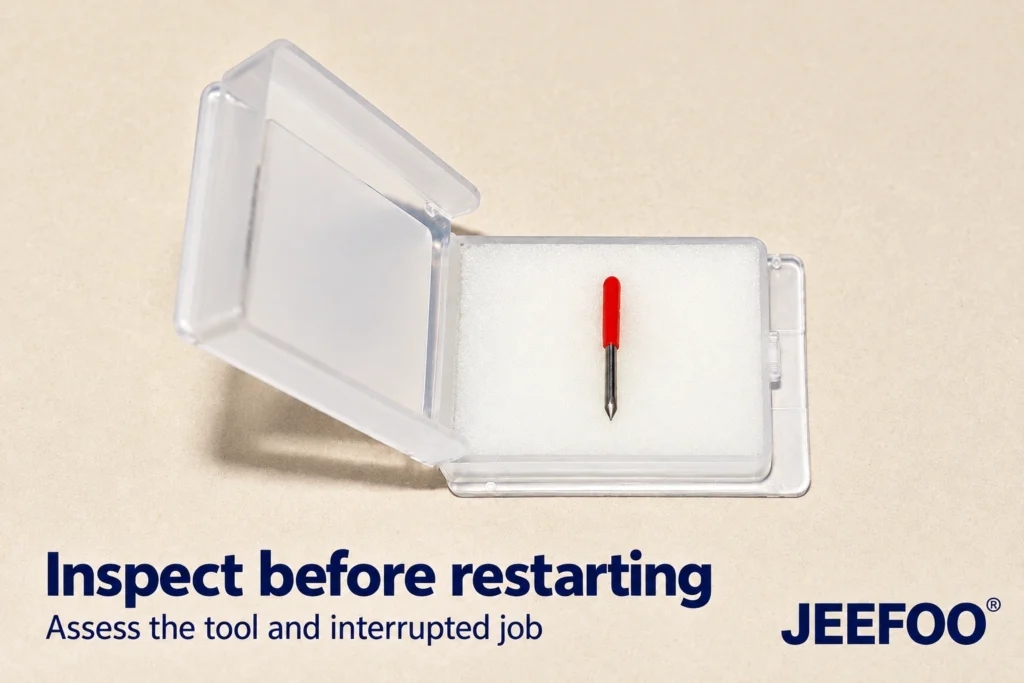
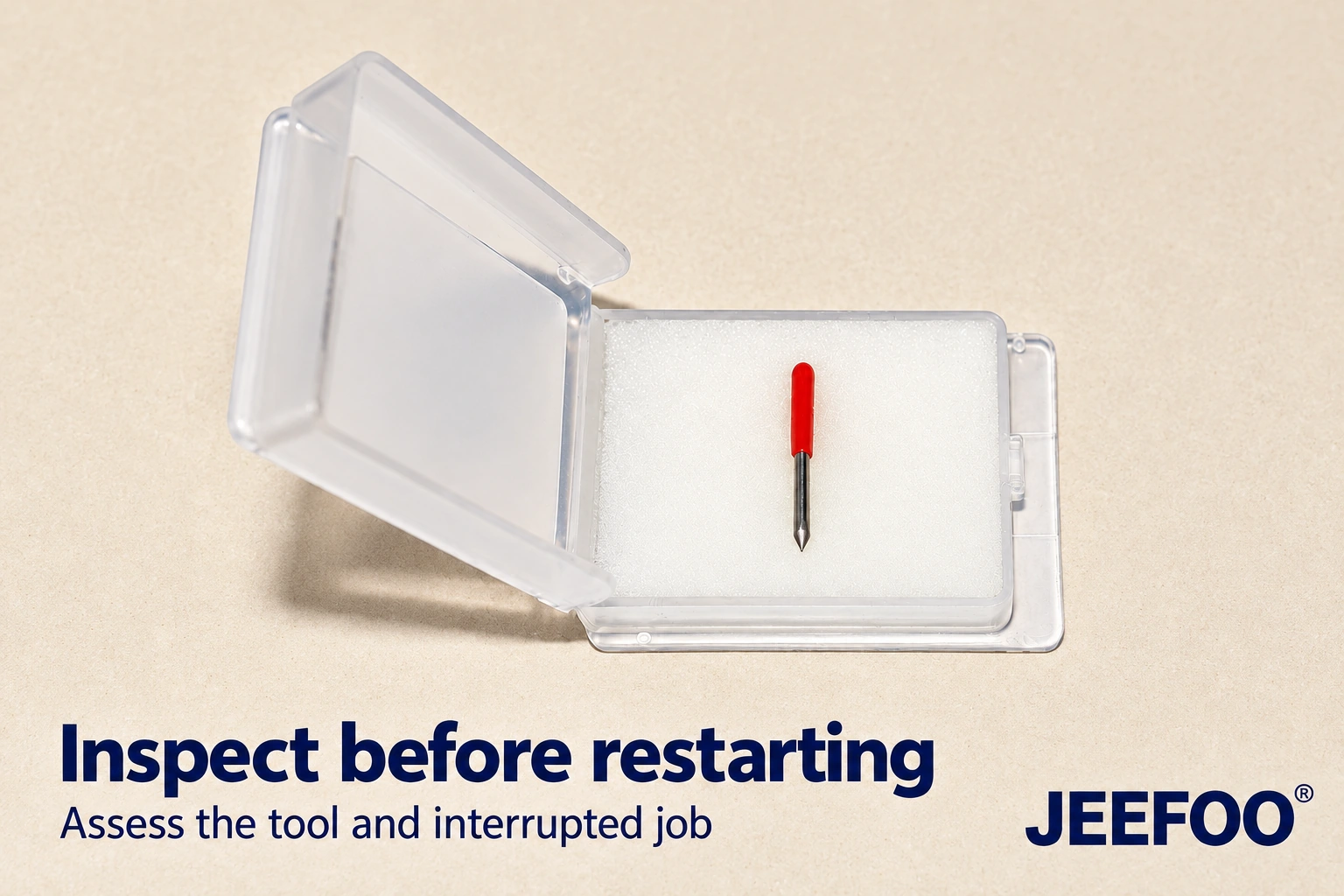
Summa plotter blades may need inspection after a jam, material shift or unexpected stop, but an interruption does not automatically mean the blade must be replaced. The immediate priority is to make the equipment safe and preserve enough information to understand what happened. Restarting without checking the affected material can hide the original fault and create additional scrap.
Preserve the point of interruption
Follow the equipment procedure for stopping and clearing the machine. Before moving the workpiece where it is safe to do so, note the job position, the visible damage and any displayed message. Mark the affected section on the material or job record. Distinguish a software or communication pause from an event involving contact, snagging or displaced media; these situations may require different checks before operation can resume.
Inspect the tool without creating another fault
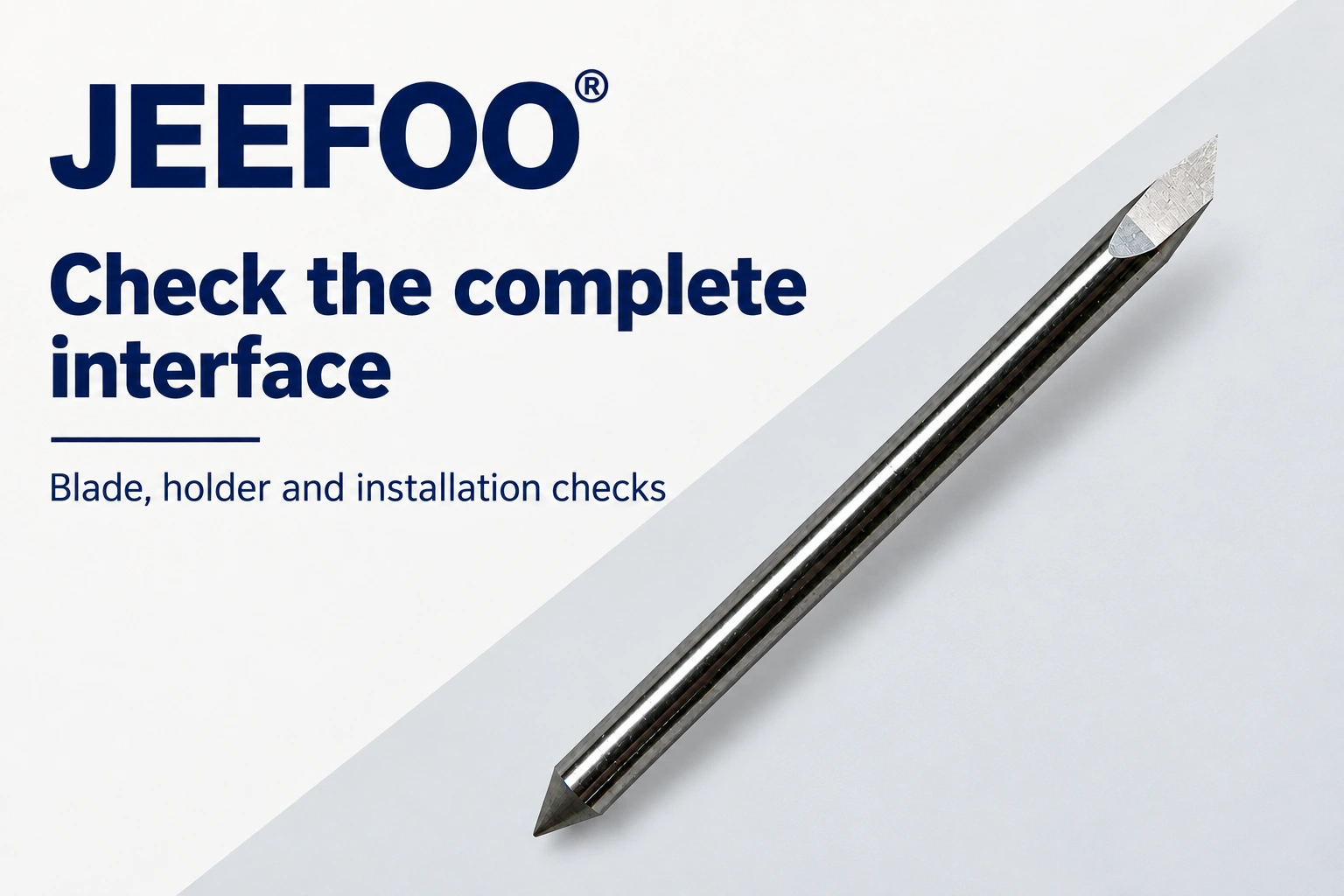
Remove the blade assembly only as directed by the manufacturer. Under suitable lighting or magnification, look for visible tip damage, adhered waste and a disturbed seating position. Avoid touching the edge or scraping it with an improvised tool. Check accessible holder areas using the approved method. If the blade’s condition is uncertain after a collision, quarantine it for assessment rather than returning it unmarked to the spare-parts drawer.
Check the path and the material together
Examine the interrupted section for folds, shifted registration, dragged waste or areas that no longer lie as intended. Inspect accessible machine surfaces according to the maintenance instructions. Do not assume an undamaged blade makes the partially cut sheet reusable. Determine whether restarting would follow the original contours accurately or risk cutting across displaced material. When alignment cannot be established confidently, a fresh test section is a more informative starting point.
Make a restart decision the next operator can follow
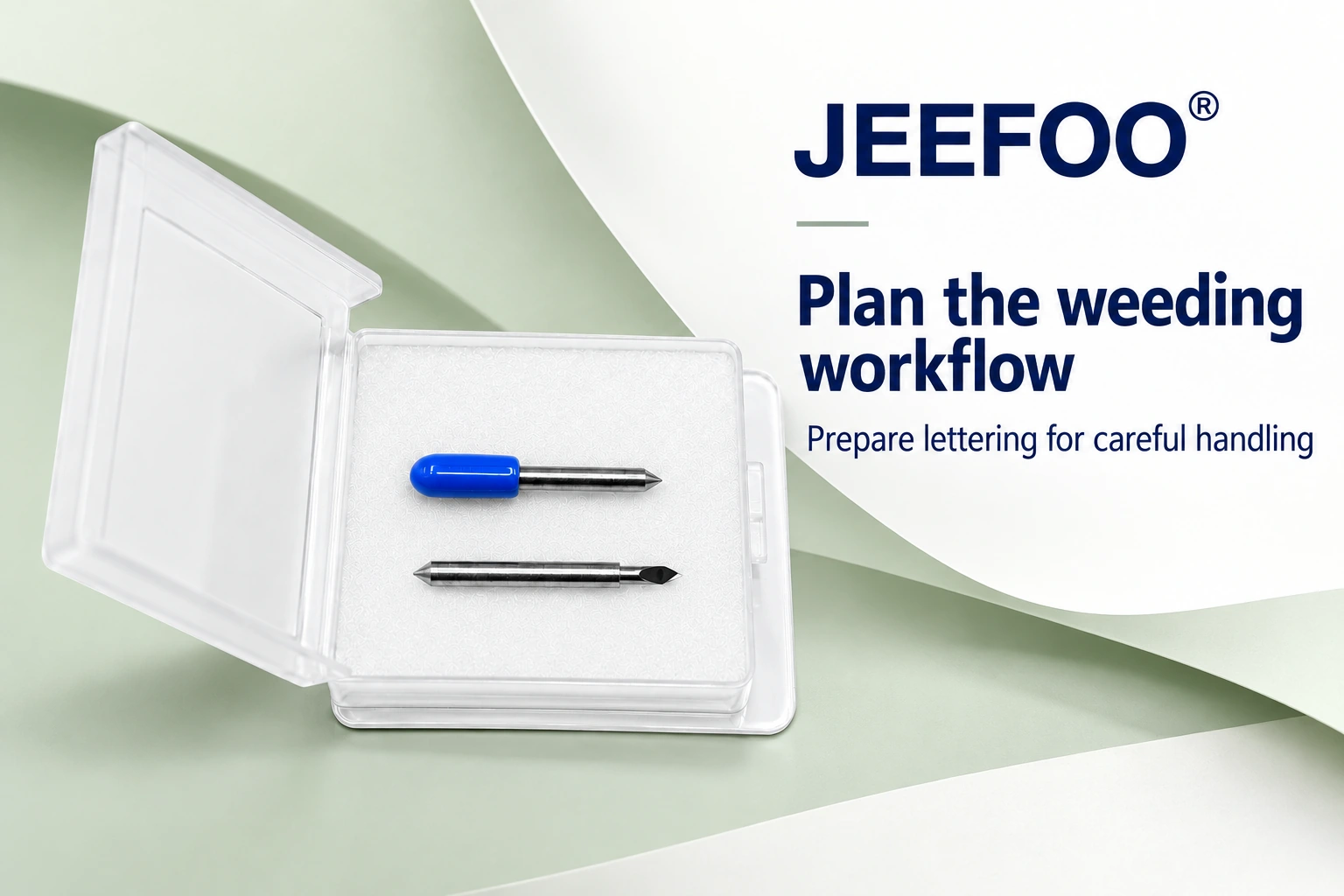
Approve any replacement against the exact blade and holder requirements. The JEEFOO® Summa category supplies a route for product enquiries, not proof that every listed item fits every Summa assembly. After correcting the cause, verify a representative result before releasing the remaining job. Record whether the original blade was retained, replaced or held for inspection, and identify which material sections were accepted. This prevents an uncertain interruption from becoming an unexplained quality variation later.
A careful restart protects both the job and the evidence needed to prevent recurrence. Assess the event, tool and material separately, then resume only when the assembly and the planned cutting path have been verified.