A magnetic response can be consistent with a Summa-type carbide blade described as tungsten-carbide–cobalt. The cobalt is part of the material, and its magnetic behaviour remains relevant even though the product is commonly shortened to a “carbide blade”. An attraction observation therefore deserves a material explanation before it becomes a reason to reject that description.
The material stated for this blade
The catalogue’s 45-degree Summa-type vinyl blade lists 89–90% WC and 10–11% Co.[1] WC denotes tungsten carbide; Co denotes cobalt. These are supplier-stated composition figures, not an independent analysis of the blade in a buyer’s hand. The listing does not publish a magnetic test result or acceptance range for a delivered batch.
The product name identifies the replacement-blade listing being discussed. It does not establish that Summa manufactured the blade or that a material manufacturer cited below supplied its carbide.
Where the magnetic response originates in a Summa-type carbide blade
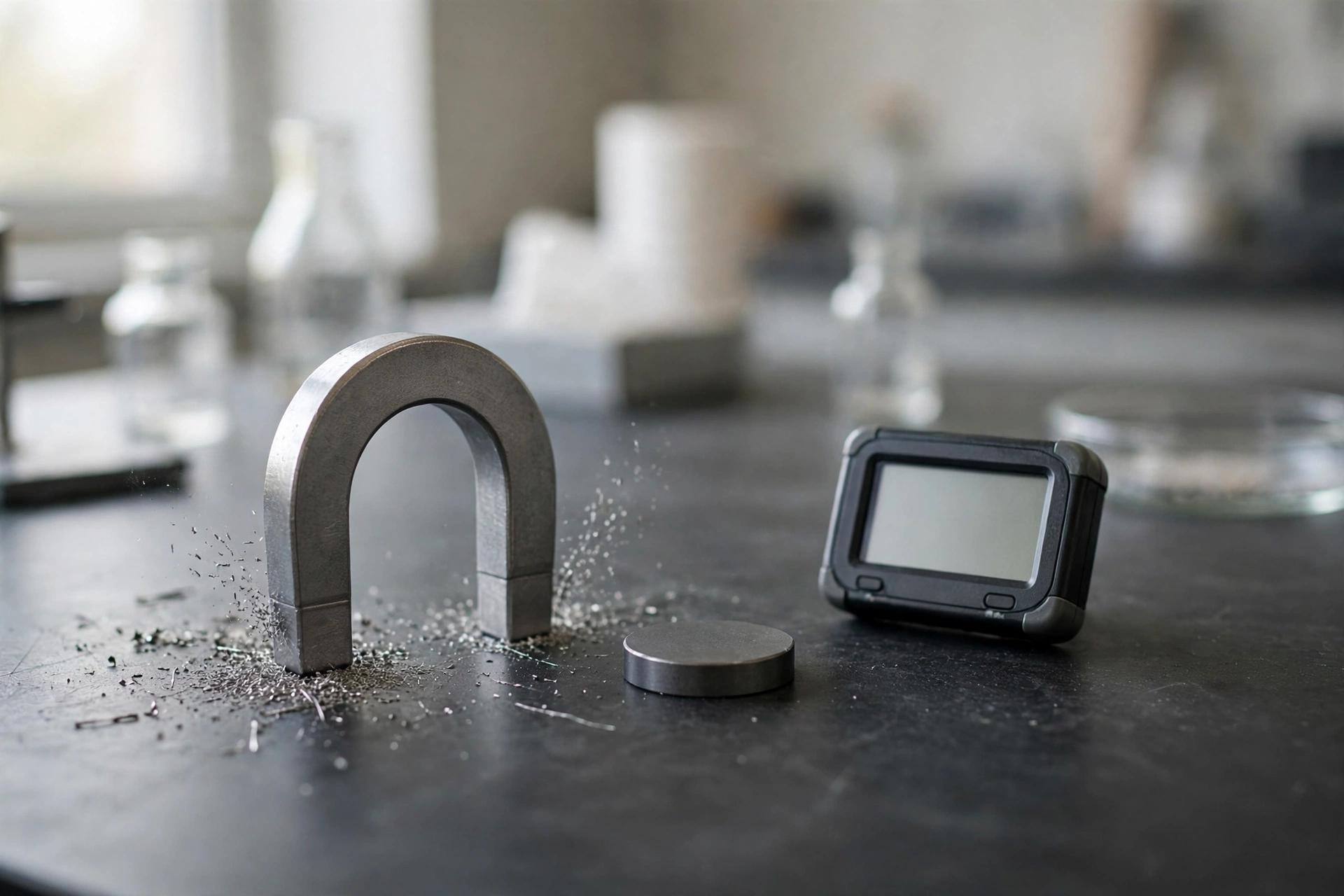
Hyperion attributes the room-temperature ferromagnetic properties of cemented carbides to cobalt or nickel in their metallic binder phase.[2] In the WC-Co composition stated here, cobalt is therefore a relevant constituent when considering magnetic behaviour. “Ferromagnetic” is not a synonym for “made entirely of iron”.
A cemented carbide combines hard particles with a metallic binder. Calling the resulting tool carbide does not remove the binder from the description of its properties. The same composite can have a hard cutting material and a constituent that responds magnetically. There is no need to assume a hidden steel substitution merely to make those two observations compatible.
This explains a possible response; it does not report a test on the catalogue blade. An unknown item’s attraction to a magnet cannot, by itself, establish that its composition matches the listed percentages either.
Magnetic behaviour has an industrial measurement role
Hyperion also describes WC-Co grades as generally having low magnetic permeability, with permeability increasing as cobalt content increases.[2] That material relationship should not be turned into an improvised rule such as “stronger attraction means the stated cobalt percentage is correct”. The product page supplies no measured permeability against which to make that comparison.
For a defined material assessment, magnetic-saturation testing provides a more specific question. ASTM B886-24‘s public scope describes determining magnetic saturation of cemented-carbide powders and sintered products using induction test instrumentation. Its public significance section identifies the measured subject as the magnetic fraction of the binder phase. It describes comparing that fraction with product specifications and a possible use as an indirect measure of carbon level.[3]
Thus magnetic evidence can contribute to material control. The useful result is an identified instrumented measurement interpreted against a relevant specification, rather than a simple statement that a magnet held the blade. The public summary does not supply a magnetic acceptance limit for this Summa-type replacement, and this article does not reproduce the complete test procedure.
Choose evidence for the material question
If a material concern arises, distinguish the observation from the question being investigated. A report of attraction raises a question about magnetic response. A request to verify the supplier’s WC-Co composition needs a suitable material assessment; if magnetic saturation forms part of that assessment, the measured property, reported result and applicable specification must be identified.
The explanation here resolves one apparent contradiction: a cobalt-containing Summa-type carbide blade can respond magnetically without that response alone disproving its material description. Establishing the composition and conformity of an actual supplied blade remains a separate, evidence-based determination.
Sources checked 5 November 2026: [1] plotter-blade.com, 45 Degree Vinyl Blade: Summa Plotter Guide. [2] Hyperion, Electrical and magnetic properties. [3] ASTM B886-24, publicly accessible Scope and Significance and Use only. No blade test, laboratory result or full-standard access is claimed.