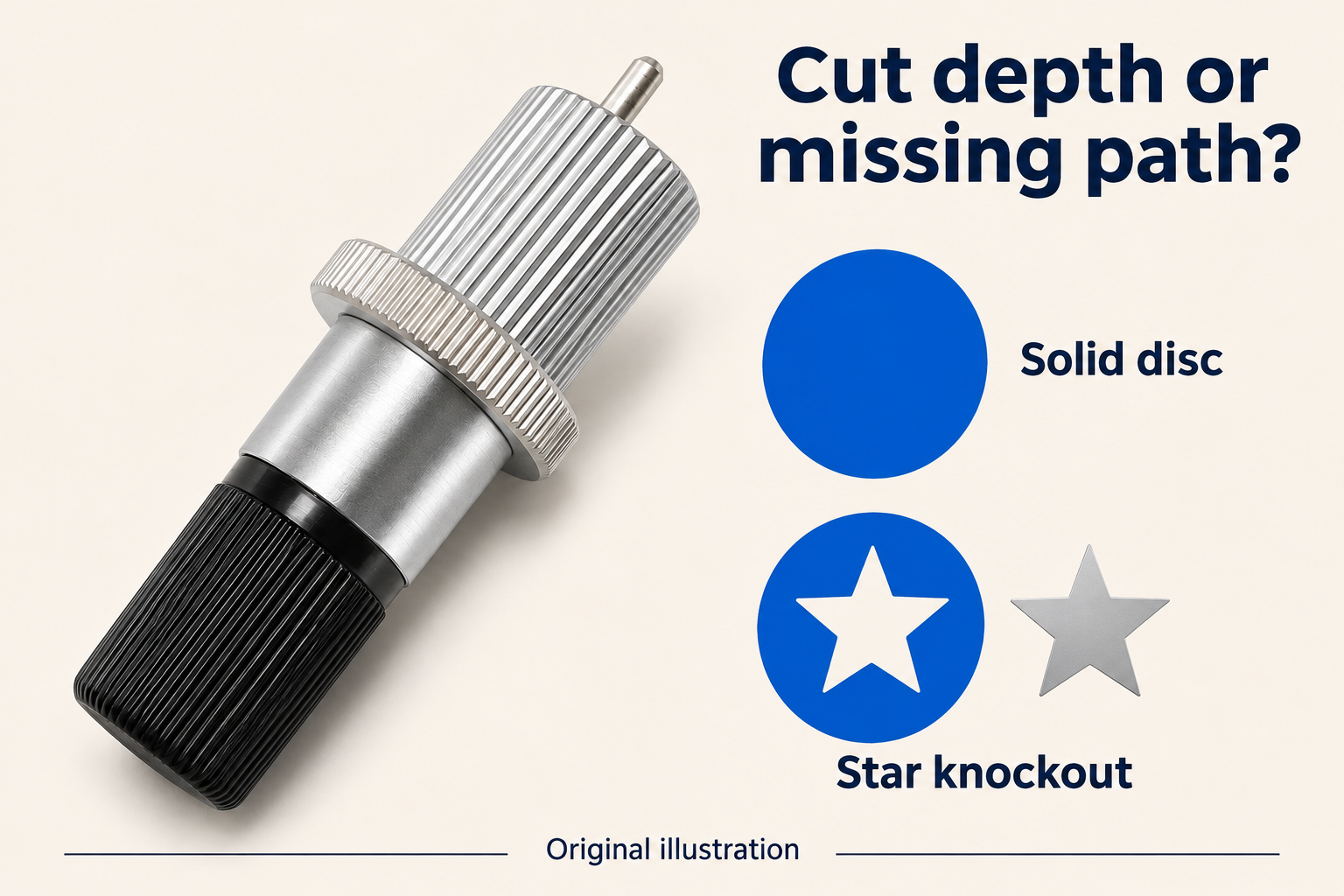
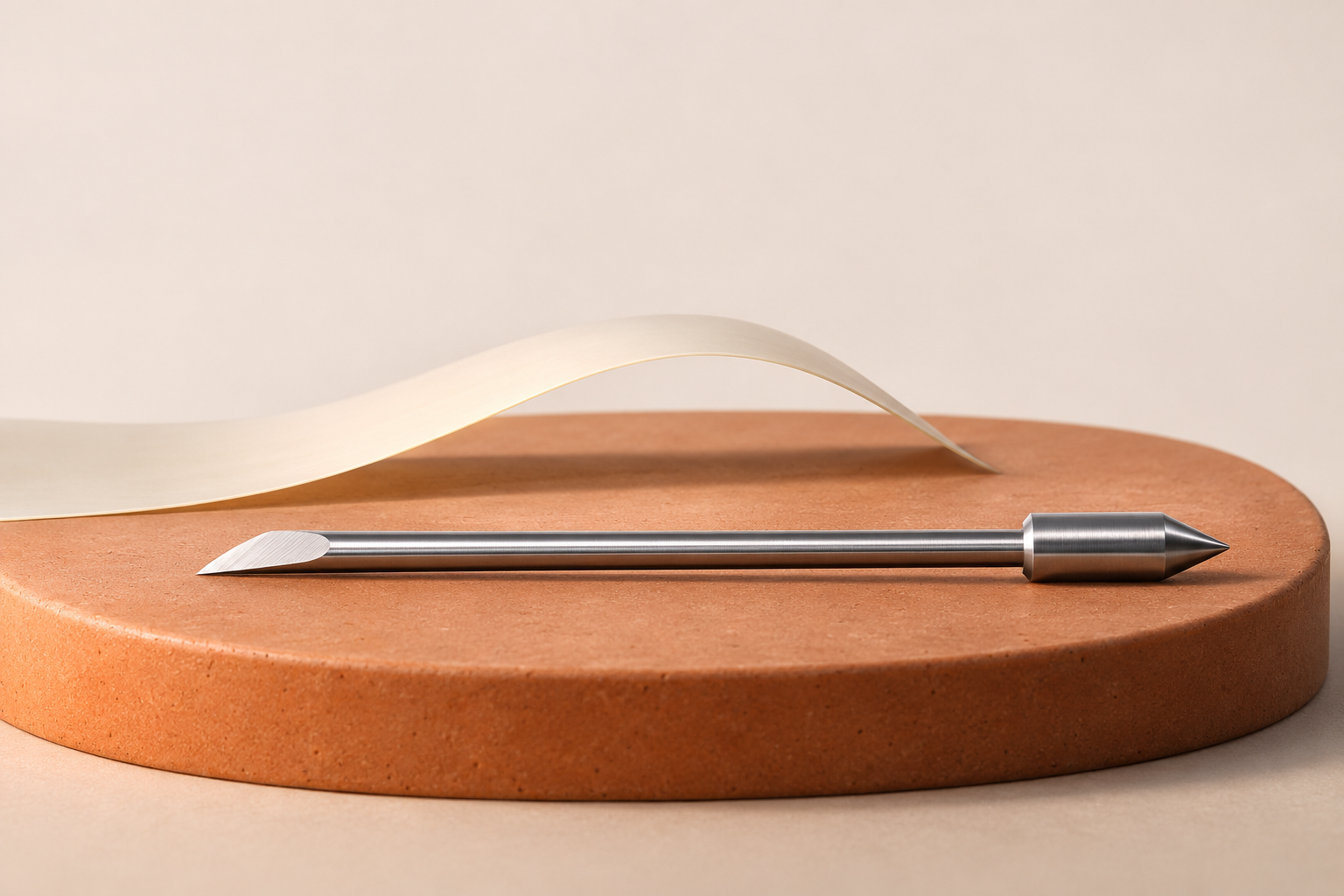
A purchase order for plotter blades may include a separate laboratory report. Before paying for that plotter blade test report, define which activity must be covered by the laboratory’s accreditation. A certificate identifying an organisation is only the beginning of that check. The decisive document is its scope: the particular work for which competence has been assessed.
Identify what the certificate describes
ISO 9001 certification concerns a quality management system. NITE’s International Accreditation Japan explains that laboratory accreditation against ISO/IEC 17025 also evaluates technical competence for specific testing or calibration activities. Its explanation includes measurement traceability, uncertainty and proficiency testing among the evidence of competence.[1]
Consequently, an ISO 9001 certificate alone does not establish laboratory accreditation for a blade measurement. Equally, the number ISO/IEC 17025 on a brochure is insufficient to identify which work is accredited. This article does not assert that JEEFOO, a blade supplier or a particular shipment holds either credential.
Plotter blade test report: read the actual activity covered
A2LA defines a scope of accreditation as the list of specific activities for which a body has been found competent. It also explains that a laboratory’s capabilities can extend beyond that list: work absent from the scope is outside its A2LA accreditation.[2] A laboratory may therefore offer a service without that service being included in its accredited scope.
For a proposed blade test, start with the property being investigated and the method offered. Then locate the corresponding scope entry and read its limits. A broad heading such as mechanical testing does not settle whether a particular method, material or part of a method is included. If the relationship is unclear, resolve it before the test is commissioned.
A published example of a restricted method
The public A2LA scope for Advanced Plastic and Material Testing, Inc., certificate 0326.01, illustrates why the description column matters. On its first page, the entry for ASTM A370 covers mechanical testing of steel products while excluding impact testing. The same page lists the laboratory identity, address, material context and validity date.[3]
Finding the method number and stopping there would miss the exclusion. This is an example of reading a document, not a recommendation to commission that laboratory or use a steel-testing method for a carbide blade. The January 2025 document gives a validity date of 30 November 2026; a retained copy does not replace checking the current status and applicable scope when placing a new order.
Make the purchased service explicit
Translate the document review into a precise enquiry. Ask the proposed laboratory to identify the test it will perform, the scope entry supporting the accredited status claimed for that work, and any relevant limitation. Where a proposal combines several measurements, establish which individual activities are covered instead of accepting one general statement for the whole package.
For example, a hypothetical proposal might combine a dimensional measurement with a separate material analysis. Evidence that one activity is in scope does not establish the status of the other. No actual supplier quotation or test result is implied by this example. It simply shows why two lines in an order may need two distinct checks.
Keep competence and the blade result separate
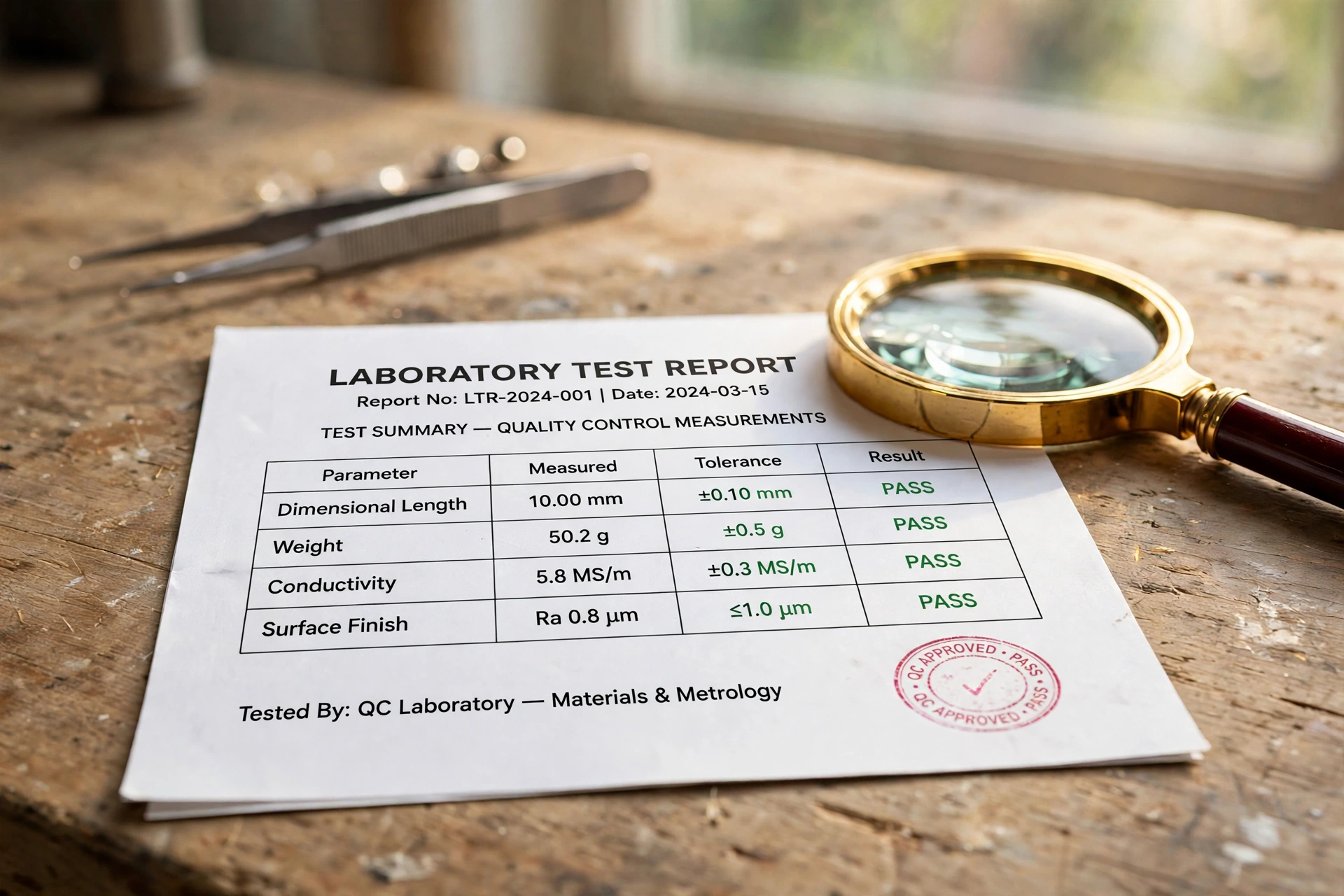
An accreditation scope describes assessed capability. It does not contain the result for the delivered blade. The completed plotter blade test report must still relate to the submitted item and the work actually performed. If the purchase also requires a conformity decision, the relevant specification and decision arrangements remain separate parts of the commission.
This gives the buyer a focused review: identify the credential, match the requested work to its stated scope, and connect the eventual plotter blade test report to the blade under investigation. It avoids treating an organisation-wide credential as a substitute for specifying the laboratory service being purchased.
Sources checked 5 November 2026: [1] NITE/IAJapan, laboratory-accreditation FAQ. [2] A2LA FAQ, definition of scope and assessment limits. [3] A2LA published scope 0326.01, dated 23 January 2025, page 1. Only relevant public sections were used; no paid standard, supplier audit or blade test was performed.